4:26
Where did the Deepwater Horizon oil go?
Mississippi-Alabama Sea Grant
Overview
The Deepwater Horizon oil spill in 2010 was the largest accidental marine spill in U.S. history, releasing approximately 200 million gallons of oil. This video explains how scientists created an "oil budget" to track the oil's fate. It details how oil was physically removed, evaporated, dispersed by chemicals, spread by currents to coastlines, formed deep-sea plumes, and settled on the ocean floor, where it breaks down very slowly. The video highlights the unprecedented use of dispersants at extreme depths and the role of marine snow in transporting oil to the seafloor, emphasizing the long-term impact on deep-sea ecosystems.
How was this?
Save this permanently with flashcards, quizzes, and AI chat
Chapters
- The 2010 Deepwater Horizon spill released 200 million gallons of oil, making it the largest accidental marine spill in U.S. history.
- Scientists developed an 'oil budget calculator' to track the oil's movement and fate.
- Oil is a complex mixture of chemicals, each behaving differently in the environment.
Understanding the sheer volume and complexity of the spill is crucial for appreciating the scientific challenge of tracking its dispersal and impact.
The spill released around 200 million gallons of oil.
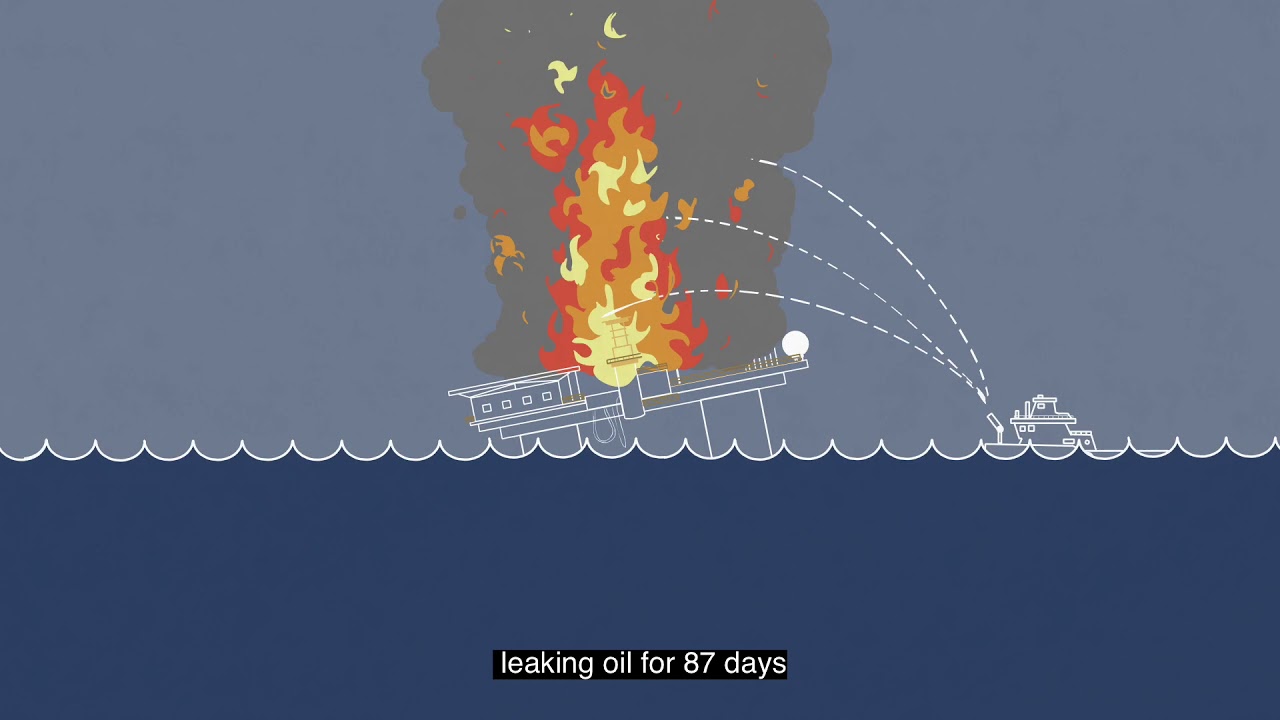
- Some oil was immediately recovered, skimmed, burned, or chemically dispersed at the surface.
- Natural processes like evaporation and dissolution also reduced surface oil.
- Ocean currents carried surface oil, impacting over 1300 miles of coastline, particularly Louisiana's marshes.
This section explains how visible surface oil spread and affected coastal environments, demonstrating the immediate and widespread consequences of such spills.
Oil impacted over 1300 miles of the Gulf of Mexico's coastline, with 64% of oiled shores occurring in Louisiana's marshes.
- The spill occurred at a depth of 5000 feet, presenting unprecedented challenges for response.
- Scientists discovered a deep-sea oil plume, a layer of tiny oil droplets and dissolved oil/gas, moving with subsea currents.
- This plume was over 22 miles long and persisted for months, located between 3000 and 4000 feet deep.
The discovery of deep-sea plumes revealed a hidden dimension of the spill, showing that oil could travel and persist far from the surface, impacting previously unconsidered environments.
Scientists used an autonomous underwater vehicle named Sentry to collect and test water samples, determining the plume's size and depth.
- Dispersants were used extensively, including for the first time at extreme depths, to break oil into smaller droplets.
- Marine snow, a mix of organic particles, trapped oil and dispersants, carrying them down to the seafloor.
- This process facilitated the transport of oil to deep-sea environments.
This chapter explains how human intervention (dispersants) and natural processes (marine snow) interacted to move oil into the deep ocean, leading to seafloor contamination.
Marine snow acted like a conveyor belt, carrying oil-based compounds from surface waters down to the ocean floor.
- Oil that reached the seafloor covered an area of approximately 770 square miles.
- This oil impacted deep-sea coral and other seafloor communities.
- In the cold, dark deep-sea environment, oil breaks down very slowly, meaning recovery will take a long time.
This section underscores the long-lasting consequences of the spill on the deep-sea ecosystem, highlighting the slow pace of natural recovery in these extreme environments.
The oil left a footprint stretching out around 770 square miles on the ocean floor, impacting delicate seafloor communities.
Key takeaways
- Oil spills are complex events where oil behaves differently based on its chemical composition and environmental conditions.
- Oil from spills can impact both surface waters and coastlines, as well as deep-sea environments.
- The Deepwater Horizon spill demonstrated the effectiveness and challenges of using chemical dispersants, especially at great depths.
- Natural processes like marine snow play a significant role in transporting pollutants to the ocean floor.
- Deep-sea ecosystems are particularly vulnerable to oil spills due to the slow rate of oil degradation and biological recovery.
- Scientists use sophisticated tools and create 'oil budgets' to track and understand the fate of spilled oil.
- Understanding the full impact of oil spills requires monitoring both immediate effects and long-term changes in various marine habitats.
Key terms
Deepwater Horizon oil spillOil budget calculatorDispersantsSubsurface plumeMarine snowSeafloor communitiesOil degradationCoastal impact
Test your understanding
- What were the main pathways through which oil from the Deepwater Horizon spill moved through the environment?
- Why was the discovery of deep-sea oil plumes significant for understanding the spill's impact?
- How did the use of dispersants and the process of marine snow influence where the oil ended up?
- What factors contribute to the slow recovery of deep-sea ecosystems after an oil spill?
- How do scientists attempt to account for all the oil released during a major spill like Deepwater Horizon?