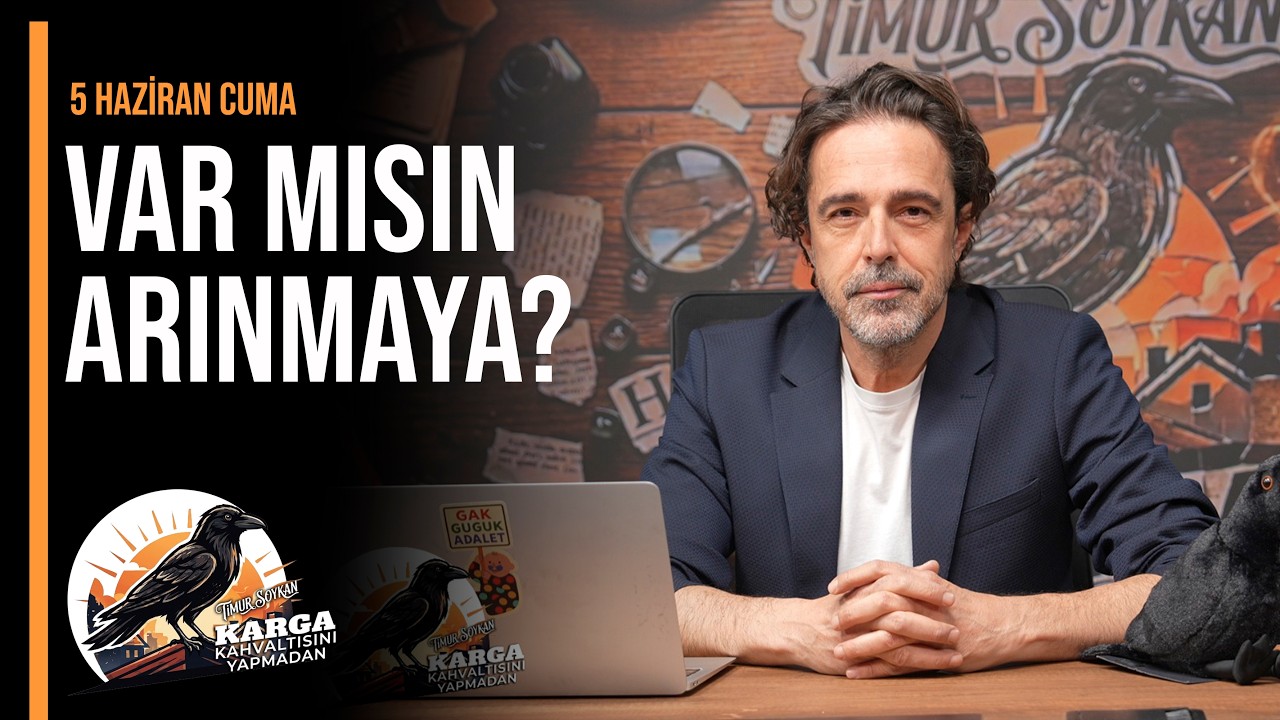
VAR MISIN ARINMAYA? | Karga Kahvaltısını Yapmadan | 05 Haziran Cuma 07:00 | Timur Soykan
Onlar
Overview
This video discusses the political maneuvering within the Republican People's Party (CHP) following a controversial "absolute nullity" decision, which is interpreted as an attempt to undermine democratic processes. The speaker alleges a coordinated effort between the ruling AKP (Justice and Development Party) and certain factions within the CHP, particularly those aligned with Kemal Kılıçdaroğlu, to consolidate power and prevent genuine elections. The discussion highlights accusations of judicial manipulation, fabricated evidence, and pressure tactics used to influence internal party politics and discredit opposition figures like Ekrem İmamoğlu and Özgür Özel. The speaker also touches upon broader issues of corruption and the erosion of democratic values in Turkey, contrasting them with the stated goals of "purification" within the CHP.
Save this permanently with flashcards, quizzes, and AI chat
Chapters
- A recent "absolute nullity" decision is seen as a significant intervention against the public's right to choose leaders.
- This decision has led to ongoing developments that reveal a plan for a Turkey without genuine elections, aligning with external geopolitical projects.
- The plan aims to perpetuate the current leadership indefinitely and potentially establish a hereditary system.
- Kemal Kılıçdaroğlu and his team are accused of aligning with this plan, driven by a desire to retain their positions rather than a genuine pursuit of power.
- Public opinion, reflected in polls, largely views recent legal cases, such as the İBB (Istanbul Metropolitan Municipality) case, as politically motivated.
- Despite accusations in indictments, polls suggest Ekrem İmamoğlu could significantly outperform Erdoğan in a presidential election.
- The perceived failure of these tactics has led to a search for new methods, including further operations and attempts to force CHP cadres to align with Kılıçdaroğlu.
- Kılıçdaroğlu's statements about needing "purification" before a party congress are interpreted as a strategy to consolidate control and eliminate opposition within the party.
- There is a perceived synchronization between Kemal Kılıçdaroğlu's actions and the judiciary, particularly the "AKP judiciary."
- Kılıçdaroğlu's pre-recorded video released before the "absolute nullity" decision is seen as evidence of this coordination.
- The judiciary is allegedly being used as a tool to push the CHP towards Kılıçdaroğlu and pressure his opponents.
- Kılıçdaroğlu's shift in stance on judicial decisions, moving from protesting arrests to accepting court rulings, is highlighted as a significant change.
- The video details a pattern of alleged coercion used to obtain testimonies, referred to as "enemy law."
- Witnesses are reportedly pressured through threats against family members or prolonged detention to provide pre-determined statements.
- Examples from the İBB case, involving individuals like Murat Kapki and Vedat Şahin, illustrate how testimonies are allegedly manufactured.
- The case of Muhittin Böcek and his son is presented as a recent example of this alleged system, where statements are obtained under duress and then selectively leaked.
- Investigations into Özgür Özel and other CHP members are being transferred to Ankara, suggesting a broader strategy to encircle the current CHP leadership.
- Allegations of financial impropriety and bribery are being directed at Özgür Özel and his associates, mirroring tactics used in previous cases.
- The speaker questions the validity of testimonies obtained under pressure, especially when lacking corroborating evidence like financial records or witness accounts.
- The alleged use of "enemy law" is seen as a tool to create division within the CHP and facilitate Kılıçdaroğlu's control.
- The speaker criticizes the selective application of "purification" and accountability, contrasting it with alleged unaddressed corruption involving government officials and their associates.
- Examples of alleged corruption include gold smuggling by MHP MPs, a large-scale embezzlement at Yunus Emre Foundation, and questionable deals involving state funds.
- The concept of "purification" within the CHP is questioned, given the alleged involvement of individuals with questionable pasts or who have made incriminating statements.
- The speaker suggests that the focus on internal CHP "purification" distracts from larger systemic issues of corruption and the erosion of democratic institutions.
- There are claims that Özgür Özel is nearing the point of forming a new party, fueled by ongoing political pressures.
- Speculation exists about a potential constitutional change to a monarchical system, possibly involving a coalition with other parties.
- Media figures are accused of promoting narratives that support Kılıçdaroğlu's faction and undermine Özgür Özel's leadership.
- The speaker highlights the upcoming local elections as a significant event that could further shape the political landscape.
Key takeaways
- Political power struggles within the CHP are allegedly being influenced by external forces and judicial manipulation.
- Allegations of fabricated evidence and coerced testimonies are central to the perceived "enemy law" being employed against opposition figures.
- The concept of "purification" within the CHP is presented as a potentially disingenuous tactic to consolidate power rather than address genuine issues.
- Widespread corruption and the erosion of democratic norms are highlighted as systemic problems that are being overshadowed by internal party disputes.
- Public trust in the judiciary is severely undermined by accusations of politically motivated investigations and rulings.
- The narrative suggests a coordinated effort to prevent genuine democratic elections and potentially alter the Turkish political system.
- The speaker implies that accountability for alleged corruption is selectively applied, with powerful figures often escaping scrutiny.
Key terms
Test your understanding
- What is the alleged connection between Kemal Kılıçdaroğlu's actions and the judiciary, according to the speaker?
- How does the video describe the alleged methods used to obtain testimonies in political cases?
- What is the speaker's interpretation of the "purification" calls within the CHP?
- What are the broader societal issues the speaker believes are being ignored due to the focus on internal CHP politics?
- What does the video suggest about the future of the Turkish political system if current trends continue?