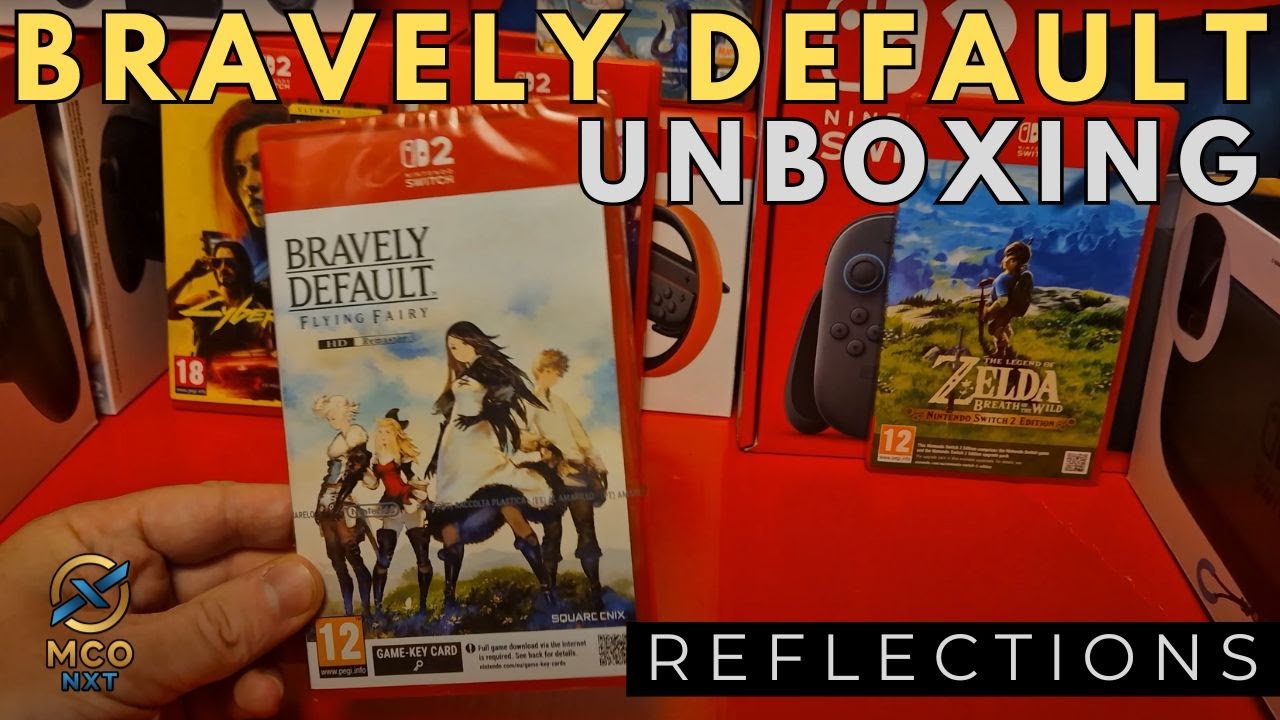
Unboxing Bravely Default for Switch 2 – Why Physical Games Still Matter
MCO NXT - Tech & Digital Culture
Overview
This video reflects on the enduring importance of physical video games, using the unboxing of "Bravely Default" for Switch 2 as a case study. Despite the game only containing a key card rather than a full cartridge, the speaker argues that physical releases offer a sense of permanence and ritual that digital-only games lack. The discussion delves into why "Bravely Default" itself, with its embrace of traditional JRPG mechanics, remains timeless and resonates with players, contrasting it with trend-chasing games. Ultimately, the video champions the tangible experience of owning and unboxing physical games as a meaningful ritual in an increasingly digital world.
Save this permanently with flashcards, quizzes, and AI chat
Chapters
- Bravely Default, originally released for the Nintendo 3DS, defied the trend of faster, action-oriented JRPGs by embracing traditional turn-based combat and job systems.
- Its name reflects its design philosophy: 'Bravely' to be bold in not chasing trends, and 'Default' to embrace classic RPG mechanics.
- The game resonated with players by reminding them of the core appeal of RPGs: team building, customization, grinding, and strategic combat.
- Its timeless quality stems from its focus on gameplay systems, story, and balance rather than photorealism or spectacle.
- The unboxing of Bravely Default for Switch 2 revealed it only contains a game key card, not a full game on a cartridge, a common trend in modern releases.
- This shift represents a move away from physical ownership towards digital licenses, subscriptions, and updates.
- The speaker laments this trend, as physical games represent a sense of permanence and ownership that digital formats often lack.
- The ritual of unboxing, tearing shrink wrap, and seeing a collection grow on a shelf is a valued experience for many players.
- Physical games offer a tangible connection to the past and a sense of permanence that digital licenses cannot replicate.
- The act of unboxing a game is a ritual that enhances the player's connection to the product and the gaming experience.
- Unlike games that offer a brief, dazzling experience and are quickly forgotten, games that become part of one's identity are remembered for years.
- The speaker hopes publishers will continue to release full physical versions of games, valuing the player's desire for tangible ownership.
Key takeaways
- Bravely Default's success demonstrates that embracing traditional gameplay mechanics can be more impactful than chasing fleeting trends.
- The transition from full physical game cartridges to digital codes or key cards signifies a loss of tangible ownership and a shift towards less permanent digital licenses.
- Physical games provide a sense of permanence and a valuable ritualistic experience (like unboxing) that digital games often cannot replicate.
- Games that become part of a player's identity, offering deep engagement rather than superficial dazzle, are the ones that leave a lasting impact.
- The desire for physical media reflects a broader human need for tangible objects and enduring connections in an increasingly ephemeral digital world.
- Even a 'remastered' game with only a key card can evoke nostalgia and highlight the value of the physical artifact itself.
Key terms
Test your understanding
- Why did Bravely Default's decision to embrace traditional JRPG mechanics, rather than chase trends, contribute to its lasting appeal?
- How does the speaker define the core difference in value between a physical game and a digital license?
- What is the significance of the 'unboxing' ritual in the context of physical game ownership?
- In what ways do games that become part of a player's identity differ from those that offer only a brief, dazzling experience?
- What is the speaker's main concern regarding the trend of releasing games with only a key card instead of a full cartridge?