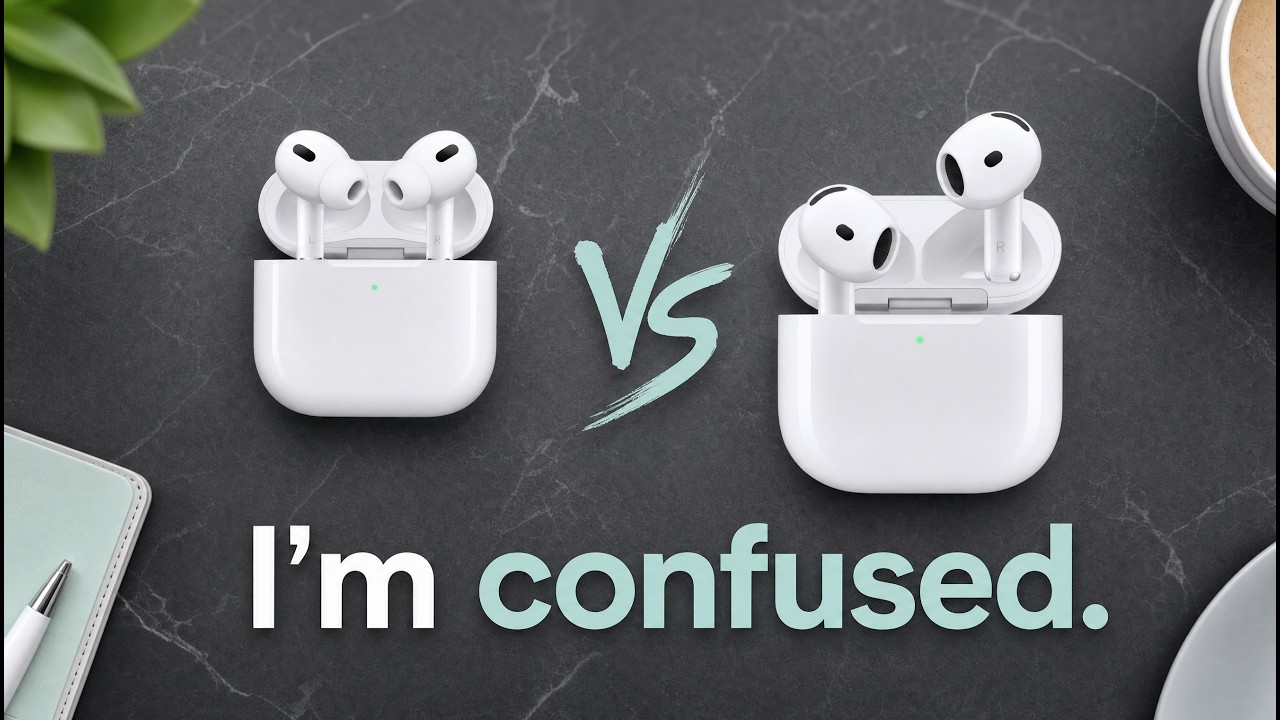
Airpods 5 vs Airpods 4 - Too Good To Be True....
Kevin The Tech Ninja
Overview
This video compares the new AirPods 5 to the previous AirPods 4, addressing skepticism about how Apple could offer improved features at a lower price point. The reviewer, Kevin the Tech Ninja, tests both models in real-world scenarios like coffee shops and flights, focusing on active noise cancellation (ANC), transparency mode, sound quality, battery life, and microphone performance. Key upgrades in the AirPods 5 include significantly better ANC, a more natural transparency mode, enhanced sound, longer battery life, and access to the new Siri AI, all while maintaining a similar design and a lower starting price than the AirPods 4. The video concludes that the AirPods 5 represent a substantial upgrade and are a strong value proposition for most users, except perhaps existing AirPods Pro owners.
Save this permanently with flashcards, quizzes, and AI chat
Chapters
- The tech market is seeing price increases, making the AirPods 5's lower price point initially suspicious.
- The AirPods 5 and AirPods 4 share an identical physical design in both the earbuds and the charging case.
- The fit and feel of the AirPods 5 in the ear are indistinguishable from the AirPods 4.
- AirPods 4 were priced at $129 (no ANC) and $179 (with ANC), while AirPods 5 start at $129 with ANC, with a $149 option for a wireless charging case.
- The AirPods 5 offer significantly improved ANC, reducing ambient noise by up to 50% more than the AirPods 4, making environments like coffee shops and airplane cabins much quieter.
- The AirPods 5's ANC is particularly impressive for an open-ear design, effectively minimizing background noise even without music playing, which was not possible with the AirPods 4.
- Transparency mode on the AirPods 5 sounds more natural and less robotic than on the AirPods 4, allowing for clearer conversations and a better awareness of surroundings.
- The open-ear design of both models contributes to long-term comfort, preventing ear fatigue often associated with sealed earbuds.
- Users sensitive to ANC might find the AirPods 5's more powerful noise cancellation to be a potential concern due to the increased sound processing.
- The AirPods 5 feature improved acoustics with a new design and adaptive EQ, resulting in about a 25% better sound quality with more body, especially noticeable in genres like EDM and hip hop.
- Battery life has been extended by approximately one hour on the AirPods 5 compared to the AirPods 4.
- Upgraded dual beamforming microphones on the AirPods 5 enhance call quality and voice recording capabilities.
- Both AirPods 4 and 5 support Live Translate, a feature useful for international travel.
- AirPods 5 exclusively offer access to the new Siri AI, requiring a compatible iPhone.
- The AirPods 5 are recommended as a significant upgrade from AirPods 4 or older models, offering better ANC, sound, and features at a reduced price point.
- The AirPods 5 are considered the best earbuds under $200, though AirPods Pro remain superior for those seeking top-tier features.
Key takeaways
- Apple has significantly improved active noise cancellation in the AirPods 5, making them a top performer in the open-ear earbud category.
- The AirPods 5 offer a more natural and cleaner transparency mode compared to the AirPods 4, enhancing situational awareness.
- Despite a similar design, the AirPods 5 deliver better sound quality and longer battery life than the AirPods 4.
- The AirPods 5 are priced more competitively than the AirPods 4, with ANC included at a lower starting point.
- Access to the new Siri AI is a key exclusive feature of the AirPods 5, requiring an iPhone for full functionality.
- For users with AirPods 4 or older, the AirPods 5 represent a compelling and cost-effective upgrade.
- The AirPods 5 are positioned as the best value earbuds under $200, though AirPods Pro remain the premium option.
Key terms
Test your understanding
- How does the active noise cancellation performance of the AirPods 5 compare to the AirPods 4, and why is this improvement significant for open-ear earbuds?
- What are the key differences in price and features between the AirPods 4 and AirPods 5 models?
- In what ways does the transparency mode on the AirPods 5 offer an improved user experience compared to the AirPods 4?
- What advanced features are exclusive to the AirPods 5, and what are the requirements to use them?
- Based on the video's analysis, for which user profiles would the AirPods 5 be a recommended upgrade, and who might still prefer the AirPods Pro?