AI-Generated Video Summary by NoteTube
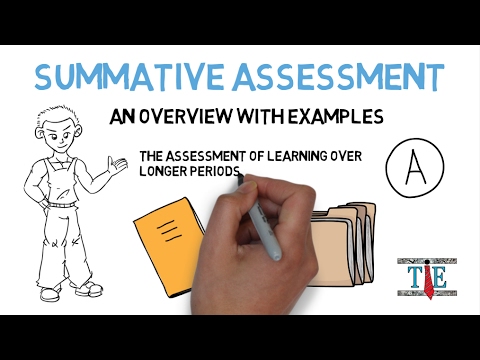
Summative Assessment: Overview & Examples
Teachings in Education
Overview
This video explains the purpose and implementation of summative assessments in education. Summative assessments are crucial for evaluating a student's mastery of essential skills and knowledge acquired over a period, ensuring they are adequately prepared for future success. The video emphasizes that these assessments should be planned and administered at the end of units, periods, or courses, allowing students ample time for preparation. It presents various examples of summative assessments, including portfolios, projects, interviews, essays, tests, and presentations, highlighting their unique benefits. Additionally, the video offers practical tips for educators on effectively utilizing summative assessments, such as differentiating instruction, providing clear instructions, encouraging students to show their work, assessing depth of knowledge, allocating sufficient time, ensuring alignment with classroom content, and proportionally weighting questions based on instructional time.
This summary expires in 30 days. Save it permanently with flashcards, quizzes & AI chat.
Chapters
- •Summative assessments evaluate long-term learning.
- •They are necessary for students to master essential skills and knowledge.
- •Students should not be advanced without mastery.
- •Plan summative assessments in advance.
- •Allow students ample time to study and prepare.
- •Administer at the end of units, periods, and courses.
- •Portfolios: good for students who struggle with tests.
- •Projects: appreciated by students, allow for diverse skills.
- •Interviews: offer direct insight into student knowledge.
- •Essays: assess higher-order thinking and depth.
- •Tests: can be standardized or teacher-created.
- •Presentations: demonstrate mastery and develop speaking skills.
- •Differentiate instruction and provide varied assessments.
- •Give clear instructions.
- •Have students show their work to account for minor errors.
- •Assess depth of knowledge beyond recall (synthesize, apply, evaluate).
- •Use frameworks like Bloom's taxonomy and Webb's DOK.
- •Provide sufficient time for students to complete assessments.
- •Summative assessments measure long-term learning, not 'pop' quizzes.
- •Assess only material covered in class to maintain student trust.
- •Question weight should be proportional to instructional time spent on the topic.
Key Takeaways
- 1Summative assessments are vital for measuring long-term learning and ensuring student mastery.
- 2Effective summative assessment requires careful planning, adequate student preparation time, and administration at logical endpoints.
- 3A variety of assessment methods (portfolios, projects, essays, etc.) cater to diverse learning styles and strengths.
- 4Differentiating instruction and assessment is key to optimizing student learning.
- 5Clear instructions and allowing students to show their work are crucial for fair evaluation.
- 6Assessments should focus on higher-order thinking skills and depth of knowledge, not just recall.
- 7Ensure that assessment content directly aligns with what was taught in class.
- 8The weighting of assessment components should reflect the time and emphasis given to those topics during instruction.