10:51
North Carolina's Senate Race Is CLOSER Than You Think!
Red Eagle Politics
Overview
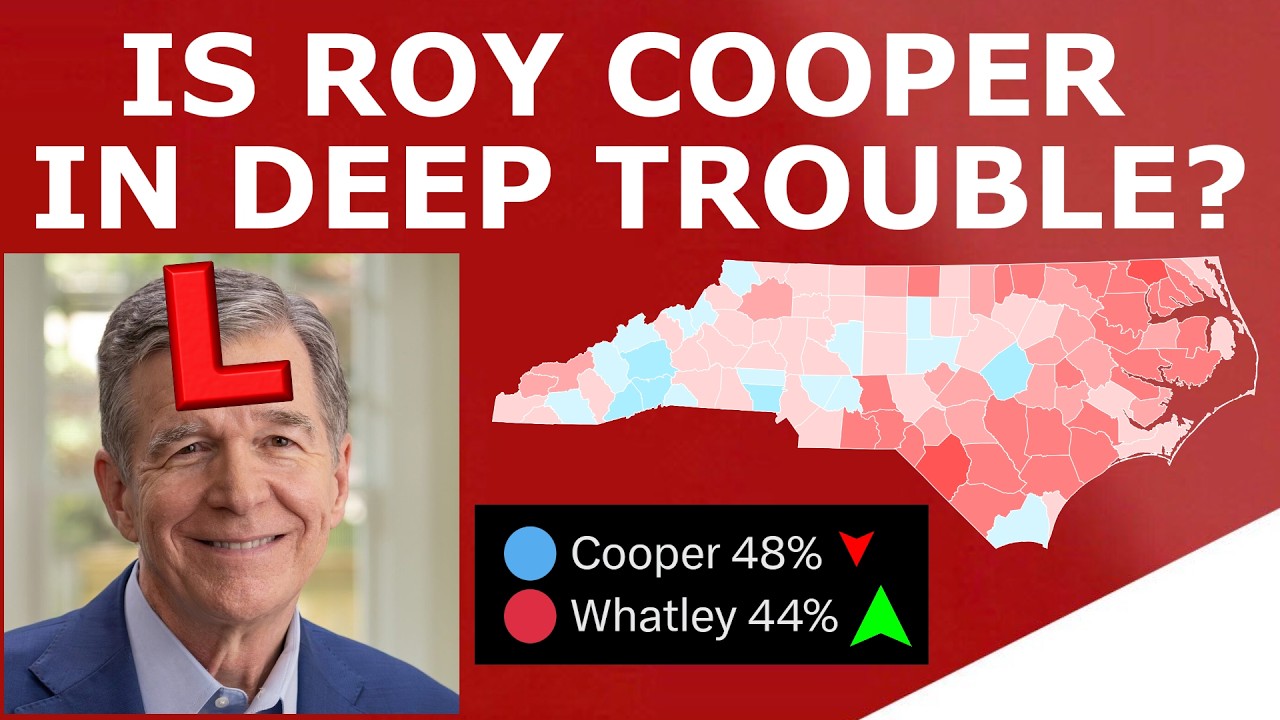
This video analyzes the North Carolina Senate race, challenging the assumption that it's a foregone conclusion for Democrats. While incumbent Roy Cooper is generally considered the favorite, recent polling suggests a closer contest than anticipated. The analysis explores factors contributing to this tighter race, including the opponent's strategic capabilities, historical voting patterns in North Carolina, and the broader national political landscape. The video suggests that while Cooper may still win, the race is tighter than many believe and warrants closer attention, especially for Republicans seeking to gain Senate seats.
How was this?
Save this permanently with flashcards, quizzes, and AI chat
Chapters
- The North Carolina Senate race is presented as closer than commonly perceived.
- Roy Cooper, the Democratic candidate, is facing Michael Whatley.
- Despite North Carolina being a swing state, the race was initially expected to favor Democrats due to the midterm environment and an unpopular Republican president.
- Early polling showed Cooper leading, but not by a decisive margin.
Understanding the dynamics of this specific race is crucial because it could significantly impact the balance of power in the Senate, especially in a midterm election year.
The video mentions that an internal poll from PPP showed Roy Cooper leading by only four points, indicating a tighter race than expected.
- Roy Cooper has a history of winning by smaller margins than his polling initially suggested, even when running for governor.
- Some Democrats are reportedly not enthusiastic about Cooper's campaign or his strategy.
- Cooper's inability to consistently achieve over 50% in polls raises questions about his electoral ceiling.
- Despite out-raising and out-spending his opponent, Cooper's lead is not as substantial as anticipated.
Low voter enthusiasm and a limited electoral ceiling for the Democratic candidate can create vulnerabilities that an opponent can exploit, even in a state that typically leans Democratic.
The video references Cooper's gubernatorial race where he was polling significantly higher than his eventual winning margin, suggesting a pattern of over-promising and under-delivering on polling.
- Michael Whatley is described as a skilled political operative with deep knowledge of his opponent.
- Republicans often utilize direct funding from the NRSC and strategic ad reservations, which can be effective.
- The Republican party has a significant lead in ad reservations in North Carolina, indicating a strong investment in the race.
- Whatley has the potential to cut into Cooper's lead by highlighting information about Cooper that may not be widely known.
A strong, strategic opponent can capitalize on any perceived weaknesses of the leading candidate, making the race more competitive than initial assessments might suggest.
The video highlights Whatley's past role as chairman of the North Carolina RNC, implying he possesses insider knowledge that could be used against Cooper.
- North Carolina has a history of close elections, with Democrats not holding a Senate seat there since 2008.
- While Democrats have a registration advantage, Republican voter registration has been increasing.
- Demographic shifts, such as retirees moving into the eastern part of the state, can influence voting patterns.
- Key voter demographics like college-educated white voters lean Republican and are reliable midterm voters, while Black voters, a significant part of the electorate, have lower turnout in midterms.
Understanding the historical voting trends and demographic composition of North Carolina is essential for predicting election outcomes, as these factors often play a significant role in close races.
The video points to registration data showing a shift from a Democratic lead of over 100,000 voters to a current Republican lead of 11,000, illustrating a significant change in the state's political leanings.
- North Carolina is a critical state for Republicans aiming to gain a Senate majority.
- Winning North Carolina, combined with victories in other key states like Ohio or Alaska, could secure 51 seats for Republicans.
- Even if Democrats hold North Carolina, other competitive races in states like Georgia and New Hampshire could still determine the Senate's control.
- The significant ad spending by Republicans in North Carolina indicates their belief in the competitiveness of the race.
The outcome of the North Carolina Senate race has national implications, potentially determining which party controls the U.S. Senate and influencing legislative priorities for the next two years.
The video suggests that if Republicans win North Carolina and Ohio, they would likely reach the 51-seat threshold needed for a Senate majority, even without winning other competitive races.
Key takeaways
- The North Carolina Senate race is tighter than often portrayed, with Roy Cooper facing a stronger challenge than anticipated.
- A candidate's perceived electoral ceiling, not just current polling, is a critical indicator of potential success.
- Skilled political operatives can leverage specific knowledge and strategic campaigning to narrow leads, even against popular incumbents.
- Demographic shifts and historical voting patterns in swing states like North Carolina are vital for understanding electoral competitiveness.
- Republican investment in advertising and strategic focus on states like North Carolina highlight their path to Senate majority.
- Voter enthusiasm and the ability of a candidate to mobilize their base are crucial, especially in midterm elections.
- The North Carolina race serves as a microcosm of broader trends that could determine the national balance of power in the Senate.
Key terms
Swing StateMidterm ElectionPolitical OperativeElectoral CeilingVoter EnthusiasmAd ReservationsDemographic ShiftsRegistration DataNRSC
Test your understanding
- Why is the North Carolina Senate race considered closer than initially expected, despite Roy Cooper's incumbency?
- How can a political operative like Michael Whatley potentially challenge a more established candidate like Roy Cooper?
- What demographic and historical factors in North Carolina contribute to the competitiveness of its Senate races?
- What are the potential implications of the North Carolina Senate race outcome for the national balance of power in the Senate?
- How does voter enthusiasm, or lack thereof, play a role in the dynamics of this particular Senate race?