18:50
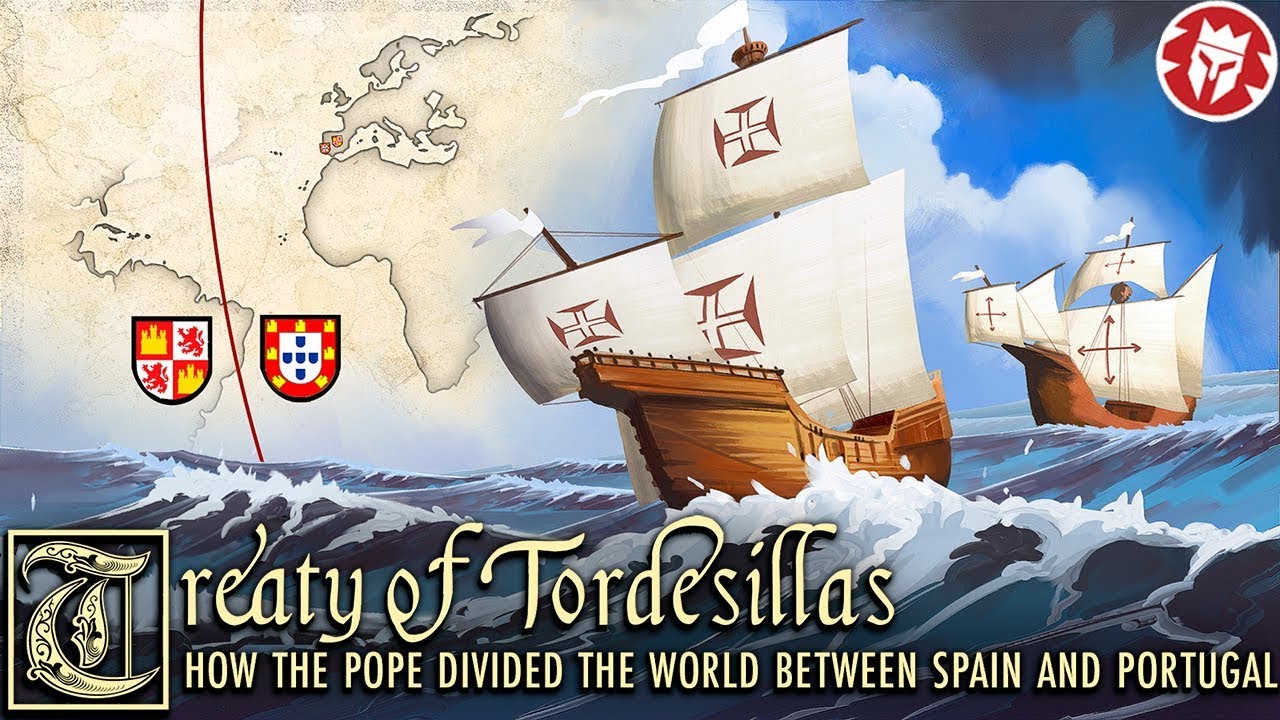
Tordesillas - How the Pope divided the world between Spain and Portugal
Kings and Generals
Overview
This video explains the historical context and consequences of the Treaty of Tordesillas, brokered by the Pope in 1494. Following Columbus's voyages, Spain and Portugal, the leading maritime powers, faced a potential war over newly discovered lands. To prevent conflict, Pope Alexander VI drew a line of demarcation in the Atlantic, dividing the world between them. This agreement, later refined by the Treaty of Tordesillas, significantly influenced global exploration, colonization, and the distribution of wealth for centuries, though it eventually faced challenges from other European powers.
How was this?
Save this permanently with flashcards, quizzes, and AI chat
Chapters
- The Age of Exploration intensified rivalry between Portugal and Spain over new trade routes and wealth.
- The fall of Constantinople in 1453 disrupted existing trade patterns, encouraging exploration.
- Genoese expertise, including Christopher Columbus's, was sought after by Portugal and later Spain.
- Columbus's westward voyage, sponsored by Spain, aimed to find a new route to Asia but led to the discovery of the Americas.
Understanding the geopolitical climate and the motivations of explorers like Columbus is crucial to grasping why a formal division of the world became necessary.
Christopher Columbus, after being rejected by Portugal's King Joao II, secured patronage from Spain's Ferdinand and Isabella for his westward voyage.
- Columbus's return from his first voyage sparked immediate claims and counter-claims between Spain and Portugal.
- King Joao II of Portugal asserted that Columbus's discoveries belonged to Portugal due to prior treaties and papal donations.
- Spain, under Ferdinand and Isabella, prepared for conflict, recognizing Portugal's superior naval power.
- The escalating dispute threatened to plunge Christendom into war at a critical juncture.
This immediate conflict highlights the high stakes of the discoveries and sets the stage for papal intervention to maintain peace.
Upon docking in Lisbon for repairs, Columbus informed King Joao II of his successful voyage, leading to a dispute over ownership of the new lands.
- Pope Alexander VI (Rodrigo Borgia) intervened to resolve the territorial dispute between Spain and Portugal.
- The first papal bull, 'Inter Caetera' (May 3, 1493), granted Spain exclusive rights to discovered lands west of a certain point.
- Spanish ambassadors pressured the Pope, leveraging political support needed against France, to issue more favorable decrees.
- Subsequent bulls, including 'Eximiae Devotionis' and a second 'Inter Caetera', clarified and established a north-south demarcation line in the Atlantic.
These papal decrees formed the initial legal basis for European claims in the New World and directly shaped the division of territories.
The second 'Inter Caetera' bull established an arbitrary line of demarcation approximately 100 leagues west of the Azores and Cape Verde, assigning lands east to Portugal and west to Spain.
- Portugal, led by King Joao II, objected to the papal demarcation line, finding it too restrictive.
- Negotiations between Spain and Portugal led to the Treaty of Tordesillas in June 1494.
- The treaty moved the demarcation line further west to 370 leagues (about 1,200 miles) west of Cape Verde.
- This adjustment is widely believed to have been made to secure Portugal's claim to Brazil, though Brazil's official discovery came later.
This treaty formalized and adjusted the papal division, directly influencing which nations would colonize vast swathes of the Americas and other parts of the world.
The treaty shifted the dividing line westward from 100 leagues to 370 leagues west of the Cape Verde islands, a change crucial for Portugal's future claims.
- The Treaty of Tordesillas initially benefited Portugal, which consolidated its eastern trade routes while Spain's western ventures proved costly.
- Ferdinand Magellan's circumnavigation, sponsored by Spain, challenged Portuguese claims in the East Indies.
- The 1529 Treaty of Zaragoza further refined the demarcation line in the Pacific, ultimately awarding the Spice Islands to Portugal.
- While the Tordesillas agreement reduced direct conflict between Spain and Portugal, it set a precedent for global division and was eventually challenged by other European powers like England, France, and the Dutch Republic.
The long-term impact of these agreements shaped global colonization patterns, wealth distribution, and international relations for centuries, laying the groundwork for future colonial empires.
Spain eventually conceded claims to the Spice Islands to Portugal in the Treaty of Zaragoza, receiving 350,000 gold ducats in return, and focused more on the immense wealth being extracted from the Americas.
Key takeaways
- Rivalry between emerging European powers like Spain and Portugal was a primary driver of the Age of Exploration.
- The Pope played a significant role as an arbiter in international disputes, using papal bulls to legitimize territorial claims.
- The Treaty of Tordesillas was a diplomatic solution to prevent war, but its arbitrary division of the world had profound and lasting consequences for global colonization.
- The economic motivations, particularly the pursuit of wealth from spices and new lands, were central to the decisions made during this era.
- Initial discoveries often led to disputes that required further negotiation and clarification, as seen with the papal bulls and the subsequent Treaty of Tordesillas.
- The division of the world established by these agreements was not static and was eventually challenged by other rising European powers.
Key terms
Age of ExplorationTreaty of TordesillasPapal BullInter CaeteraEximiae DevotionisLine of DemarcationCircumnavigationSpice IslandsColonization
Test your understanding
- What were the primary motivations for Spain and Portugal to seek papal intervention in dividing newly discovered territories?
- How did the Treaty of Tordesillas differ from the initial papal bulls regarding the line of demarcation?
- Why was the fall of Constantinople in 1453 a significant precursor to the Age of Exploration and the subsequent division of the world?
- What were the long-term implications of the Treaty of Tordesillas for global power dynamics and colonization?
- How did the actions of explorers like Columbus and Magellan contribute to the disputes and agreements between Spain and Portugal?