How to Get the Most Out of Studying: Part 4 of 5, "Putting Principles for Learning into Practice"
Samford University
Overview
This video, the fourth in a five-part series on effective studying, focuses on translating learning principles into practical study strategies. It emphasizes that effective learning requires deep processing of material, not just time and effort. The video introduces three research-based strategies for deep processing: question generation, concept mapping, and active retrieval practice. It also discusses how to apply deep processing principles to note-taking during lectures and highlighting while reading textbooks, contrasting these with shallow processing methods. Finally, it offers guidance on making group study sessions productive by treating them like business meetings with clear goals and preparation.
Save this permanently with flashcards, quizzes, and AI chat
Chapters
- Effective college study depends on using learning strategies, not just effort.
- Deep processing, focusing on meaning and implications, leads to connected learning.
- Shallow processing, focusing on superficial aspects, results in poor learning.
- Study strategies act as 'orienting tasks' that guide how deeply you process information.
- After reading, generate meaningful questions about the material.
- Prioritize questions that require analysis, comparison, connection, and implication over simple fact recall.
- The act of generating questions prompts deeper thought, and answering them further solidifies understanding.
- Practice makes question generation easier and more automatic.
- A concept map is a visual diagram of concepts and their relationships.
- Creating a concept map requires identifying key ideas (nodes) and drawing links between them.
- The effort involved in constructing a concept map promotes deep processing of the material.
- The map doesn't need to be perfect; the process of creation is the learning benefit.
- Practice retrieving information without looking at your notes or book.
- Explain the material aloud or write it down from memory.
- Tailor retrieval practice to how your teacher will assess the material (e.g., multiple choice, essay).
- Checking your recalled information against sources helps identify knowledge gaps.
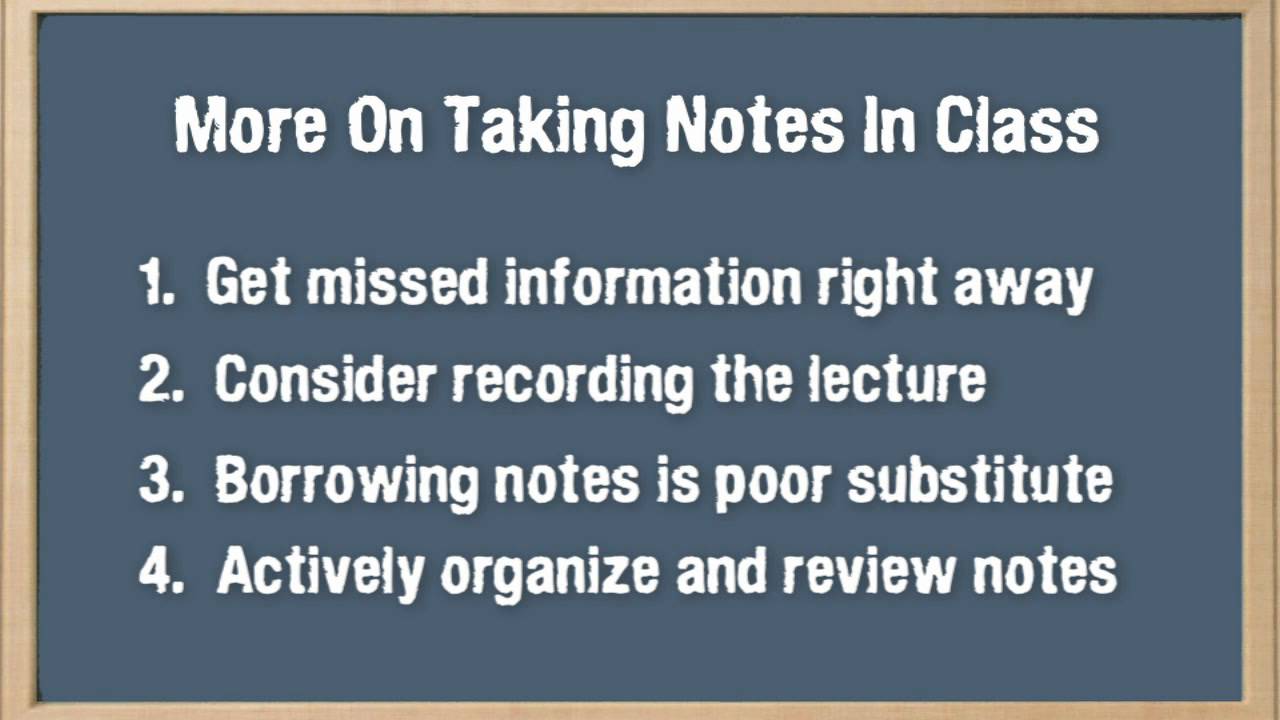
- Note-taking summarizes key points, serves as retrieval cues for missed information, and acts as an orienting task.
- Deep processing during note-taking involves focusing on key concepts, distinctions, and relationships.
- Shallow note-taking, like transcribing lectures verbatim without understanding, is ineffective.
- Handwritten notes offer flexibility, while laptops risk distraction and shallow processing.
- Highlighting can be a deep or shallow processing activity depending on how it's done.
- Shallow highlighting involves marking bold terms or entire passages without understanding.
- Deep highlighting requires reading the text first, then selectively marking key ideas, connections, and distinctions.
- Effective highlighting involves multiple readings and thoughtful decisions about what is truly important.
- Group study can be highly effective if productive strategies and norms are used.
- Treat group study like a business meeting with a clear goal and agenda.
- All members must come prepared, having completed assigned readings and formulated questions.
- The goal is for each member to understand the material well enough to explain it to others.
Key takeaways
- Effective studying is about using the right strategies, not just putting in time.
- Deep processing, which focuses on meaning and connections, is essential for durable learning.
- Actively engaging with material through questioning, mapping, and retrieval is more effective than passive review.
- Note-taking and highlighting are tools that can either promote deep learning or hinder it, depending on your approach.
- The way you practice recalling information should mimic how you will be tested.
- Group study requires structure and preparation to be beneficial; it's easy to fool yourself into thinking you've learned when you haven't.
- Developing effective study habits takes practice and conscious effort but becomes easier over time.
Key terms
Test your understanding
- How does the principle of 'deep processing' differ from 'shallow processing' in the context of studying?
- What are the three main research-based strategies presented for achieving deep processing while reading?
- Why is actively retrieving information from memory considered a more effective study technique than simply rereading notes?
- How can note-taking during a lecture be an example of either deep or shallow processing?
- What steps should be taken to ensure a group study session is productive rather than a waste of time?