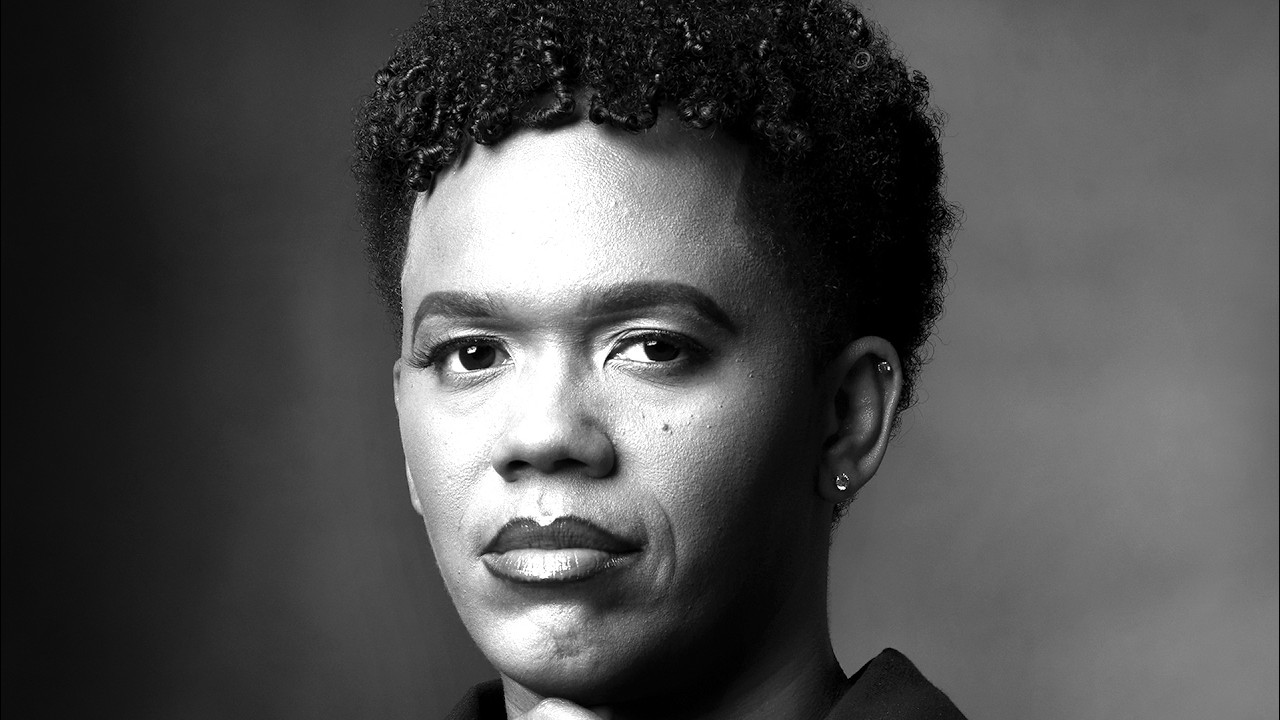
Why Men and Women Are Not Compatible-Princella Clark
Soft White Underbelly
Overview
This video explores the inherent incompatibility between men and women, arguing that biological differences create fundamental conflicts in relationships. It distinguishes between 'relationships,' which are seen as codependent and draining, and 'partnerships,' which are built on wholeness and shared purpose. The speaker introduces the concept of six pillars of independence (mental, emotional, spiritual, financial, physical, sexual) as crucial for individuals to become 'whole' before entering into any partnership. The discussion delves into societal expectations, the differing biological risks and responsibilities between sexes, and the psychological dynamics that often lead to conflict and misunderstanding, suggesting that a lack of education and acceptance of human flaws contribute to relationship failures.
Save this permanently with flashcards, quizzes, and AI chat
Chapters
- The speaker's core belief is that men and women are fundamentally incompatible, leading to relationship conflicts.
- The definition of 'compatible' (existing without conflict) is contrasted with human nature, which inherently involves sexual conflict.
- Attempting to build relationships beyond biological differences leads to persistent conflicting issues.
- This biological incompatibility means men and women must exert significant effort for healthy relationships.
- Modern society conflates 'relationships' and 'partnerships,' causing confusion.
- Relationships are for 'broken' people, built on filling voids and codependent fulfillment.
- Partnerships are for 'whole' people who have met their own needs and bring their gifts to a higher purpose.
- Codependent relationships are draining because one person (the 'black hole') constantly takes energy from the other without reaching equilibrium.
- True adulthood and wholeness are achieved through independence in six key areas.
- Mental independence: the ability to think for oneself, not just passively accept information.
- Emotional independence: managing and channeling emotions constructively, rather than using them for manipulation.
- Spiritual independence: possessing an internal code of ethics and self-discipline, distinct from external religious dogma.
- Financial independence: the ability to provide for oneself without relying on others for basic needs.
- Physical independence: self-sufficiency in health and mobility.
- Sexual independence: disciplined use of sexual energy, viewing it as life force rather than solely for fulfillment.
- Interdependence is the stage where independent individuals connect to contribute their gifts to a larger purpose.
- This level is characterized by value, sovereignty, freedom, and genuine friendship.
- The majority of people operate at the 'bottom' of societal or relationship pyramids, focused on meeting basic needs.
- Partnerships are for those at the 'top' (independent individuals), while relationships are for those at the 'bottom'.
- Men and women have fundamentally different biological roles and risk-taking in reproduction.
- Women bear a significantly higher biological risk and responsibility in reproduction (STIs, pregnancy, child-rearing).
- This biological reality means men are not inherently designed for the immense societal responsibility often placed upon them.
- Societal expectations for men (100% provision, protection, emotional investment) far exceed their biological capacity (estimated at 5%).
- Women often misunderstand men's struggles, viewing them through an idealized lens rather than as humans under pressure.
- Many relationships are built on delusion and fantasy, particularly for women who seek a 'savior' figure.
- Women are described as a thousand times more narcissistic than men, often believing they can abuse others without consequence.
- Men are often pressured to lie or hide their struggles to meet women's idealized expectations.
- Misandry and misogyny often stem from an inability to accept truths about one's own gender's behavior.
- Relationships should serve as mirrors for self-reflection, but people often fail to use them as feedback mechanisms.
- The decline in education and critical thinking skills is a major societal issue, leaving people more like 'animals.'
- Low reading comprehension and a lack of discipline create a recipe for chaos and destruction.
- Artificial intelligence and job displacement will exacerbate these issues, leaving individuals without purpose.
- The speaker is pessimistic about the future of relationships due to these societal trends.
- The most important factor for happy relationships is accepting that humans are fundamentally flawed and imperfect.
Key takeaways
- True compatibility is not about existing without conflict, but about navigating inherent differences with understanding and effort.
- Distinguishing between 'relationships' (codependent) and 'partnerships' (whole individuals) is vital for healthy connection.
- Achieving independence in mental, emotional, spiritual, financial, physical, and sexual areas is a prerequisite for personal wholeness.
- Interdependence, where whole individuals contribute to a higher purpose, is the ideal state for connection.
- Biological differences in risk and responsibility between men and women significantly impact societal expectations and relationship dynamics.
- Accepting human imperfection and avoiding idealized fantasies is crucial for realistic and fulfilling relationships.
- Societal decline in education and critical thinking poses a significant threat to the future of human connection.
Key terms
Test your understanding
- How does the speaker define 'compatibility' and why does this definition lead to the conclusion that men and women are inherently incompatible?
- What is the fundamental difference between a 'relationship' and a 'partnership' according to the speaker, and what are the implications of this distinction?
- Explain the concept of the 'Six Pillars of Independence' and why achieving independence in these areas is presented as essential for personal growth.
- How does the speaker use biological risk-taking in reproduction to argue that societal expectations placed on men are often disproportionate to their capabilities?
- What does the speaker identify as the most uncomfortable truth about women, and how does this relate to relationship dynamics and parenting?