AI-Generated Video Summary by NoteTube
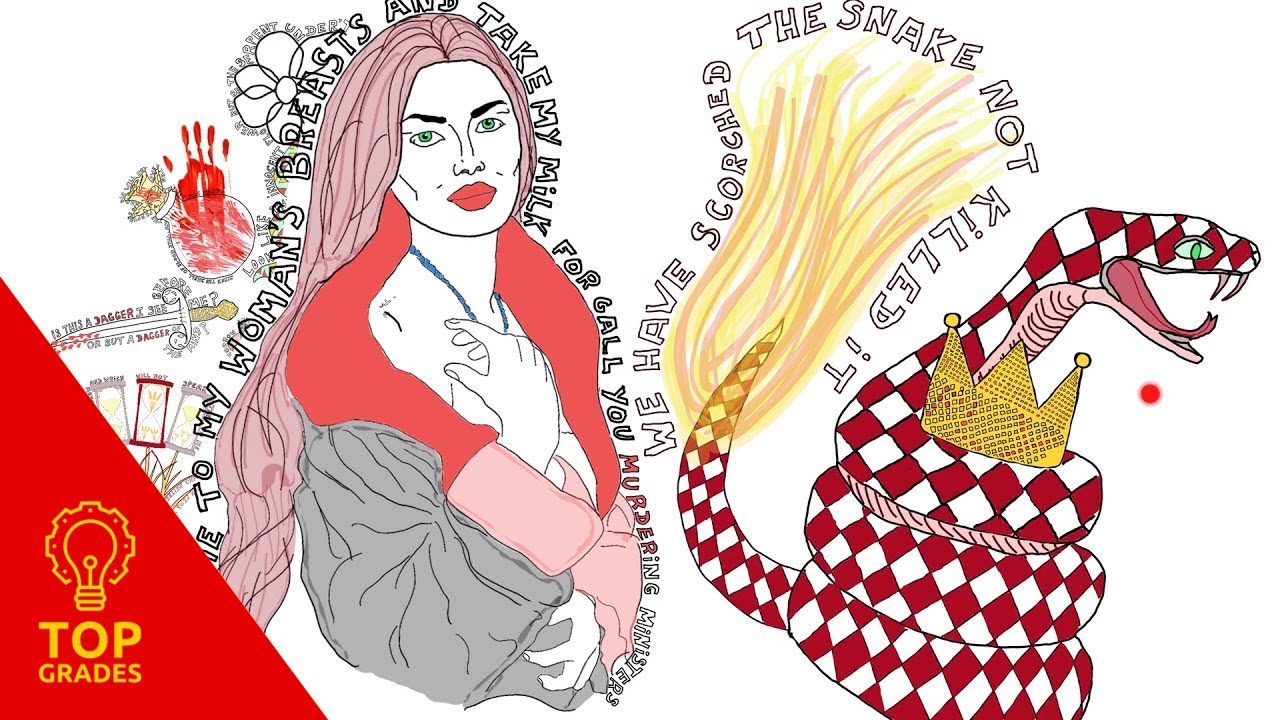
Lady Macbeth Top 9 Quotations (Mr Salles)
Mr Salles Teaches English
Overview
This video analyzes the complex relationship between Macbeth and Lady Macbeth, focusing on nine key quotations to explore their dynamic. The presenter argues that Lady Macbeth is initially the more dominant partner, driving Macbeth's ambition. However, Macbeth eventually eclipses her, exploiting her strength and then discarding her as she succumbs to guilt. The analysis delves into themes of gender roles, power, ambition, and psychological disintegration. It examines how Lady Macbeth's desire to shed her femininity to gain power contrasts with Macbeth's initial hesitation and eventual descent into nihilism. The video also touches upon Shakespeare's political context, suggesting the play serves as a warning against regicide, while also offering a critique of patriarchal society's repression of women. Ultimately, the presenter suggests that Shakespeare uses their tragic marriage to explore the destructive nature of unchecked ambition and the profound consequences of defying moral and divine laws.
This summary expires in 30 days. Save it permanently with flashcards, quizzes & AI chat.
Chapters
- •Focus on the relationship between Macbeth and Lady Macbeth for potential exam questions.
- •Thesis: Lady Macbeth is initially more dominant, but Macbeth exploits her strength and later abandons her.
- •Macbeth's actions are driven by ambition, with Lady Macbeth acting as a catalyst.
- •The consequences of their actions lead to Macbeth's rejection of Lady Macbeth.
- •Quotation: 'Come to my woman's breasts and take my milk for gall you murdering ministers.'
- •Lady Macbeth seeks to shed femininity to gain power in a patriarchal society.
- •She sacrifices her maternal role and desires the power to commit murder.
- •This can be seen as an extraordinary sacrifice driven by grief for a recently deceased child.
- •Quotation: 'Look like the innocent flower but be the serpent under it.'
- •Lady Macbeth instructs Macbeth to appear feminine while harboring evil intentions.
- •This suggests a critique of patriarchal roles and a need for balance.
- •The serpent imagery links Macbeth to Satan and the Garden of Eden.
- •Macbeth writes to Lady Macbeth, acknowledging her as the more dominant partner.
- •He knows she will devise a plan to achieve their ambition.
- •This challenges the idea of Lady Macbeth solely manipulating Macbeth.
- •Macbeth invites her participation, showing his own desire for power.
- •Quotation: 'If you can look into the seeds of time and say which grain will grow and which will not speak then to me who neither beg nor fear your favors.' (Banquo speaking)
- •Macbeth's self-interest is highlighted by his failure to ask about Lady Macbeth's fate.
- •He uses her mental resolve but doesn't fully care for her well-being.
- •The 'we' in 'we have scorched the snake not kill'd it' signifies an initial partnership.
- •Macbeth excludes Lady Macbeth from his plans to kill Banquo.
- •He tells her to be 'innocent of the knowledge,' potentially to shield her from guilt or deny her power.
- •In the banquet scene, Lady Macbeth is forced to take charge but turns on Macbeth, calling him a coward.
- •This creates an irreparable break in their relationship.
- •Quotation: 'Is this a dagger I see before me or a dagger of the mind?'
- •Macbeth's mind begins to disintegrate, symbolized by the dagger hallucination.
- •Lady Macbeth also suffers from hallucinations, particularly in her sleep.
- •Her 'damned spot of blood' symbolizes guilt and fear of eternal damnation.
- •Lady Macbeth retains Christian belief, fearing damnation.
- •Macbeth abandons religious belief, losing fear of afterlife punishment.
- •This suggests Macbeth is more profoundly lost in terms of faith.
- •Shakespeare contrasts their suffering, with Macbeth's being more public and psychological.
- •The play serves as a political warning against regicide, especially for King James I.
- •Shakespeare is interested in the psychology of relationships and the portrayal of women.
- •Lady Macbeth's attempt to escape traditional roles and its consequences are explored.
- •The question arises whether Shakespeare criticizes Lady Macbeth or society's repression of women.
- •Quotation: 'Out, damned spot! Out, I say!'
- •Macbeth has abandoned Lady Macbeth, not hearing her sleepwalking confessions.
- •He seeks a doctor for her, showing a lingering act of care.
- •This scene suggests they still love each other, but the regicide has created an irreparable rift.
- •Quotation: 'Tomorrow, and tomorrow, and tomorrow creeps in this petty pace from day to day.'
- •Macbeth's reaction to Lady Macbeth's death is seemingly without feeling, reflecting his nihilism.
- •He has given up on life, wanting time to accelerate towards his death.
- •He is ready to die, but wishes to do so in battle.
- •Macbeth embraces a nihilistic view: life is pointless.
- •Lady Macbeth's despair stems from believing in an afterlife and wasting her soul's future.
- •Lady Macbeth's death offstage may symbolize society's exclusion of women.
- •The interpretation of Shakespeare's intent—criticizing or supporting patriarchy—is left to the viewer.
Key Takeaways
- 1Lady Macbeth's initial dominance and subsequent decline highlight the destructive nature of ambition.
- 2Macbeth's relationship with Lady Macbeth evolves from partnership to exploitation and abandonment.
- 3Shakespeare uses the characters to explore gender roles and the societal pressures on women.
- 4The play serves as a political warning against regicide and a commentary on the consequences of defying moral order.
- 5Both Macbeth and Lady Macbeth suffer severe psychological deterioration due to their actions.
- 6Macbeth's descent into nihilism contrasts with Lady Macbeth's despair rooted in religious belief.
- 7The tragedy of their marriage lies in the destruction of a once-perfect union by their shared ambition.
- 8Shakespeare's portrayal of Lady Macbeth's offstage death may symbolize the marginalization of women in society.