3:45
What is the Internet?
CodeAI
Overview
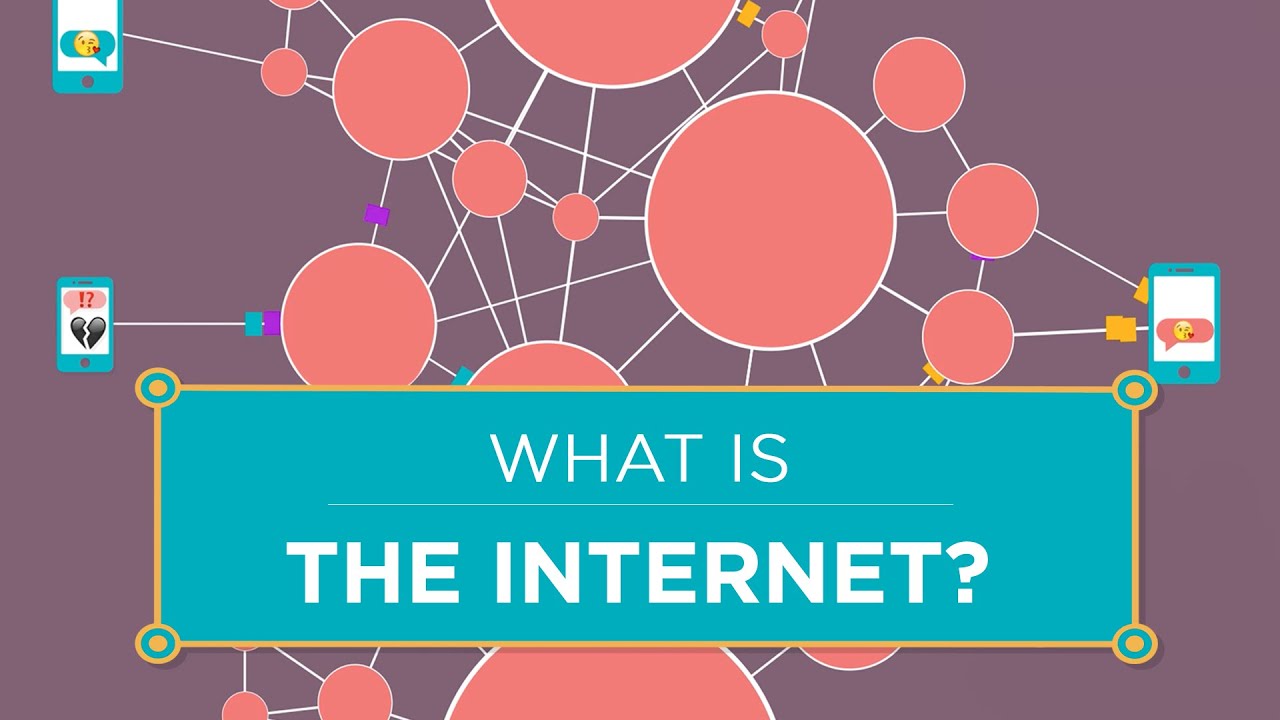
This video explains the fundamental nature of the internet, demystifying its origins and structure. It likens the internet to everyday utilities like plumbing, emphasizing its seamless integration into our lives. The explanation traces the internet's roots to a US Department of Defense project aimed at creating a resilient communication system. Crucially, it highlights that the internet is not centrally controlled but is a vast, distributed network of independently operated networks, driven by the collective goal of enabling universal connectivity and information sharing.
How was this?
Save this permanently with flashcards, quizzes, and AI chat
Chapters
- The internet is a ubiquitous technology that most people use daily without understanding its origins, similar to inventions like the ballpoint pen or flush toilet.
- It functions like a utility, constantly moving information, and is often conceptualized through analogies like plumbing or a cloud.
- Its widespread use means understanding its basic principles can enhance one's interaction with it.
Understanding the internet as a utility helps demystify its complexity and highlights its essential role in modern life, encouraging learners to engage with it more intentionally.
Comparing the internet to the flush toilet or ballpoint pen to illustrate how common, essential inventions are often taken for granted.
- The internet's development began in the early 1970s, stemming from a project called ARPANET (Advanced Research Projects Agency Network).
- ARPANET was a Defense Department research project initiated by Paul Baran.
- The core idea was to create a communication system that could withstand a nuclear attack by breaking messages into blocks and sending them through a resilient, mesh-like network.
Knowing the internet's origin in a defense project reveals its foundational design principles of resilience and distributed communication, which are still critical today.
Paul Baran's concept of breaking messages into blocks and sending them in all directions through a mesh network to ensure survival during an attack.
- There is no single entity in charge of the internet; it is a collection of many independently operated networks.
- The internet's fully distributed nature means no central authority dictates routing, network expansion, or interconnection.
- These decisions are made by network operators based on business interests, all motivated by the goal of ensuring end-to-end connectivity.
- The primary utility of the internet lies in its ability for any device to communicate with any other device, mirroring the global telephone system.
Understanding the internet's decentralized structure is crucial because it explains its robustness, adaptability, and the economic and social forces that drive its growth and accessibility.
The internet is like the global telephone system, where the utility comes from being able to connect any phone to any other phone, and similarly, any device on the internet can connect to any other.
- The internet facilitates a powerful motivator for sharing information: the idea that one's knowledge can benefit others, and vice versa.
- This principle of information sharing is fundamental to how scientific progress is made.
- The internet provides opportunities for developing new applications, expanding network infrastructure to underserved areas, and enabling daily use.
- Embracing and understanding the internet allows individuals to better leverage its capabilities.
Recognizing the internet as a platform for information sharing highlights its potential for innovation, collaboration, and personal growth, encouraging active participation and contribution.
Developing new applications (apps) on a mobile phone that utilize the internet's connectivity to share information or provide services.
Key takeaways
- The internet, like many essential technologies, is often used without a deep understanding of its origins or workings.
- The internet evolved from ARPANET, a US military project designed for resilient communication.
- The internet is not owned or controlled by any single entity; it's a decentralized network of networks.
- The core design principle of the internet is enabling universal connectivity between any two devices.
- Information sharing is a fundamental driver of the internet's utility and growth.
- Understanding the internet empowers individuals to better utilize its potential for innovation and daily life.
Key terms
InternetARPANETPacket NetworkMesh NetworkDistributed SystemEnd-to-end ConnectivityInformation SharingNetwork Operators
Test your understanding
- How does the video compare the internet to everyday utilities, and why is this comparison useful?
- What was the original purpose of ARPANET, and how did it influence the development of the internet?
- Explain why the internet is considered a decentralized system and what that means for its control.
- What is the primary utility of the internet, according to the video, and how is it achieved?
- How does the concept of information sharing contribute to the internet's value and growth?