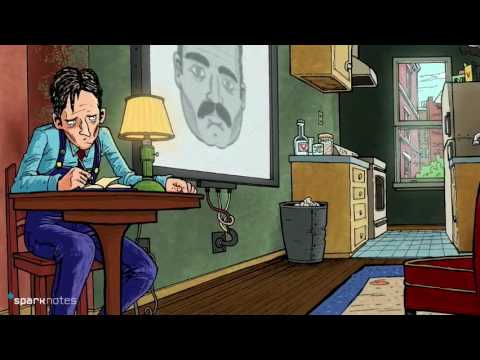
Video SparkNotes: Orwell's 1984 Summary
VideoSparkNotes
Overview
George Orwell's "1984" depicts a dystopian future under a totalitarian regime known as the Party, led by the omnipresent figure of Big Brother. The novel explores the Party's absolute control over every facet of life in Oceania, from daily routines and personal relationships to thoughts and beliefs. Set in a bleak, war-torn London, the story follows Winston Smith, a low-ranking Party member who secretly harbors rebellious thoughts. He begins a forbidden diary and embarks on a dangerous love affair with Julia, seeking an escape from the oppressive surveillance of the Thought Police. Their quest for freedom leads them to believe they've found an ally in O'Brien, only to be betrayed and subjected to brutal torture and psychological manipulation in the Ministry of Love, ultimately aiming to break their spirits and ensure their complete submission to the Party's ideology.
Save this permanently with flashcards, quizzes, and AI chat
Chapters
- Totalitarianism: Government controls all aspects of life, including private thoughts and beliefs.
- Orwell's Inspiration: Based on observations of the Soviet Union and Nazi Germany in the late 1940s.
- Novel's Purpose: To illustrate the potential consequences of totalitarian rule in a free country.
- Setting: A bleak, dilapidated London in Oceania, marked by scarcity and constant war.
- Big Brother: The symbolic leader, whose image is everywhere with the slogan 'Big Brother is Watching You'.
- Thought Police: Enforce Party doctrine through constant surveillance using hidden cameras and microphones.
- Technology: Telescreens in homes allow the government to monitor citizens 24/7 and cannot be turned off.
- Restrictions: Prohibitions on personal relationships, love, and private activities; mandatory participation in Party events like the 'Two Minutes Hate'.
- Winston's Character: A 39-year-old man living a dreary existence, secretly hating the Party.
- The Diary: Winston begins writing a diary, a dangerous act of rebellion and self-expression.
- Historical Revisionism: The Party constantly rewrites history, making it impossible to know the past.
- Key Figures: Winston's initial fear and fascination with Julia and his hope for understanding from O'Brien.
- Julia's Note: Julia secretly expresses her love for Winston, initiating their affair.
- Secret Meetings: They find ways to meet in private, often in the countryside, to escape surveillance.
- Emotional Connection: The affair provides Winston with happiness and a sense of shared rebellion.
- Increased Danger: Their forbidden relationship heightens the risk of severe punishment.
- Seeking O'Brien: Winston and Julia approach O'Brien, believing him to be a fellow rebel.
- The Brotherhood: O'Brien seemingly confirms their belief and introduces them to a book detailing the Party's ideology.
- Capture: Shortly after reading the book, they are arrested by the Thought Police.
- Ministry of Love: Winston is taken to the Ministry of Love for systematic torture and interrogation.
- O'Brien's Role: O'Brien is revealed to be a high-ranking Party interrogator, not a rebel.
- Goal of Torture: The Party seeks absolute power, aiming to control minds completely.
- Psychological Manipulation: Winston is subjected to physical and mental torture, including starvation and electric shock.
- Room 101: The ultimate torture chamber, where Winston confronts his greatest fear (rats) and betrays Julia to save himself.
- Complete Submission: Winston is broken and forced to accept the Party's reality, including '2 + 2 = 5'.
- Release: Winston and Julia are released, but their relationship is destroyed.
- Winston's Change: He becomes a passive, smiling individual, devoid of rebellious thought.
- Final Scene: Winston's ultimate 'love' for Big Brother signifies the Party's total victory.
Key takeaways
- Totalitarian regimes seek absolute control over individuals, extending to their thoughts and emotions.
- Surveillance technology can be a powerful tool for oppression and the suppression of dissent.
- The manipulation of history and information is crucial for maintaining political power.
- Human beings can be psychologically broken to the point of accepting false realities.
- Love and personal relationships are seen as threats by totalitarian governments.
- The struggle for individual freedom and thought is a central theme in resisting oppression.
- Orwell's novel serves as a stark warning about the dangers of unchecked government power.