12:35
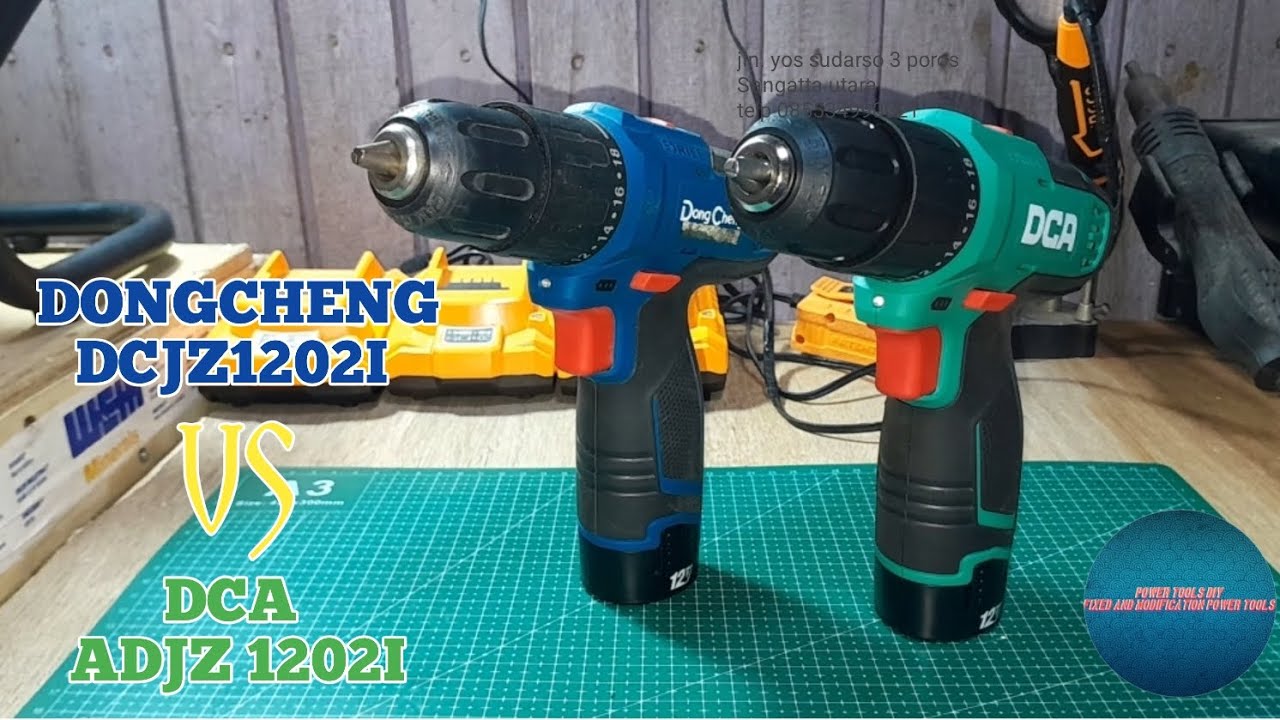
pengujian DONGCHENG DCJZ1202I VS DCA ADJZ1202I
Power tools DIY
Overview
This video compares two 12-volt cordless drills: the Dongcheng DCJZ1202i and the DCA ADJZ1202i. Both are from the same manufacturer but differ in color and price, with the DCA being slightly more expensive. The comparison involves several drilling tests using different bits (fan bit, short auger bit, and 8mm concrete bit with hammer mode) to evaluate performance, heat generation, and durability. The results indicate that the DCA drill generally outperforms the Dongcheng drill, exhibiting better strength and stability, especially under load, despite generating higher temperatures due to its more demanding performance.
How was this?
Save this permanently with flashcards, quizzes, and AI chat
Chapters
- The video compares Dongcheng DCJZ1202i and DCA ADJZ1202i, both 12-volt drills from the same factory.
- The Dongcheng model is cheaper at 395,000 (full set with 2 batteries, charger, bits, and case).
- The DCA model is slightly more expensive at 452,500 (including shipping), with similar included accessories.
- The core question is whether the price difference translates to a performance difference.
Understanding the price-to-performance ratio helps learners make informed purchasing decisions based on their budget and needs.
Dongcheng costs 395,000 with a full set, while DCA costs 452,500 with a similar set.
- The first test uses a fan bit (mata bor kipas) on speed setting 2.
- The goal is to see how deep each drill can go before struggling.
- Both drills use fully charged, interchangeable batteries.
- The DCA drill's initial temperature remained stable (30-31°C), while the Dongcheng drill reached a higher temperature (37-40°C) during this test.
This test reveals how well the drills handle basic drilling tasks and highlights initial differences in heat management, which can affect tool longevity and user comfort.
During the fan bit test, the DCA drill stayed at 30-31°C, while the Dongcheng reached nearly 40°C.
- The second test uses a short auger bit (mata bor auger pendek).
- Due to the 12-volt limitation, speed setting 1 is chosen for this potentially more demanding task.
- The DCA drill was able to drill up to 25mm with this bit.
- The Dongcheng drill's capacity with this bit was significantly less, estimated at around 16mm.
This test assesses the drills' power and torque for more challenging applications, demonstrating their practical limits and how they handle increased load.
The DCA drill successfully drilled 25mm deep with the auger bit, while the Dongcheng only managed about 16mm.
- The final test involves an 8mm concrete bit (mata bor konkrit) using hammer mode on speed setting 2.
- This is a rigorous test of the drills' hammer function and power.
- The video implies the DCA performed better in this mode as well, consistent with previous findings.
Testing in hammer mode for concrete drilling shows the drills' capability for masonry work, a common requirement for many DIY projects.
An 8mm concrete bit was used in hammer mode on speed setting 2 for the final test.
- The DCA drill is concluded to be superior in quality and performance, justifying its higher price.
- The DCA demonstrated greater strength and stability throughout the tests.
- While the DCA ran hotter, this was attributed to its higher performance output, whereas the Dongcheng showed higher initial temperatures and less power.
- The DCA's ability to handle larger depths (25mm vs. 16mm) with the auger bit was a key differentiator.
This summary directly answers the initial question about whether the price difference matters, providing a clear recommendation based on performance metrics.
The DCA's superior performance, evidenced by drilling 25mm with an auger bit compared to Dongcheng's 16mm, makes it the better choice despite the higher cost.
Key takeaways
- Higher price often correlates with better performance and build quality in power tools.
- Interchangeable batteries between brands (if compatible) offer flexibility but don't guarantee equal performance.
- Heat generation during use is an indicator of tool performance; higher heat can mean more work done, but also potential for reduced tool life if not managed.
- Different drill bits and modes (e.g., hammer) test different aspects of a drill's capabilities, requiring varied testing approaches.
- For demanding tasks, a slightly more expensive tool like the DCA may offer better value through superior performance and durability.
- Always consider the specific application (e.g., wood, concrete) when choosing a drill and evaluating its performance.
Key terms
Cordless Drill12-Volt SystemBattery Capacity (Ah)TorqueHammer ModeAuger BitFan BitHeat ManagementPerformance Testing
Test your understanding
- What are the key differences in price and included accessories between the Dongcheng DCJZ1202i and the DCA ADJZ1202i?
- How did the two drills compare in terms of temperature during the initial fan bit test, and what does this suggest?
- Why is the DCA drill considered superior despite running hotter in some tests?
- What specific performance differences were observed when using the auger bit, and why is this significant?
- How can understanding the results of these specific drilling tests help a consumer choose between the two models?