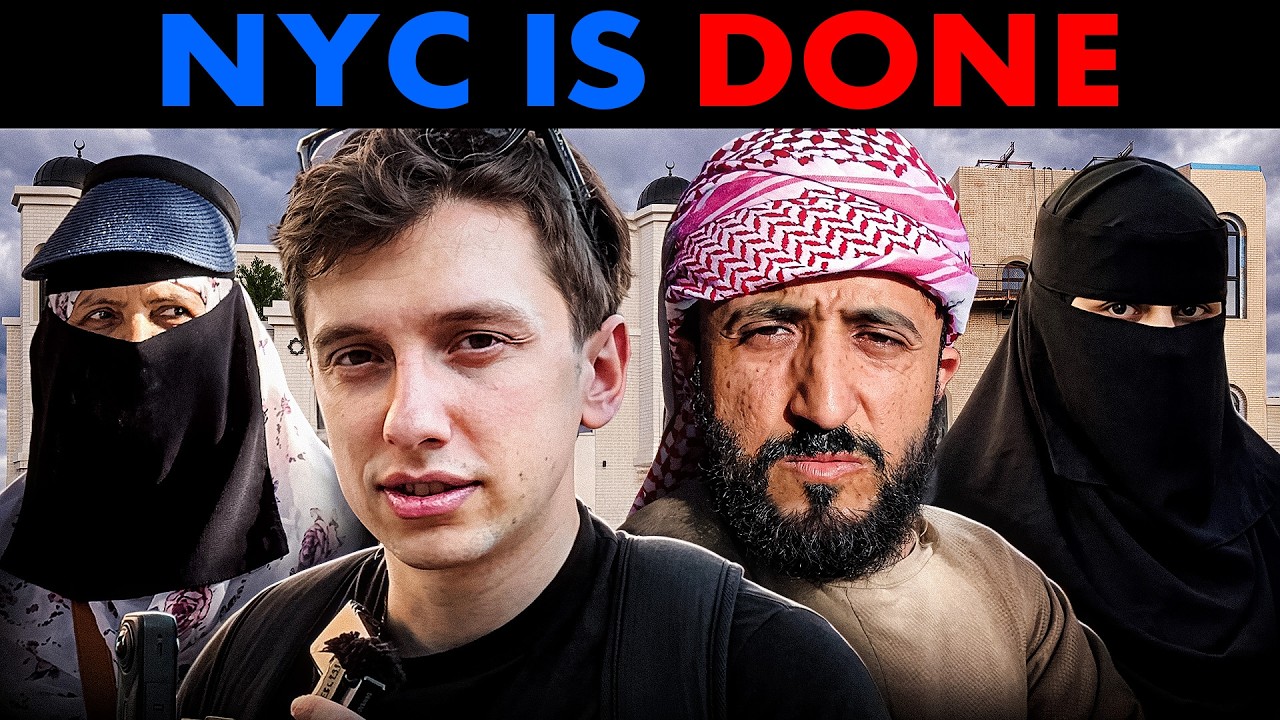
24:15
I Exposed the Islamic Takeover of the Bronx
Nate Friedman
Overview
This video investigates the growing influence of Islamic organizations in the Bronx, New York, focusing on the "Little Yemen" neighborhood and the Bronx Muslim American Society (BMAS). The creator interviews individuals, including one with a Hamas tattoo, and explores the mosque's expansion, its funding, and alleged ties to the Muslim Brotherhood. The video raises concerns about the potential imposition of Sharia law, the political influence of these organizations, and their stance on Western values, contrasting these with the stated goals of peace and community by some members.
How was this?
Save this permanently with flashcards, quizzes, and AI chat
Chapters
- The "Little Yemen" neighborhood in the Bronx is characterized by a significant Yemeni population and Islamic cultural presence.
- Street interviews reveal varying perspectives on the community's growth and its integration with American society.
- A mosque expansion project is underway, funded partly by taxpayer money, sparking questions about its purpose and affiliations.
Understanding the local context and initial reactions from residents is crucial for assessing the broader implications of the community's development.
The street interview with a man sporting a Hamas tattoo, who expresses positive views about the organization and its potential role in American governance.
- Interviews suggest a desire among some individuals for Islamic principles, including Sharia law, to be implemented in Western countries.
- Specific Quranic verses regarding women's testimony and the permissibility of striking a disobedient wife are discussed.
- The video questions whether these interpretations align with or contradict American legal and social norms, particularly concerning women's rights and domestic violence.
This section highlights potential ideological clashes between Islamic legal interpretations and Western democratic values, raising concerns about future societal integration.
A discussion about Quranic verse 4:34, which mentions advising, separating from, or striking a wife, and the interviewee's response that one should consult Imams for guidance on such matters.
- The Bronx Muslim American Society (BMAS) is presented as being an arm of the Muslim Brotherhood, an organization with a history of controversial activities.
- Evidence is cited, including testimony from a convicted terrorist, linking MAS to the Muslim Brotherhood's goal of 'civilization jihad'.
- Concerns are raised about potential conflicts of interest in zoning approvals for the mosque expansion, involving individuals with ties to BMAS.
- Political figures, like Congressman Ritchie Torres, are noted for providing taxpayer funding to the mosque, despite alleged controversial statements made by affiliated individuals.
Understanding the alleged organizational affiliations and political connections is vital for evaluating the potential impact of these groups on local and national policies.
Testimony from Abderrahman Alamoudi stating, 'Everybody knows that the Muslim American Society is the Muslim Brotherhood,' presented as evidence of the organization's foundational ties.
- Imams associated with the mosque have made statements perceived as anti-Christian and anti-LGBTQ+.
- Videos show children singing about beheading 'infidels' at a Muslim American Society event.
- Individuals associated with the mosque have expressed support for Hamas and called for actions similar to the October 7th attacks.
These incidents raise serious questions about the values being promoted within the community and their potential implications for social harmony and security.
A video clip of children singing about beheading infidels at a Muslim American Society event in Philadelphia.
- Some local residents express concerns about the mosque's expansion and potential changes to the neighborhood's character.
- Issues like sidewalk prayer and parking by mosque attendees are cited as immediate neighborhood disturbances.
- There is a perception among some non-Muslim residents that the community is being 'bought out' and its identity altered.
- The video concludes with a warning about the potential loss of American identity if current trends continue.
The differing views and concerns of long-term residents provide a ground-level perspective on the impact of the growing Islamic community and its institutions.
A resident complaining about mosque attendees praying on the sidewalk and using mats, indicating a disregard for public space and local norms.
Key takeaways
- The presence and influence of Islamic organizations, particularly in areas like the Bronx, are growing and warrant scrutiny.
- Allegations of ties between organizations like the Muslim American Society and groups such as the Muslim Brotherhood raise concerns about their long-term agendas.
- Interviews suggest that some individuals within these communities desire the implementation of Sharia law, which may conflict with Western legal and social frameworks.
- Public funding of religious institutions, even for community services, can become controversial when those institutions are perceived to hold ideologies hostile to Western values.
- The interpretation and application of religious texts can vary significantly, leading to differing views on social issues like women's rights and domestic violence.
- Political engagement by religious organizations, including lobbying and seeking government funding, can shape community development and policy.
- The integration of immigrant communities involves complex dynamics, including cultural preservation, ideological differences, and potential impacts on existing social structures.
Key terms
Little YemenBronx Muslim American Society (BMAS)Muslim BrotherhoodSharia LawHamasCivilization JihadTaxpayer FundsQuranImamRitchie Torres
Test your understanding
- What are the primary concerns raised by the video regarding the Bronx Muslim American Society?
- How does the video explore the potential conflict between Sharia law and Western legal principles?
- What evidence is presented to suggest a link between the Muslim American Society and the Muslim Brotherhood?
- What are the differing perspectives on the role of Islamic organizations in the Bronx, as shown through street interviews?
- Why is the funding of the BMAS mosque expansion by taxpayer money considered controversial within the video's narrative?