6:49
GCSE Biology - Cell Types and Cell Structure (2026/27 exams)
Cognito
Overview
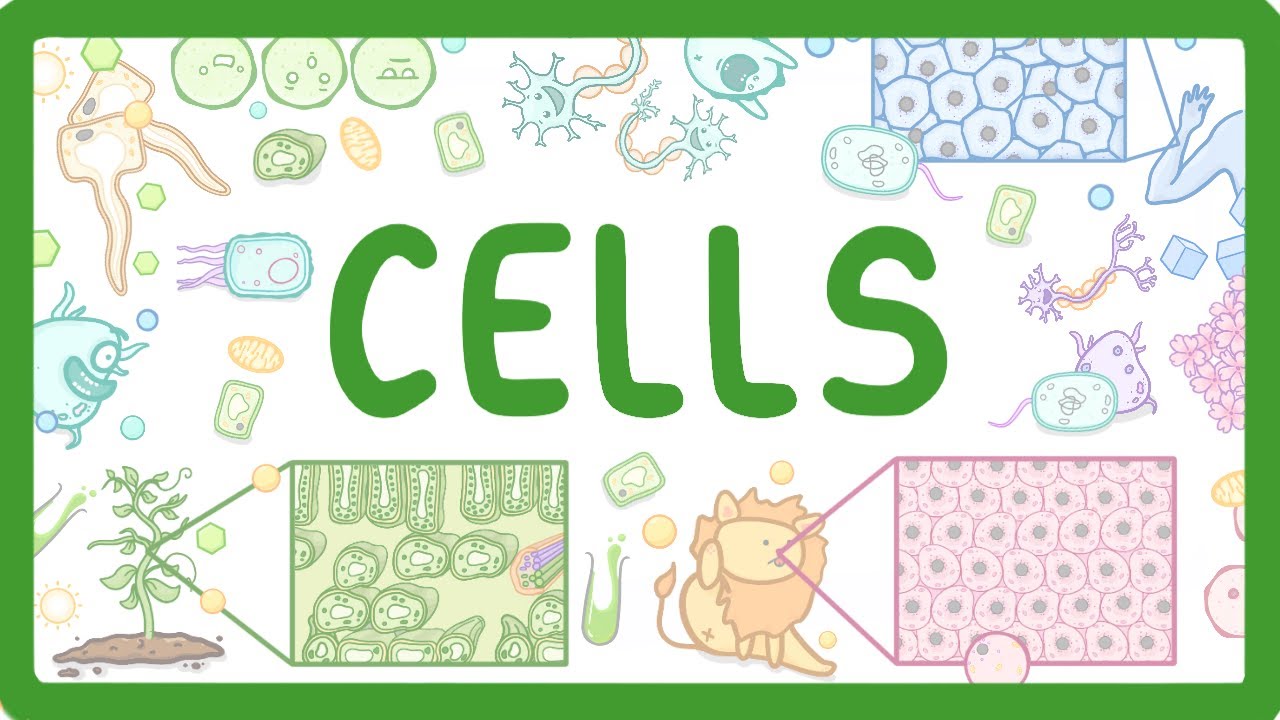
This video explains the fundamental concept of cells as the basic building blocks of life, detailing their structure and function. It compares and contrasts eukaryotic cells (animal and plant) with prokaryotic cells (bacteria), highlighting shared and unique subcellular structures like the nucleus, cell membrane, cytoplasm, mitochondria, ribosomes, cell wall, vacuole, and chloroplasts. The video emphasizes the role of these components in cell survival, energy production, protein synthesis, and photosynthesis, providing a foundation for understanding biological processes.
How was this?
Save this permanently with flashcards, quizzes, and AI chat
Chapters
- Cells are the smallest, independently replicating units of life.
- Multicellular organisms (like animals and plants) use cell division for growth and repair, not reproduction.
- Unicellular organisms (like bacteria) reproduce when their single cell divides.
Understanding cells as the basic units of life is crucial because all biological processes, from growth to reproduction, originate at this fundamental level.
An adult human is made of trillions of cells, including specialized skin cells and blood cells, demonstrating the complexity of multicellular life.
- Both animal and plant cells have a cell membrane to control substance passage, a nucleus containing DNA to direct cell activities, cytoplasm as a gel-like substance for reactions, mitochondria for energy production via respiration, and ribosomes for protein synthesis.
- Plant cells possess a rigid cell wall made of cellulose, providing structural support and preventing bursting from excess water.
- Plant cells typically have a large permanent vacuole storing cell sap (sugars, salts, water) for the cell's needs.
- Plant cells contain chloroplasts, the site of photosynthesis, which use chlorophyll to capture light energy.
Recognizing the shared and distinct structures between animal and plant cells helps explain their different functions and adaptations, such as a plant's ability to produce its own food.
The rigid cell wall in plant cells, made of cellulose, is analogous to the walls of a building, providing essential support and shape.
- Bacterial cells are prokaryotic and unicellular, meaning each cell is a complete organism.
- They share some structures with eukaryotic cells: cell membrane, cell wall, ribosomes, and cytoplasm.
- Unlike eukaryotic cells, bacteria lack mitochondria and chloroplasts, and their genetic material (a circular DNA strand) floats freely in the cytoplasm, not enclosed in a nucleus.
- Some bacteria have plasmids (small DNA rings for extra genes like antibiotic resistance) and flagella for movement.
Understanding the simpler structure of bacterial cells, compared to eukaryotic cells, is key to grasping why they can reproduce rapidly and how they develop resistance to treatments.
The free-floating circular DNA in a bacterium is like a single, essential instruction manual not kept in a protected office (nucleus), allowing for quick access but also vulnerability.
Key takeaways
- Cells are the fundamental units of all living organisms.
- Eukaryotic cells (animal and plant) are complex, containing a nucleus and various organelles.
- Plant cells have unique structures like a cell wall, large vacuole, and chloroplasts that enable photosynthesis and structural rigidity.
- Prokaryotic cells (bacteria) are simpler, lacking a nucleus and membrane-bound organelles, but still possess essential components for life.
- Subcellular structures perform specialized functions, such as energy production (mitochondria) and protein synthesis (ribosomes).
- Differences in cell structure account for the distinct characteristics and capabilities of different organisms.
Key terms
CellEukaryotic cellProkaryotic cellCell membraneNucleusCytoplasmMitochondriaRibosomesCell wallVacuoleChloroplastsPhotosynthesisDNAPlasmidFlagella
Test your understanding
- What is the primary difference in genetic material organization between eukaryotic and prokaryotic cells?
- How do the cell wall and vacuole contribute to the structure and function of a plant cell?
- Why are mitochondria essential for both animal and plant cells, and what process do they facilitate?
- What are plasmids, and what kind of genetic information might they carry in bacterial cells?
- Describe the role of ribosomes in all three cell types discussed (animal, plant, bacterial).