49:44
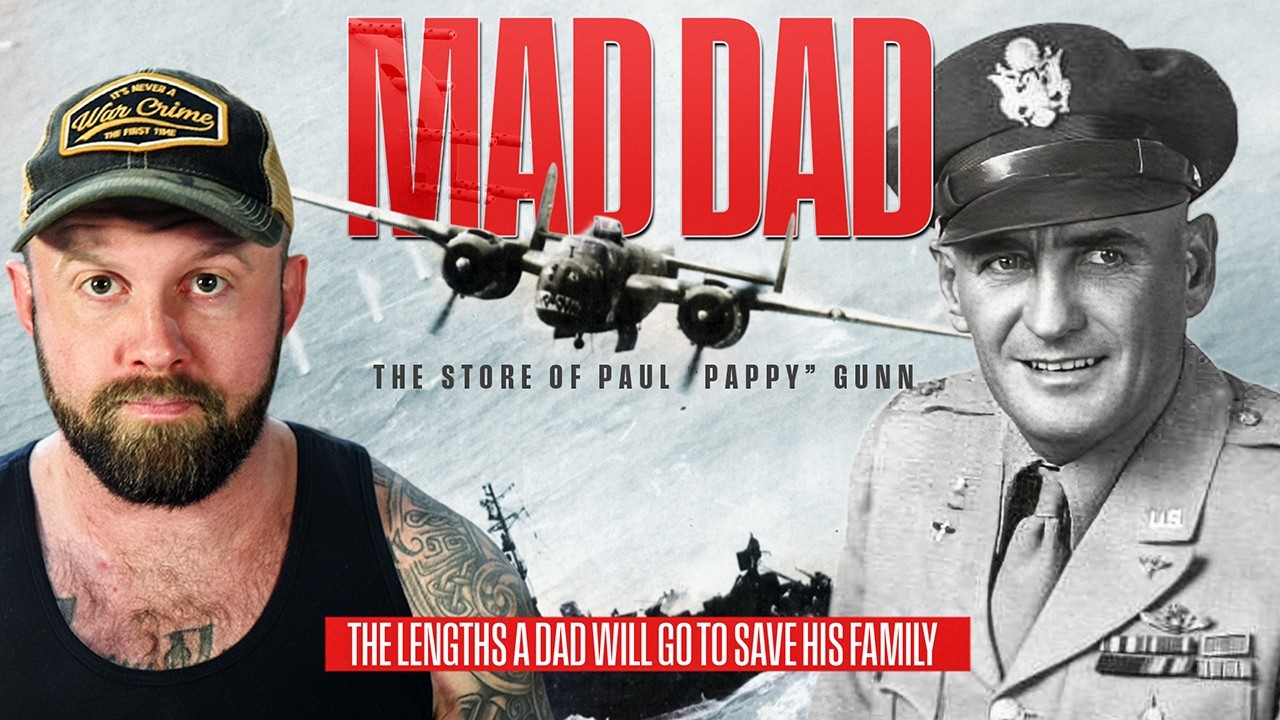
The Most Gangster Dad Of WW2 - Paul "Pappy" Gunn
The Fat Electrician
Overview
This video tells the extraordinary story of Paul "Pappy" Gunn, a retired Navy pilot who became a pivotal figure in the Pacific theater of World War II. When the Japanese attacked the Philippines, Pappy's family was interned, and he embarked on a relentless mission to reunite with them. This quest led him to develop innovative aerial combat tactics and heavily modify aircraft, including the B-25 bomber, significantly impacting the war effort. His ingenuity and determination, even in the face of immense personal loss and bureaucratic obstacles, earned him legendary status and the admiration of top military leaders.
How was this?
Save this permanently with flashcards, quizzes, and AI chat
Chapters
- Paul "Pappy" Gunn, a civilian pilot in Manila, was tasked with evacuating VIPs as the Japanese invasion began.
- He was misled about the defense of Manila and the safety of his family, who were subsequently placed in an internment camp.
- Initially seeking to rescue his family single-handedly, Pappy realized he needed to contribute to the war effort to achieve his goal.
This chapter sets the stage for Pappy's motivation, highlighting the personal tragedy that fueled his extraordinary actions and his shift from individual rescue to contributing to the larger war effort.
Pappy was told Manila would be defended and he'd have time to evacuate his family, but upon reaching Australia, he learned it had fallen with no resistance, and his family was interned.
- Pappy developed exceptional mechanical skills from a young age, even building a fast car from salvaged parts.
- He initially pursued aviation through the Navy but had to become an aviation mechanic due to enlistment status.
- Despite being an enlisted mechanic, he secretly trained as a pilot and eventually became a decorated Navy aviator, pioneering carrier warfare.
Understanding Pappy's early life reveals his innate talent for mechanics and his persistent drive to fly, foreshadowing his later innovations and his willingness to bend rules for his goals.
At 16, Pappy became a bootlegger to earn money to support his mother, demonstrating his resourcefulness and willingness to take risks to achieve his objectives.
- Pappy acquired a fleet of B-25 bombers from the Dutch and heavily modified them, adding numerous machine guns to the nose.
- He developed and implemented the skip bombing technique, which proved devastatingly effective against enemy ships.
- His modifications and tactics were so impactful that engineers initially deemed them impossible, and they laid the groundwork for future aircraft like the A-10 Warthog.
This chapter details Pappy's most significant contributions to aerial warfare, showcasing his innovative spirit and how his unconventional modifications and tactics directly impacted the war's outcome.
Pappy mounted eight .50 caliber machine guns in the nose of a B-25, a modification that engineers said was impossible, to create a formidable ground-attack and anti-ship aircraft.
- Pappy played a crucial role in the Battle of the Bismarck Sea, leading modified B-25s in a devastating attack on a Japanese reinforcement convoy.
- His skip bombing and strafing tactics, combined with other Allied air assets, destroyed the entire convoy, preventing Japanese reinforcements from reaching New Guinea.
- This victory was a major turning point in the Pacific, directly contributing to the liberation of the Philippines and significantly shortening the war.
This battle exemplifies the strategic importance of Pappy's innovations, demonstrating how his actions directly led to a decisive Allied victory and accelerated the war's end.
In the Battle of the Bismarck Sea, Pappy's B-25s, using skip bombing and strafing, sank all eight Japanese troop transports and four destroyers, killing thousands of enemy soldiers.
- General Kenny recognized Pappy's immense value, making him head of special projects and giving him significant resources.
- Pappy continued to innovate, developing new aircraft configurations and tactics, including mounting a tank cannon on a B-25.
- Despite his critical role and personal drive, Pappy's family remained in internment until the liberation of the Philippines, highlighting his enduring personal sacrifice.
- His family also showed incredible resilience, with his children actively participating in intelligence gathering and survival efforts within the camp.
This chapter emphasizes Pappy's lasting legacy and the personal cost of his war efforts, culminating in the reunion with his family and the recognition of their shared resilience.
While Pappy was developing new aircraft, his daughter smuggled intelligence out of the internment camp, and his sons stole food to help their family survive.
Key takeaways
- Personal motivation, like the desire to protect family, can drive extraordinary innovation and courage in extreme circumstances.
- Unconventional thinking and a willingness to challenge established engineering principles are crucial for overcoming seemingly insurmountable obstacles.
- Pappy Gunn's story highlights the importance of adaptability and resourcefulness in wartime, turning available resources into powerful weapons.
- The impact of an individual's actions can be amplified through strategic innovation and effective application of new tactics.
- True leadership involves recognizing and empowering individuals who can achieve results through unconventional means.
- The resilience of the human spirit is evident not only in combatants but also in civilians enduring hardship and contributing in their own ways.
- Sometimes, the most effective solutions come from individuals who are willing to disregard conventional wisdom and 'just make it work'.
Key terms
Paul "Pappy" GunnSkip BombingB-25 Bomber ModificationsPacific TheaterWorld War IIInternment CampAerial Combat TacticsGeneral KennyBattle of the Bismarck SeaA-10 Warthog Predecessor
Test your understanding
- How did Pappy Gunn's personal circumstances influence his approach to contributing to the war effort?
- Describe Pappy Gunn's key modifications to the B-25 bomber and explain why they were significant.
- What was the skip bombing technique, and how did Pappy Gunn adapt it for use in the Pacific?
- Why was Pappy Gunn's story kept secret during the war, and what was the impact of his actions on the liberation of the Philippines?
- How did Pappy Gunn's family demonstrate resilience and contribute to the war effort while he was fighting?