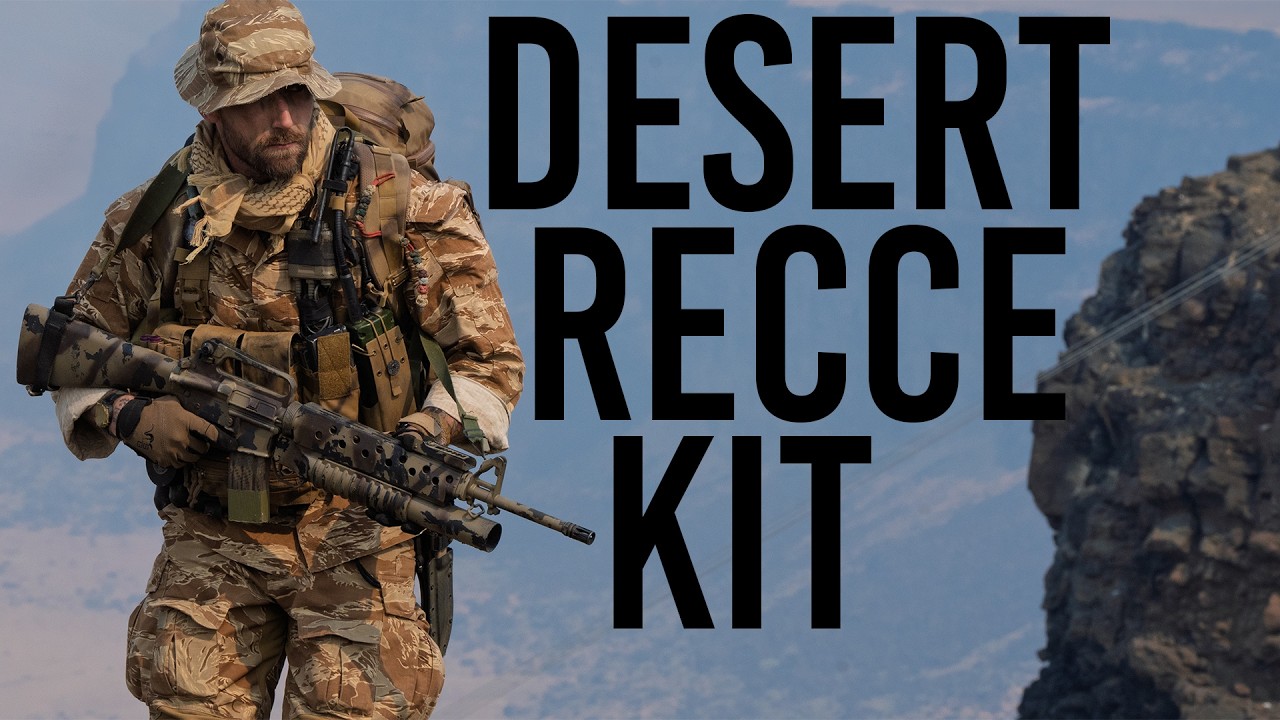
Basics Of Desert Recce / Survival Kit (Becoming Deadly In the Desert)
Garand Thumb
Overview
This video details the essential gear and principles for desert reconnaissance and survival, emphasizing preparedness for harsh environments. It breaks down equipment into three lines: first-line (clothing and immediate-wear items), second-line (mission-critical gear like weapons and optics), and third-line (sustainment items carried in a pack). The presenter, a former Air Force Special Warfare survival instructor, stresses the importance of understanding environmental specifics, conserving water, protecting oneself from the elements, and maintaining operational readiness. The video covers everything from appropriate camouflage and layered clothing to navigation tools, communication devices, medical supplies, and water purification, all crucial for surviving and operating effectively in desert conditions.
Save this permanently with flashcards, quizzes, and AI chat
Chapters
- The desert is an unforgiving environment where nature does not prioritize human survival.
- Historical examples, like a WWII flight crew, demonstrate the horrific consequences of lacking proper preparation in desert survival.
- Being prepared is the difference between returning home and perishing, highlighting the necessity of taking survival knowledge and gear seriously.
- Each environment requires a unique skill set and specific gear for successful operation and survival.
- Three core principles for desert survival are rationing sweat (by wearing protective clothing), not rationing water (as mammals require significant amounts), and carrying mission-essential gear.
- First-line gear includes clothing and items worn directly on the body, crucial for immediate survival and getting home.
- Second-line gear comprises mission-essential equipment carried in a kit.
- Third-line gear is sustainment equipment, typically carried in a pack.
- Desert clothing should be robust (e.g., NyCo blend ripstop) to withstand abrasion from terrain and vegetation, unlike ultralight hiking gear.
- Loose, flowing outer layers create a microclimate, allowing sweat to cool the body effectively rather than evaporating too quickly.
- Covering as much skin as possible is vital; this includes long sleeves (potentially with 'wizard sleeves' for adjustable cooling) and pants that can be bloused into boots or secured to prevent debris entry.
- Base layers (undershirts, underwear, socks) should be quick-drying synthetics or merino wool to prevent hypothermia at night due to rapid temperature drops.
- Gloves are essential for protecting hands from jagged rocks and thorny plants, preventing debilitating cuts and infections.
- Headwear, like a boonie hat, is crucial for preventing heat loss and protecting against severe sunburn, especially on the neck.
- A shemagh offers versatile protection for the head, face (from dust), and neck, and can be adapted for various conditions.
- Eye protection (sunglasses or goggles) is vital to prevent sun blindness and protect against sand and dust, with low-reflection coatings and full seals being important features.
- Camouflage face paint helps break up facial outlines, particularly important in rocky or grassland desert environments.
- A watch (preferably analog with a protector) and a backup compass are key for timekeeping and navigation.
- Writing materials (notepad, pen/pencil) are necessary for terrain sketching and recording observations, especially when electronic devices may fail.
- A multi-tool, like a Leatherman, is indispensable for repairs, first aid (tweezers for spines), and general utility.
- Multi-use items like camo face paint, signal mirrors (or reflective surfaces), and duct tape are crucial for concealment, signaling, and repairs.
- Fire-starting tools (lighter with duct tape) are important, but their use must be considered carefully due to thermal detection.
- Paper maps are essential for navigation, as electronic devices and GPS can be unreliable due to electronic warfare or battery failure.
- A tourniquet and a trauma kit carried on-person are critical for immediate response to severe injuries, ensuring life-saving capabilities are always accessible.
- A fixed-blade knife is a versatile tool for survival tasks, repairs, and self-defense.
- A lensatic compass is a primary navigation tool, and carrying at least one backup is a crucial safety measure ('one is none').
- Collapsible water bags are vital for carrying sufficient water, and water purification tablets (like Potable Aqua) are necessary for making found water sources safe to drink.
- The primary role in reconnaissance is information gathering, not direct combat, but a reliable, camouflaged weapon is necessary.
- Camouflaging firearms and using accessories like kill flashes on optics can reduce the risk of detection through reflection.
- Observation devices like binoculars are crucial for reconnaissance, and understanding fieldcraft (e.g., using the sun for concealment) is as important as technology.
- Grenades (smoke for concealment, incendiary for disabling equipment) and specialized ammunition (e.g., for drone defense) provide tactical options.
- Communication devices, such as encrypted radios and hearing protection earpieces, are vital for coordination, but awareness of electronic warfare threats is paramount.
- A robust backpack (e.g., Mystery Ranch) is needed to carry sustainment gear, and camouflage techniques like spray painting can improve concealment.
- Load-bearing straps (chest and hip) help distribute weight effectively, reducing fatigue during long movements.
- Ranger beads are used for pace counting to aid navigation over distance.
- Sufficient water carrying capacity (e.g., 3-7 liters per day) is critical, with water bladders being a practical option, though insulation may be needed.
- Sustainment items include extra socks and underwear, a wind/weather layer for cold nights, thermal blocking tarps for shelter and signature mitigation, and food (carbohydrate-rich, low-protein to conserve water).
- Specialized tools like entrenching tools are valuable for digging shelters or burying waste, and trash bags can be used for caching or disposal.
- Line kits (paracord) are versatile for building shelters, repairs, and even emergency medical use.
- Basic medical supplies (foot powder, moleskin, lip balm, common medications) are crucial for maintaining health and preventing minor issues from becoming major problems.
- Key desert survival principles are: avoid overheating (sun will kill you), manage sweat and water intake carefully (do not ration water), and carry all necessary mission gear.
- Understanding the specific characteristics of different desert environments (e.g., Atacama vs. Syria) is vital for tailoring gear and tactics.
Key takeaways
- Desert survival hinges on meticulous preparation, understanding that the environment is indifferent to human life.
- Effective desert gear strategy involves layering: first-line for immediate protection, second-line for mission tasks, and third-line for sustainment.
- Conserving body moisture by managing sweat and avoiding rapid evaporation through appropriate clothing is as critical as direct water intake.
- Never ration water; mammals require significant hydration, and dehydration can rapidly incapacitate or kill.
- Navigation relies on both technology (compasses) and fundamental skills (pace counting, map reading), especially given the unreliability of electronics in hostile environments.
- Personal protection extends beyond clothing to include headwear, eye protection, gloves, and meticulous attention to preventing cuts and infections.
- Multi-use tools and adaptable gear, like shemaghs and duct tape, offer significant advantages in resource-scarce environments.
- Understanding and mitigating thermal signatures is crucial for avoiding detection, especially with the prevalence of advanced surveillance technology.
Key terms
Test your understanding
- Why is wearing loose, full-coverage clothing generally more effective for desert survival than wearing minimal clothing?
- What are the three core principles for survival in a desert environment as outlined by the presenter?
- How does electronic warfare impact the reliability of GPS and radio communications in a desert scenario, and what are the implications for gear selection?
- Describe the importance of 'first-line gear' and provide at least three examples of essential items within this category for desert survival.
- Explain the concept of 'rationing sweat' and how it relates to clothing choices and microclimate creation in hot, arid environments.