Ben Affleck’s Turbulent Year: Navigating Grief & The Art of Not Caring
One More Question
Overview
This interview with Ben Affleck delves into his personal reflections on navigating grief, the evolving media landscape, and his approach to filmmaking and career choices. He discusses the ephemeral nature of public perception, the importance of prioritizing family over career demands, and the philosophy behind his production company, Artists Equity. Affleck also shares insights into his recent AI venture, its implications for the film industry, and his perspective on the future of filmmaking in the age of artificial intelligence. The conversation touches upon his acting roles, the significance of collaboration, and the profound impact of personal loss on his outlook on life and work.
Save this permanently with flashcards, quizzes, and AI chat
Chapters
- Public scrutiny and tabloid attention can be intense and often based on rumors that are quickly forgotten due to cultural amnesia.
- The sheer volume of media and online content leads to a rapid cycle of attention, where outrage and scandals become ephemeral.
- Despite the intensity, there's a sense of relief in realizing that public perception is fleeting and that tomorrow brings new subjects of attention.
- Affleck notes a generational shift, where younger actors face even more overwhelming scrutiny due to the proliferation of media channels.
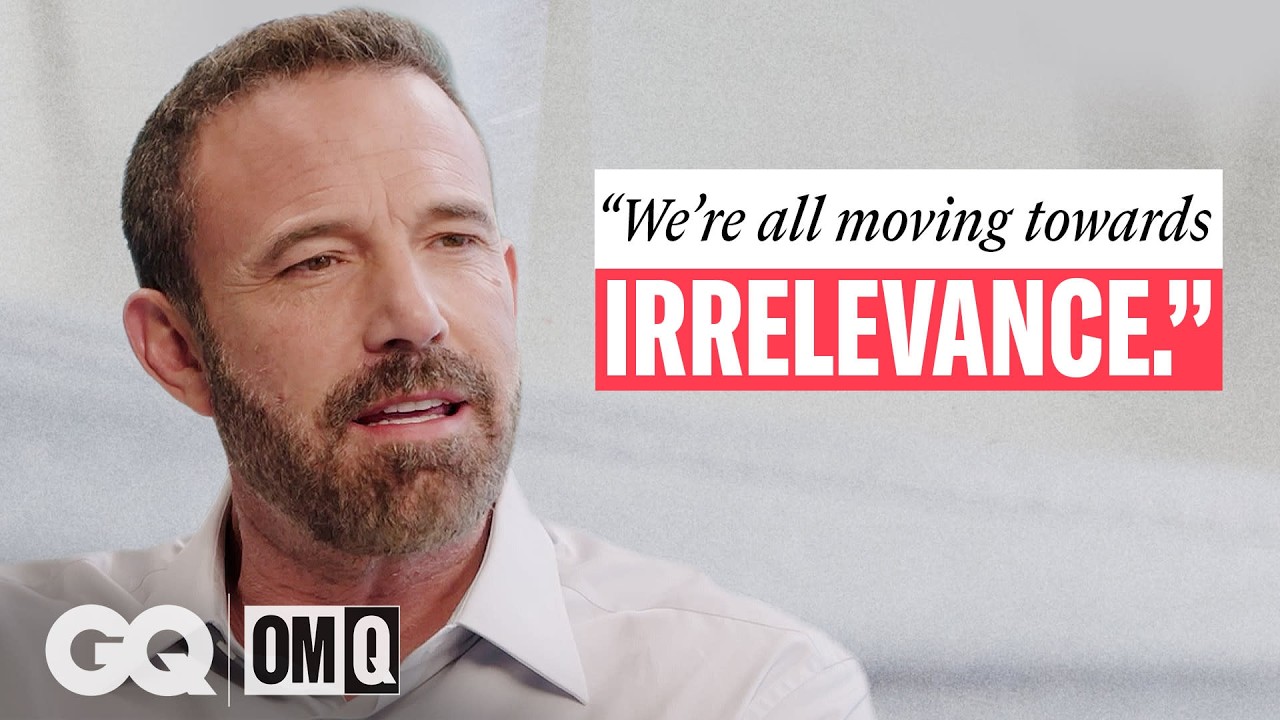
- Affleck expresses a desire for irrelevance as he ages, viewing it as a more appealing state than constant relevance, which invites dissection and debate.
- He prioritizes his role as a father, consciously structuring his life to be present for his children's development, even if it means turning down certain career opportunities.
- The experience of being a divorced dad with shared custody reinforced the importance of being present during his children's formative years.
- He contrasts this with his younger self's perception of older age, highlighting how priorities shift with life experience.
- Artists Equity is founded on the principle of fairness and equity, aiming to reward those who take risks on passionate, potentially unconventional projects.
- The model treats key creative personnel like investors, offering them a stake in the film's success, rather than the traditional Hollywood model of upfront payment and separation.
- This approach aligns incentives, ensuring that actors, directors, and crew are motivated by the project's success and have a greater sense of authorship and authority.
- The company seeks to ensure that in success, people are actually compensated, countering a history of unfulfilled promises in the industry.
- The desire for shared experiences and entertainment outside the home remains strong, making theatrical releases relevant.
- However, the bar for what constitutes a must-see theatrical event has been raised, requiring exceptional filmmaking and compelling content.
- There's a distinction between content suited for theatrical release, streaming, or other platforms like YouTube, and value judgments are not attached to these distinctions.
- Netflix's massive subscriber base offers a significant advantage in reaching a broad audience, including those who may not frequent theaters.
- Affleck embraces the concept of the 'tarnished leading man,' finding characters with imperfections and lived experiences more interesting to play.
- He believes that familiarity can lead audiences to take actors for granted, and taking risks is essential to avoid becoming stale.
- Aging can make actors more compelling camera subjects, suggesting a depth and experience that resonates more than youthful callowness.
- The ability to draw from personal life experiences enriches performances, especially as one ages and accumulates more life events.
- Experiencing the death of both parents within a short period is a profound and life-altering event.
- Grief brings up childhood memories, re-evaluates parental appreciation, and forces contemplation of one's own mortality and legacy.
- Life's brevity becomes starkly apparent, emphasizing the need to be present and make conscious choices about how time is spent.
- Unresolved issues and regrets from the past become more poignant when faced with the finality of loss.
- Affleck's AI venture, InterPositive, aims to capture generative AI technology for filmmakers, ensuring they retain control.
- He recognized the potential of AI early on but also identified limitations in current models, particularly regarding control and consistency for filmmaking purposes.
- The company focused on building a robust, proprietary dataset to train AI, avoiding reliance on data scraped from other artists' work.
- The goal is to democratize AI tools for artists, preventing them from being disintermediated and ensuring responsible use, not replacing human creativity.
- Affleck believes that trivial matters, petty disputes, and resentments are a waste of time and are forgotten at the end of life.
- He emphasizes the importance of resolving conflicts and being present for loved ones, as time is finite and relationships are paramount.
- The experience of loss has led him to make different decisions, prioritizing availability and connection over work demands.
- Ultimately, he believes that how one spends their days and who they are with defines their life experience more than career achievements.
Key takeaways
- Public perception is largely ephemeral, and focusing on personal values and relationships is more enduring than seeking external validation.
- Prioritizing family and presence, especially during children's formative years, is a conscious choice that shapes life's trajectory.
- Fairness and equity in creative industries can be fostered through business models that align incentives and reward collaboration.
- The film industry is adapting to new distribution models, requiring a nuanced understanding of theatrical, streaming, and other platforms.
- Embracing imperfections and lived experiences, both personally and in characters, leads to more compelling and authentic performances.
- Confronting mortality and loss can be a powerful catalyst for re-evaluating life's priorities and cherishing present moments.
- Generative AI presents both opportunities and challenges for creatives; responsible development and artist control are crucial.
- True fulfillment in life comes from meaningful relationships and how one spends their time, not solely from career accomplishments.
Key terms
Test your understanding
- How does Ben Affleck describe the impact of cultural amnesia on public perception of celebrities?
- What is the core philosophy behind Artists Equity, and how does it differ from traditional Hollywood models?
- Why does Affleck express a desire for 'irrelevance' as he ages, and how does this relate to his career choices?
- What are the primary concerns and potential benefits of generative AI in filmmaking, according to Affleck?
- How has experiencing significant personal loss influenced Affleck's perspective on his career and life priorities?