45:10
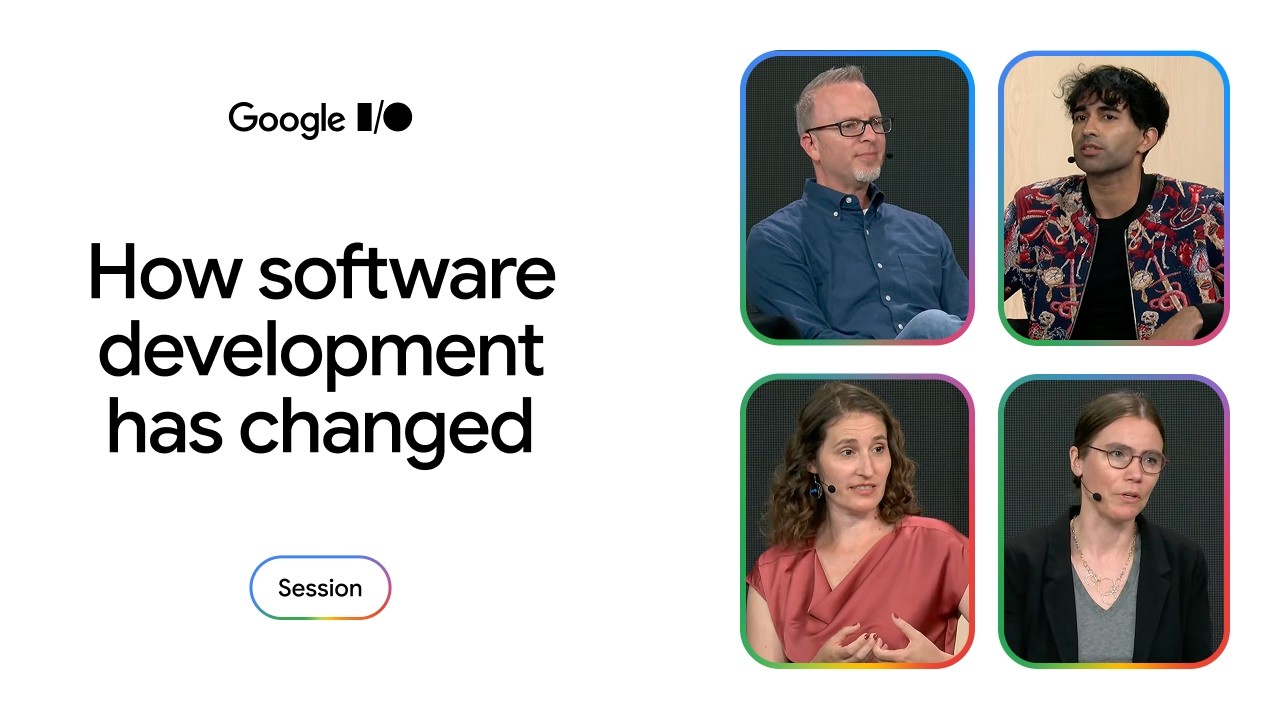
A fireside chat on the evolution of the developer craft
Google for Developers
Overview
This fireside chat explores the evolving role of software engineers in the age of AI. The discussion centers on how seniority is redefined, the blurring lines of development tasks across different roles, and the essential skills needed to remain relevant. Experts emphasize the importance of continuous learning, adapting to new tools and methodologies like agentic engineering, and maintaining critical thinking to avoid cognitive surrender. The conversation highlights practical advice on skill development, tool adoption, and building new habits to leverage AI effectively while ensuring high-quality, sustainable software development.
How was this?
Save this permanently with flashcards, quizzes, and AI chat
Chapters
- Seniority is shifting from solely solving complex problems to understanding code others cannot, emphasizing clarity and strong engineering fundamentals as a base for AI.
- Senior engineers still excel at breaking down problems, performing trade-off analysis (e.g., security vs. performance), and understanding business needs.
- There's a growing need to upskill junior engineers rapidly to meet the demands of modern development, making everyone a 'senior' in some capacity.
- Hiring criteria for senior engineers now include comfort with AI tools, a proactive approach to staying updated, and strong curiosity about new technologies.
Understanding the evolving definition of seniority and engineering roles is crucial for career progression and for effectively mentoring and developing teams in the current technological landscape.
A senior engineer's value is now as much about understanding complex, AI-generated code as it is about writing it from scratch.
- As AI tools lower the barrier to entry for coding, roles like Product Managers and Designers are increasingly contributing to prototype development.
- This shift means traditional software engineers may spend less time on initial coding and more on design docs, documentation, or refining AI-generated outputs.
- Cross-functional teams are seeing members experiment with AI, leading to unexpected role-swaps, such as UX researchers writing code and engineers focusing on documentation.
- The core idea is that everyone can become a 'builder' with AI, combining diverse skills (UX, product, coding) in novel ways.
Recognizing that development tasks are no longer confined to traditional roles prepares engineers for collaborative environments and helps them adapt their own skill sets.
In one team's experiment, software engineers focused on design docs and documentation while UX researchers wrote code, demonstrating a fluid exchange of tasks facilitated by AI exploration.
- Continuous learning and curiosity are paramount; engineers must intentionally carve out time to experiment with new tools and techniques.
- There's a need to 'de-skill' from outdated practices or over-reliance on specific tools (like IDE customization) to embrace new workflows.
- Focus should shift from deep syntax knowledge to understanding concepts, strengths, and weaknesses of various languages and tools.
- Key areas for reskilling include AI architecture, understanding how agents should interact, and framing problems effectively for AI tools.
Proactively managing skill development and unlearning old habits is essential for maintaining relevance and effectiveness in a fast-evolving technological landscape.
Instead of mastering every IDE setting, engineers should focus on understanding the conceptual strengths of different programming languages and tools, allowing them to switch contexts more easily.
- Cognitive debt occurs when deferring problem-solving to AI erodes one's own understanding and memory.
- Cognitive surrender is the natural progression where individuals blindly accept AI outputs without critical thinking, leading to a loss of debugging skills and critical analysis.
- Developers must actively engage with AI-generated code, understanding the 'why' behind its decisions, to avoid becoming passive consumers of technology.
- Quality in software development now encompasses system design, user problem-solving, and maintainability, not just lines of code.
Preserving critical thinking and deep understanding is vital to ensure the quality and reliability of software, preventing a decline in engineering expertise.
Instead of blindly merging AI-generated code, developers should take time to understand the reasoning behind the AI's suggestions, ask clarifying questions, and ensure the output aligns with project goals.
- Shift from a 'faster shipping' mindset to 'mutual amplification' with AI tools, where both the developer and the AI improve over time.
- Establish habits like documenting learnings, identifying mistakes, and sharing insights to continuously refine AI interactions and personal skills.
- Treat AI tools as 'adversarial mentors' that challenge your work, identify missed aspects, and push for higher quality, rather than just assistants.
- Focus on 'spec-driven development,' clearly articulating the desired end-state and problem to solve, rather than getting lost in syntax or specific tool details.
Cultivating new daily habits is key to effectively integrating AI into workflows, fostering continuous improvement, and ensuring that AI enhances, rather than hinders, developer productivity and quality.
A developer might end each coding session by asking their AI assistant: 'What did we miss? What are the potential objections to this approach?' to proactively identify weaknesses.
- The rapid proliferation of new tools and frameworks can lead to FOMO (Fear Of Missing Out); a strategy of learning one new tool per month can maintain sanity.
- Prioritize learning tools that solve actual problems you face, rather than chasing every new trend.
- Leverage teammates, newsletters, and curated relationships with smart people for staying informed, rather than relying solely on social media.
- Allocate an 'innovation budget' of time for experimenting with new technologies, focusing on those that offer novel solutions rather than converging on similar UX patterns.
A structured approach to learning and tool adoption is necessary to navigate the overwhelming landscape of new technologies without burnout, ensuring continuous growth.
Instead of trying to learn every new AI framework released weekly, a developer might dedicate a month to deeply understanding and applying one specific framework to a real project problem.
- The shift towards AI-assisted development requires an identity and mental model change, moving from writing code to defining intentions and specifications.
- Developers need to give up some control over the exact path code takes, focusing instead on the desired end-state and problem-solving.
- This transition elevates thinking from syntax and libraries to the core problem, requiring clear and precise communication with AI tools.
- Quality is redefined to encompass the entire system, user needs, and trade-offs, moving beyond just individual lines of code.
Embracing this fundamental shift in how we approach development is crucial for effectively leveraging AI and evolving into more strategic engineers.
Instead of writing detailed code, a developer might write a comprehensive prompt or specification that clearly outlines the desired functionality, constraints, and quality attributes for an AI to generate the solution.
Key takeaways
- Seniority in engineering is evolving beyond just coding prowess to encompass understanding complex systems and guiding AI.
- AI tools are lowering the barrier to entry, making development a more collaborative and cross-functional effort.
- Continuous learning and adaptability are non-negotiable skills for staying relevant in the tech industry.
- Actively combat cognitive surrender by critically engaging with AI outputs and understanding the underlying principles.
- Develop new habits focused on 'mutual amplification' with AI, treating tools as partners for growth and quality improvement.
- Manage the overwhelming pace of new tools by being intentional, focusing on problem-solving, and leveraging curated learning resources.
- The developer's role is shifting towards defining intent and problem-solving, with AI acting as a powerful execution engine.
- Prioritize quality and understanding over sheer velocity to build sustainable and effective software solutions.
Key terms
Senior EngineerAgentic EngineeringCognitive DebtCognitive SurrenderMutual AmplificationSpec-Driven DevelopmentTrade-off AnalysisReskillingDe-skillingTooling OverloadPrompt Engineering
Test your understanding
- How has the definition of a 'senior engineer' changed with the advent of AI, and what core skills remain essential?
- What are the implications of blurring role boundaries in development teams, and how can engineers adapt to this shift?
- Explain the concepts of cognitive debt and cognitive surrender, and describe strategies to prevent them when using AI tools.
- What new habits should developers cultivate to effectively collaborate with AI and ensure continuous improvement in their work?
- How can developers manage the constant influx of new tools and technologies without experiencing burnout or FOMO?