18:38
Officer Locked Out of Secured Facility During Active Traffic Stop
Blue Call
Overview
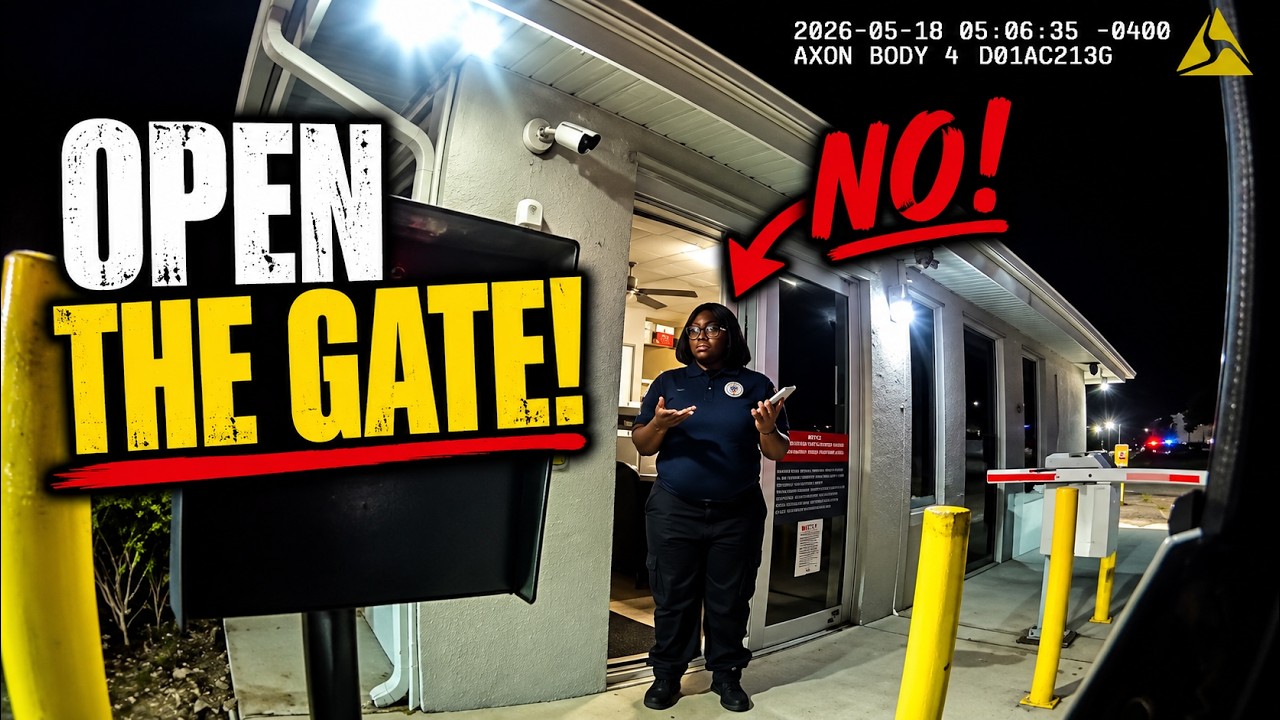
This video documents a traffic stop that escalated when a security guard denied a police officer access to a secured facility. The officer was in pursuit of a vehicle that had violated traffic laws and entered the facility. The security guard, citing company policy and the need to contact a supervisor, refused to open the gate, leading to a confrontation and the officer's threat of arrest for obstruction. The incident highlights the conflict between following protocol and obeying lawful orders during an active law enforcement situation, ultimately resulting in the security guard receiving a notice to appear in court instead of immediate arrest.
How was this?
Save this permanently with flashcards, quizzes, and AI chat
Chapters
- An officer initiated a traffic stop for a vehicle running a stop sign.
- The suspect vehicle entered a secured business facility through a gate.
- The security guard refused to open the gate for the pursuing officer, despite the officer identifying himself and the ongoing traffic stop.
- The officer warned the security guard that refusal could lead to arrest for obstruction.
This chapter establishes the core conflict: a law enforcement officer's pursuit being actively blocked by a private security guard, setting the stage for a legal and procedural dispute.
The officer repeatedly stated, 'Open the gate. Open the gate. Open the gate,' while the security guard responded, 'I can't.'
- The security guard insisted on calling a supervisor before granting access, citing policy.
- The officer emphasized that he was conducting an active investigation and that the guard's actions were impeding it.
- A police supervisor arrived on the scene to assess the situation.
- The supervisor informed the security guard that she did not have the authority to stop a fresh pursuit and that her actions constituted obstruction.
This section demonstrates how initial non-compliance can escalate into a more serious legal situation, involving higher authorities and clarifying the legal ramifications of the guard's actions.
The police supervisor stated, 'You don't have the authority to stop fresh pursuit in the state of Florida.'
- The security guard explained that she was trained not to let just anyone in and had to follow protocol by asking questions and contacting a supervisor.
- She believed that even in this situation, she had to follow procedure before granting access.
- The guard mentioned that her supervisor was approximately 45 minutes away and that she was the only one on duty.
- The guard expressed concern about losing her job due to violating procedures.
This chapter explores the security guard's perspective, highlighting the tension between established company policy and the immediate, lawful demands of law enforcement during an emergency.
The guard stated, 'We're not supposed to let you guys in until we ask questions what's going on. We have to ask questions, and then we have to follow protocol.'
- The police supervisor decided not to arrest the security guard immediately but issued a notice to appear in court for obstruction.
- The officer explained that if the gate had been opened, the suspect would have been apprehended immediately.
- The officer clarified that refusing entry during a fresh pursuit is unlawful and impedes law enforcement.
- The security guard was given a court date and released, with the understanding that failure to appear would result in a warrant.
This chapter details the outcome of the incident, emphasizing the legal consequences for obstructing law enforcement and reinforcing the importance of understanding when protocols must yield to lawful orders.
The officer explained, 'Had you opened the gate, then we wouldn't be having this conversation.'
Key takeaways
- Law enforcement officers have the authority to pursue vehicles into secured areas during active traffic stops or fresh pursuits.
- Security personnel must prioritize lawful orders from law enforcement over standard operating procedures when faced with an active pursuit.
- Obstructing a law enforcement officer in the performance of their duties can lead to charges of obstruction or resisting arrest.
- Understanding the concept of 'fresh pursuit' is crucial for security personnel operating gates to secured facilities.
- While following company policy is important, it does not supersede legal obligations to cooperate with law enforcement during an active investigation.
- Failure to comply with a lawful order from a police officer can result in immediate arrest or a notice to appear in court.
- The presence of blue lights and sirens is a clear indicator of an emergency situation requiring immediate compliance from security.
Key terms
Traffic StopSecured FacilityGate AccessFresh PursuitObstruction of JusticeLawful OrderSupervisorNotice to AppearProtocolLaw Enforcement Action
Test your understanding
- What are the legal implications for a security guard who refuses to open a gate for an officer in fresh pursuit?
- Why is it critical for security personnel to distinguish between a routine investigation and an active pursuit when managing access to a facility?
- How should a security guard respond when an officer with active lights and sirens demands entry into a secured area?
- What is the difference between following company policy and obeying a lawful order from law enforcement in a situation like this?
- Under what circumstances might a security guard be issued a notice to appear in court rather than being immediately arrested?