Inside the Final Ball From Surface to Core | FIFA Final'26
The 500Hz Pitch
Overview
This video explains the evolution of the FIFA World Cup final match ball, moving from a purely aesthetic customization to a sophisticated piece of technology. Initially, balls were distinguished by color and design to commemorate specific tournaments and host nations. However, the increasing speed of the game necessitated a shift towards embedded technology. The 2026 ball, for instance, features not only external customization but also an internal inertial measurement unit (IMU) sensor that tracks ball movement at high frequency. This data aids referees in making critical calls, such as offside and penalty decisions, by providing objective evidence of ball contact and trajectory. The modern final ball thus serves as both a historical artifact and an active data-generating participant in the game.
Save this permanently with flashcards, quizzes, and AI chat
Chapters
- The final match ball has evolved from a simple visual distinction to a unique artifact representing a specific game.
- FIFA began customising final balls 20 years ago, starting with color variations in 2006.
- Over time, designs incorporated visual elements honoring host nations and the trophy.
- Surface-level aesthetics became insufficient as the game's speed outpaced human perception.
- The 2026 ball features a red, green, and blue design honoring the host nations: Canada, Mexico, and the United States.
- Specific details like team names and venue are applied shortly before the match.
- Industrial-grade precision, using laser alignment, is required to permanently apply text onto the curved synthetic surface.
- This process transforms standard balls into unique, game-specific artifacts.
- The most significant innovation is the hidden inertial measurement unit (IMU) sensor at the ball's core.
- This sensor is suspended by a tension harness and tracks acceleration and movement across three axes.
- It operates at a high frequency (500 Hz), capturing data 500 times per second.
- This data is crucial for semi-automated offside technology and identifying the exact kick point.
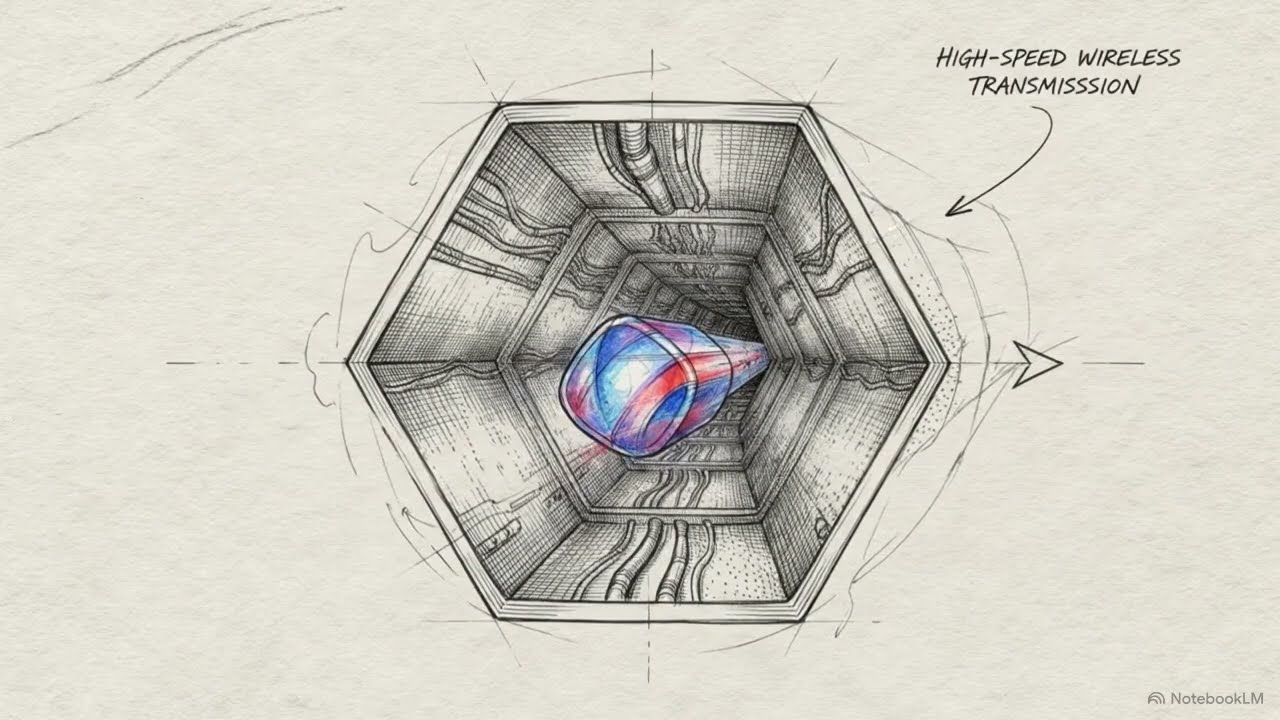
- The IMU sensor's data is transmitted in real-time to the video operation room.
- This telemetry merges with stadium camera data to assist referees.
- The system provides alerts for automated offside and penalty decisions.
- The ball acts as an active data transmitter, offering objective evidence for critical calls.
- The modern ball combines high-performance engineering with digital intelligence.
- Physical construction includes deep seams for aerodynamics and embossed icons for grip.
- Laser-calibrated typography provides historical customization.
- The IMU sensor acts as a digital witness, recording every touch via unique hardware identifiers.
Key takeaways
- The FIFA World Cup final ball has evolved from a symbolic artifact to a technologically advanced data-gathering device.
- Technological integration in sports aims to enhance accuracy and fairness by providing objective data for officiating.
- The 500 Hz IMU sensor is central to the modern ball's ability to capture high-resolution movement data.
- Real-time data transmission from the ball assists referees in making critical decisions like offside and penalty calls.
- The design of the final ball now balances aesthetic customization with functional, embedded technology.
- The ball serves a dual purpose: commemorating a specific match externally and actively recording its events internally.
Key terms
Test your understanding
- How has the role of the FIFA World Cup final ball changed over the last two decades?
- What technological component is hidden inside the 2026 final ball, and what is its primary function?
- How does the data generated by the ball's internal sensor assist referees during a match?
- What are the key elements that contribute to the modern World Cup final ball's 'layered architecture'?
- Why is precise external customization, like laser alignment, still important for the final match ball?