4:58
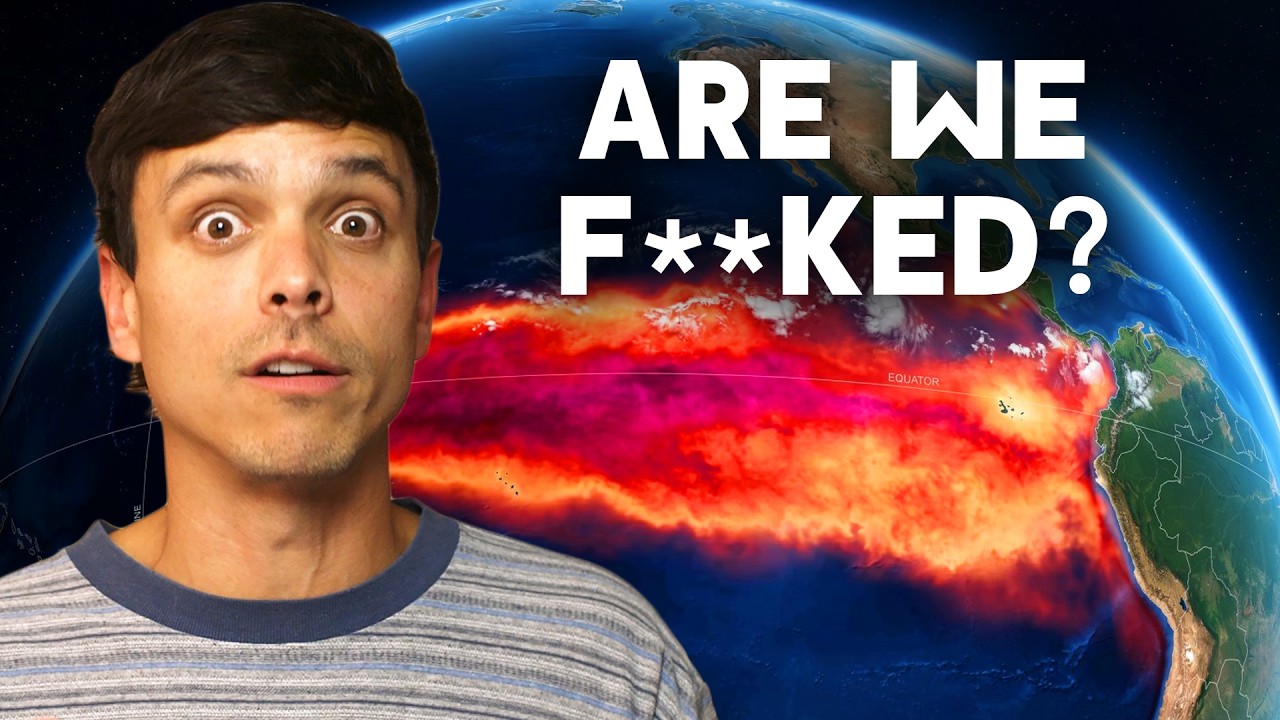
Nobody has EVER seen an El Niño like this
AsapSCIENCE
Overview
This video explains the phenomenon of El Niño, focusing on a particularly strong "super El Niño" event. It clarifies that El Niño is a natural cycle of ocean warming in the Pacific, distinct from but exacerbated by climate change. The summary details how weakened trade winds shift warm water eastward, altering global weather patterns, leading to increased rainfall and storms in some regions, and drought in others. It highlights the severe potential impacts on fisheries, agriculture, global economies, and human health, emphasizing that while not solely caused by human activity, it amplifies existing climate change effects.
How was this?
Save this permanently with flashcards, quizzes, and AI chat
Chapters
- El Niño is a natural, recurring pattern of ocean warming in the Pacific Ocean, oscillating every 2-7 years.
- It occurs when sea surface temperatures rise more than 0.5°C above average for an extended period.
- The current event is notable for breaking records in ocean temperature, potentially being the most severe in centuries.
- This El Niño is amplified by, but not caused by, human-induced climate change, acting like a 'steroid' on existing warming.
Understanding El Niño as a natural cycle helps demystify extreme weather events and distinguish them from the long-term impacts of climate change, allowing for more accurate preparation and response.
The current El Niño has already surpassed previous records for ocean temperature, reaching approximately 3.08°C above average, beating the peak of all other recorded years.
- Normally, trade winds push warm Pacific water west towards Asia, allowing cooler water to rise near South America.
- During El Niño, these trade winds weaken, causing warm water to shift eastward towards the Americas.
- This eastward movement of warm water heats the air above it, altering atmospheric pressure and global weather patterns.
- These changes impact large-scale air currents like the jet stream, influencing storms and droughts worldwide.
Knowing the mechanism behind El Niño explains why a seemingly localized ocean warming event can have widespread, global consequences on weather systems.
The weakening of trade winds allows warm surface water, normally found near Asia, to move towards the coasts of Peru and Chile.
- El Niño causes increased rainfall and storms, leading to floods and mudslides on the west coast of the US and in South America.
- Conversely, regions like Indonesia, Australia, and Southern Africa may experience extreme heat and wildfires due to drought.
- The Amazon and Central America can also face drought conditions, with significant cascading effects.
- While typically reducing Atlantic hurricanes, El Niño can lead to a more active hurricane season in the Pacific.
- An average El Niño can cause trillions of dollars in global economic losses over several years.
This illustrates the far-reaching and often contradictory weather impacts of El Niño, highlighting its potential to disrupt ecosystems, economies, and human lives across the globe.
The Peruvian anchovy fishery was canceled early because warm surface waters drove anchovies deeper, making them harder to catch, impacting both local livelihoods and international food supply chains.
- This severe El Niño is predicted to cause hundreds of thousands of deaths from heat and push millions into acute hunger.
- It exacerbates existing climate change impacts, potentially making 2027 a record hot year.
- El Niño's effects on weather, food security, and inflation will likely be felt globally, even in less directly impacted regions.
- The event serves as a preview of future climate change projections, accelerating temperatures to levels expected decades from now.
- Even after the El Niño cycle ends, the planet remains warmer due to ongoing fossil fuel use.
This chapter underscores the severe human cost and the long-term consequences of El Niño events, framing them as critical indicators of our planet's vulnerability to climate change.
Current predictions for this El Niño anticipate around 450,000 deaths solely from heat exposure and 50 million people facing acute hunger.
Key takeaways
- El Niño is a natural climate pattern involving Pacific Ocean warming, distinct from but intensified by climate change.
- Weakened trade winds are the primary driver, shifting warm water eastward and altering global weather systems.
- El Niño causes a spectrum of extreme weather, including floods in some areas and droughts and heatwaves in others.
- The economic and humanitarian consequences of severe El Niño events are substantial, affecting food security, health, and global markets.
- Understanding El Niño helps to contextualize extreme weather and its relationship with long-term climate change.
- Even natural climate cycles like El Niño have amplified and more dangerous effects on a warming planet.
- The downstream effects of El Niño, such as supply chain disruptions and inflation, can impact everyone regardless of direct weather exposure.
Key terms
El NiñoLa NiñaTrade WindsJet StreamAtmospheric PressureClimate ChangeOcean WarmingDroughtFloodingFood Security
Test your understanding
- What is the fundamental difference between El Niño and La Niña?
- How do weakened trade winds during an El Niño event lead to global weather pattern changes?
- What are the predicted humanitarian impacts of a 'super El Niño' event?
- Why is it important to understand that El Niño is a natural phenomenon, even when discussing its connection to climate change?
- How can an El Niño event in the Pacific Ocean affect weather patterns and economies in regions far from the Pacific?