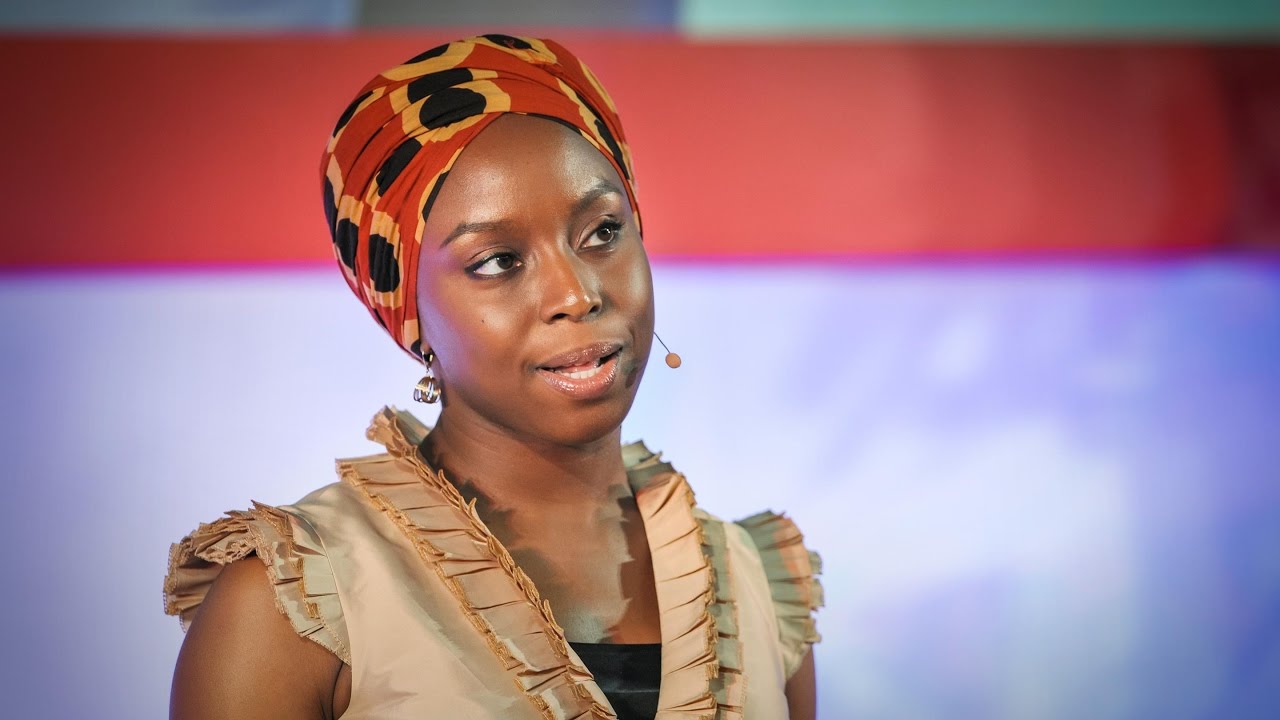
Chimamanda Ngozi Adichie: The Danger of a Single Story | TED
TED
Overview
Chimamanda Ngozi Adichie's TED Talk, "The Danger of a Single Story," explores how limiting narratives about people, places, or cultures can lead to profound misunderstandings and prejudice. Drawing from her personal experiences as a Nigerian writer, Adichie illustrates how a "single story" – often perpetuated by media and literature – reduces complex realities to simplistic, stereotypical portrayals. She argues that power dynamics influence which stories are told and heard, leading to the marginalization of diverse experiences. Adichie advocates for embracing multiple perspectives to foster empathy, recognize shared humanity, and ultimately, regain a more complete and dignified understanding of the world.
Save this permanently with flashcards, quizzes, and AI chat
Chapters
- As a child in Nigeria, Adichie primarily read British and American children's books, leading her to write stories with white characters and settings unfamiliar to her own life.
- This early exposure created a 'single story' of what books and characters should be, making her believe that literature had to feature foreigners and experiences she couldn't identify with.
- Discovering African writers like Chinua Achebe was a pivotal moment, showing her that people like herself could be central characters in literature, thus saving her from a limited view of storytelling.
- Adichie's perception of Fide, the family's house boy, was initially limited to his family's poverty, preventing her from seeing their capabilities or other aspects of their lives.
- A visit to Fide's village revealed his mother's beautifully crafted basket, challenging Adichie's preconceived notions and revealing the 'single story' of poverty she had imposed.
- This experience taught her that focusing solely on one aspect of a person or group, like poverty, blinds one to their full humanity and complexity.
- In the U.S., Adichie encountered stereotypes about Africa, such as assumptions that she wouldn't speak English well or listen to popular music.
- Her American roommate's 'single story' of Africa was one of catastrophe, depicting it as a place of suffering, war, and helplessness, devoid of complexity or similarity to Westerners.
- Historical narratives, like John Lok's 16th-century account of Africans as 'beasts' or Rudyard Kipling's 'half devil, half child' description, have contributed to this persistent, negative single story of Africa.
- Power is intrinsically linked to storytelling; it's the ability to not only tell someone's story but to make it the definitive, accepted narrative.
- The Igbo concept of 'nkali' (to be greater than another) reflects how power structures dictate whose stories are told, when, and how.
- Starting a narrative from a particular point (e.g., Native American struggles before British arrival) fundamentally alters its meaning and impact, demonstrating how power shapes historical accounts.
- A single story is created by repeatedly showing a people as only one thing, leading them to become that stereotype.
- Adichie admits her own guilt in perpetuating a single story of Mexicans as abject immigrants after being immersed in media coverage.
- She argues that incomplete stereotypes are dangerous because they are not necessarily untrue, but they are incomplete, making one story the only story.
- To truly understand a place or person, one must engage with all their stories, not just the dominant or negative ones.
- Promoting diverse African stories through platforms like an African television network or through publishers like Muhtar Bakare can create a 'balance of stories'.
- Challenging single stories restores dignity, humanizes individuals, and emphasizes our shared humanity over our differences.
Key takeaways
- Single stories, often born from limited exposure and perpetuated by power dynamics, create harmful stereotypes that reduce complex individuals and cultures to simplistic, often negative, representations.
- Our understanding of the world is shaped by the stories we consume; early and limited narratives can profoundly impact our self-perception and views of others.
- Power dictates which stories are told and amplified, often marginalizing the experiences of less dominant groups.
- Stereotypes are dangerous not because they are entirely false, but because they are incomplete, presenting one facet of reality as the whole truth.
- Actively seeking out and engaging with multiple, diverse stories is crucial for developing empathy, recognizing shared humanity, and challenging prejudice.
- By embracing a 'balance of stories,' we can restore dignity, humanize others, and regain a more complete and accurate understanding of the world.
- Personal experiences, both positive and negative, contribute to a person's identity, and reducing them to a single narrative erases their complexity.
Key terms
Test your understanding
- How does exposure to a limited set of stories, like Adichie's childhood reading, contribute to the formation of a 'single story'?
- What is the relationship between power and the creation and dissemination of single stories?
- In what ways can a single story, even if partially true, be more damaging than a complete falsehood?
- How can actively seeking out multiple perspectives challenge the 'single story' of a person or culture?
- Why is it important to recognize the complexity of individual experiences and avoid reducing people to stereotypes?