5:04
Growth Mindset vs. Fixed Mindset
Sprouts
Overview
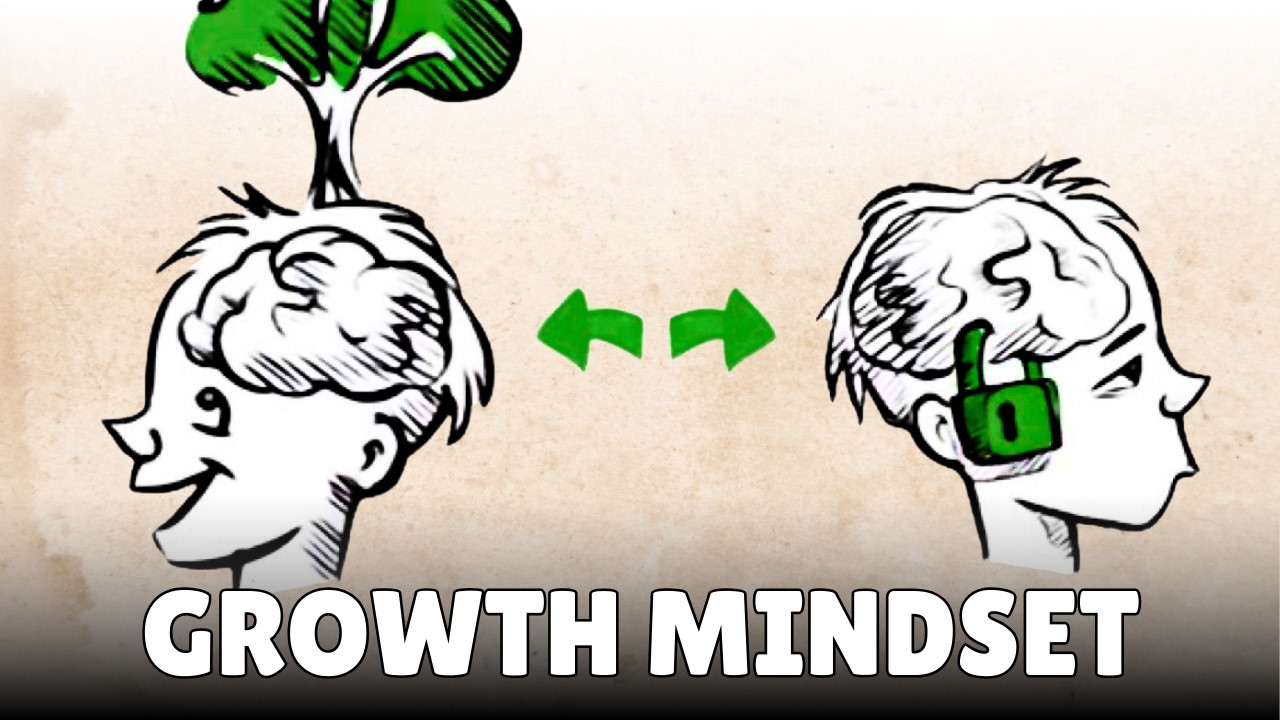
This video explores the concepts of fixed and growth mindsets, drawing on the work of Dr. Carol Dweck. A fixed mindset views basic qualities like intelligence and talent as unchangeable, leading to avoidance of challenges and fear of failure. In contrast, a growth mindset believes abilities can be developed through practice and effort, fostering a love for learning and viewing challenges as opportunities. The video illustrates these differences with examples and highlights the importance of effort, feedback, and embracing challenges for personal and professional success, supported by neuroscientific evidence.
How was this?
Save this permanently with flashcards, quizzes, and AI chat
Chapters
- A fixed mindset believes intelligence and talents are innate and unchangeable, leading individuals to avoid challenges to protect their perceived abilities.
- A growth mindset views abilities as developable through dedication and hard work, encouraging individuals to embrace challenges as opportunities for learning and growth.
- People with a fixed mindset often focus on documenting past successes, while those with a growth mindset see life as a continuous journey of learning and improvement.
Understanding these two mindsets is crucial because it frames how individuals approach challenges, learning, and ultimately, their potential for success and personal development.
A person with a fixed mindset avoids difficult tasks for fear of appearing unintelligent, while someone with a growth mindset tackles them eagerly, seeing them as chances to learn.
- Dr. Carol Dweck suggests celebrating effort and the process of trying, rather than solely focusing on outcomes or grades.
- Parents and educators should encourage children to pursue new skills and offer support for their learning endeavors.
- Embracing the 'skill of learning' through practice and effort is key to developing a growth mindset and achieving long-term success.
Actively fostering a growth mindset, especially in educational settings, can equip individuals with the resilience and learning strategies necessary to navigate complex situations throughout their lives.
Teachers applauding students for studying hard for a test, regardless of the final grade, encourages the value of effort and learning.
- Jay, with a fixed mindset, avoids physical challenges like the vaulting horse due to fear of failure and embarrassment.
- Ann, with a growth mindset, embraces challenges, viewing failure as a natural part of learning and improvement.
- Jay avoids constructive criticism, taking feedback personally, while Ann actively seeks and uses feedback to enhance her work.
- Jay prefers easy paths and gives up when encountering difficulties, whereas Ann persists through challenges, understanding effort is essential for growth.
These contrasting examples vividly illustrate how a fixed versus growth mindset influences daily decisions, reactions to setbacks, and the overall approach to skill development.
Jay avoids the stairs, preferring escalators, while Ann enjoys climbing stairs, seeing it as a physical challenge and a demonstration of effort.
- Individuals with a growth mindset are inspired by the success of others and may even be motivated to help friends improve, recognizing that collective growth benefits everyone.
- Conversely, those with a fixed mindset may feel threatened by others' achievements, fearing it increases pressure on their own performance.
- Companies actively seek employees with a growth mindset because they are more likely to solve problems and persevere through obstacles.
- Interview questions probing beliefs about whether management is an innate trait or a learned skill can help identify candidates with a growth mindset.
The mindset an individual holds significantly impacts their interpersonal relationships and their desirability and effectiveness in professional environments.
A company hiring an applicant who believes management is a learned skill over one who believes managers are born, signaling a preference for growth-oriented individuals.
- Neuroscience supports the growth mindset by showing that the brain can develop and strengthen like a muscle through practice and training.
- Studies on adopted twins suggest that environmental factors, such as higher parental education levels (nurture), can have a greater impact on intelligence than genetics (nature).
- A shift in perspective towards a growth mindset can profoundly influence an individual's life trajectory and outcomes.
Scientific evidence validates the malleability of human potential, reinforcing the idea that effort and learning environments are powerful drivers of development.
The brain's ability to form new neural connections and strengthen existing ones with consistent mental exercise, similar to how muscles grow with physical training.
Key takeaways
- Believing your abilities can be developed through effort is the core of a growth mindset.
- Challenges are opportunities for learning, not threats to your self-worth.
- Effort is not a sign of weakness, but a necessary component of mastery.
- Seeking and utilizing feedback is essential for improvement.
- The success of others can be a source of inspiration and motivation.
- Companies value growth mindsets for problem-solving and resilience.
- The brain's capacity for growth is supported by scientific evidence.
Key terms
Fixed MindsetGrowth MindsetAbilitiesTalentsIntelligencePracticeEffortChallengesFeedbackNeuroscience
Test your understanding
- What are the fundamental beliefs that differentiate a fixed mindset from a growth mindset?
- How can educators and parents encourage the development of a growth mindset in children?
- Why is embracing challenges and constructive criticism important for someone with a growth mindset?
- What does neuroscience suggest about the brain's capacity for change and how does this relate to the growth mindset?
- How might a fixed mindset hinder professional growth and how does a growth mindset offer an advantage in the workplace?