37:42
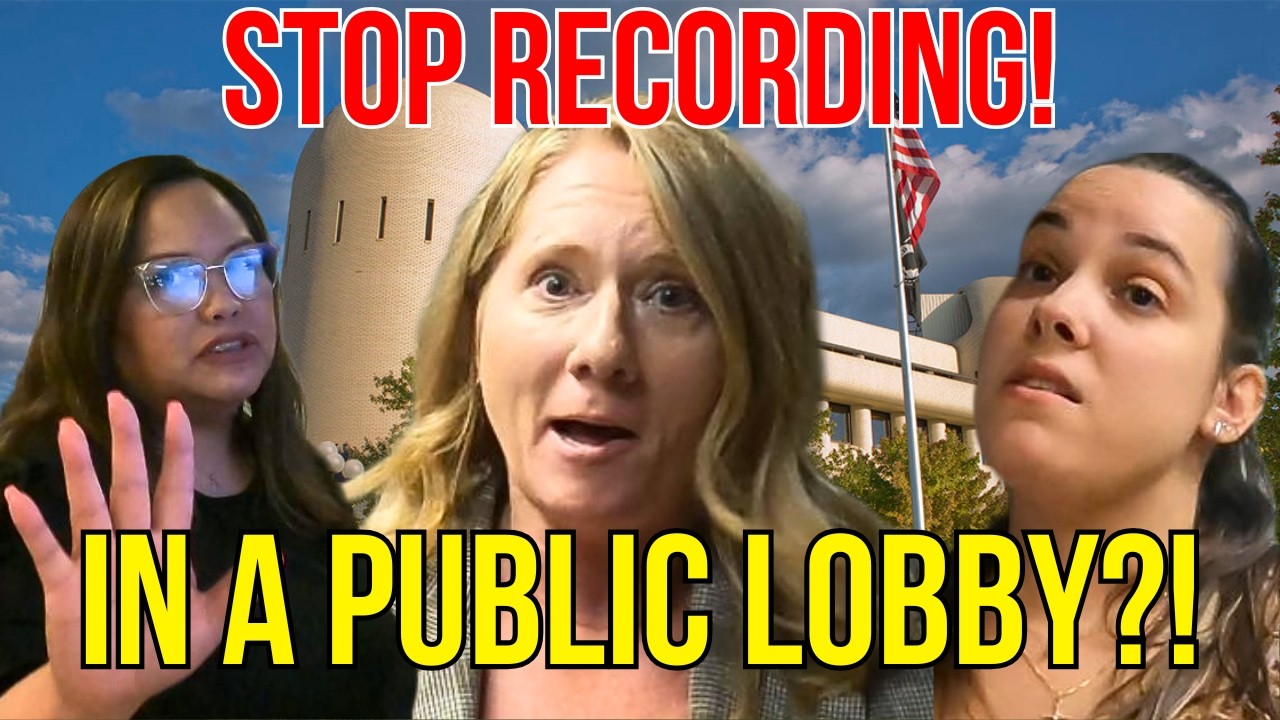
Health Official Told Me to Stop Recording—in a Public Lobby!
I.A.M. Free - Inland Auditing Media
Overview
This video documents an individual's attempt to access public records, specifically the procedures manual, at the Spokane Regional Health District. The interaction highlights a significant disconnect between state law requirements for public agencies and the district's practices. The individual encounters resistance, a refusal to identify staff, and a general lack of readily available public information, suggesting potential non-compliance with the Public Records Act. The video captures the challenges faced by citizens seeking transparency and accountability from public institutions.
How was this?
Save this permanently with flashcards, quizzes, and AI chat
Chapters
- The narrator arrives at the Spokane Regional Health District to investigate alleged non-compliance with the Public Records Act.
- The narrator's initial request to inspect the procedures manual is met with resistance and a suggestion to speak with the records officer.
- Staff members initially refuse to identify themselves, citing privacy concerns or company policy, which the narrator disputes based on public servant obligations.
- The narrator is asked not to record, but asserts their right to do so in a public space.
This chapter establishes the central conflict: the public's right to access information versus the agency's perceived reluctance to provide it, setting the stage for the subsequent investigation into compliance.
A staff member states, 'I don't have to do that,' when asked to identify themselves, directly contrasting with the narrator's understanding of public servant duties.
- The narrator's attempts to obtain the name of the front desk employee for a public records request are rebuffed by a security officer.
- Security and other staff members refuse to identify themselves, claiming it's for personal protection, which the narrator questions as a tactic to avoid accountability.
- The narrator is told that the records officer, Julie Beth, is unavailable but will be down in approximately 10 minutes.
- The narrator attempts to file a verbal public records request for communications data from an administrator named Danny.
This section illustrates the practical difficulties and evasive tactics individuals may face when trying to interact with public agencies, highlighting the importance of clear identification for accountability.
The security officer, Keith, states, 'I don't have to do that,' when asked to identify himself, mirroring the earlier refusal by other staff.
- The narrator finally speaks with Julie Beth, the Public Records Officer, who confirms the district does not prominently display the procedures manual as required by state law.
- Julie Beth explains that the district typically requires appointments for inspecting records and directs the narrator to their website, which the narrator states is incomplete.
- The narrator cites Washington state statute (RCW 42.56.040) requiring prominent display of the procedures manual, rules of procedure, and organizational information.
- Julie Beth acknowledges the manual is not prominently displayed but insists on their established procedure for record inspection.
This is the core of the investigation, directly confronting the agency's alleged non-compliance with a specific state law and the public records officer's justification for their practices.
Julie Beth admits, 'No, but that's something that we don't have prominently display,' directly contradicting the legal requirement.
- The narrator attempts to file an appeal with a supervisor, as the Public Records Officer is not the final authority.
- The Communications Director, Danny Scaliz, initially mistakes the narrator's request for an appeal to the Public Information Officer, a title he also holds.
- Danny acknowledges the district's lack of a complete procedures manual and records index, promising to address the issue immediately.
- The narrator expresses concern about a potential two-tier system for processing public records requests, which Danny denies.
This chapter shows the next steps in seeking accountability when initial requests are denied or met with non-compliance, demonstrating the formal processes for challenging agency actions.
Danny Scaliz states, 'We're going to work on this immediately,' in response to the narrator's assertion that the district is out of compliance with the Records Act.
- The narrator concludes that the district is out of compliance with the Public Records Act, lacking a required exemption, records index, and a complete published procedures manual.
- The provided materials only included a basic request form, not the full range of required documents.
- The narrator advises the district to properly document any exemptions to avoid legal challenges.
- The narrator reiterates that the website is not a substitute for the prominently displayed manual required by law.
This chapter summarizes the findings of the investigation, reinforcing the narrator's claims of non-compliance and the potential legal ramifications for the health district.
The narrator states, 'the district is out of compliance with the Records Act. They do not have an exemption. They do not have a records index. They do not have a published procedures manual.'
Key takeaways
- Public agencies are legally obligated to make certain procedural documents, like the procedures manual, readily available to the public in a prominent location.
- Refusal to identify public employees when requested for the purpose of a public records request can hinder transparency and accountability.
- A government agency's internal procedures or website content do not supersede state law requirements for public information access.
- Citizens have the right to record in public spaces, and public employees generally do not have a right to privacy regarding their official duties in such spaces.
- When seeking public records, understanding the specific statutes and regulations governing public access is crucial for effective advocacy.
- Appealing decisions or denials related to public records requests is a standard process for challenging an agency's compliance.
- The 'Public Records Act' is designed to ensure transparency, and agencies must actively comply with its provisions, not merely offer workarounds.
Key terms
Public Records ActProcedures ManualProminently DisplayedPublic Records OfficerPublic ServantPublic SpaceRecords IndexWAC (Washington Administrative Code)RCW (Revised Code of Washington)Compliance
Test your understanding
- What specific document is the narrator trying to inspect at the Spokane Regional Health District, and why is its availability important?
- How did the Spokane Regional Health District staff initially respond to the narrator's requests for information and identification, and what legal principles were at play?
- What are the key requirements of the Public Records Act regarding the 'prominently displayed procedures manual' that the narrator cited?
- What steps can a citizen take if they believe a public agency is not complying with the Public Records Act?
- Why is the distinction between a public space and a private space relevant when considering the right to record interactions with public officials?