6:40
This Is How Geniuses Train Their Mind — IQ Is Not Fixed
EverLearning Growth
Overview
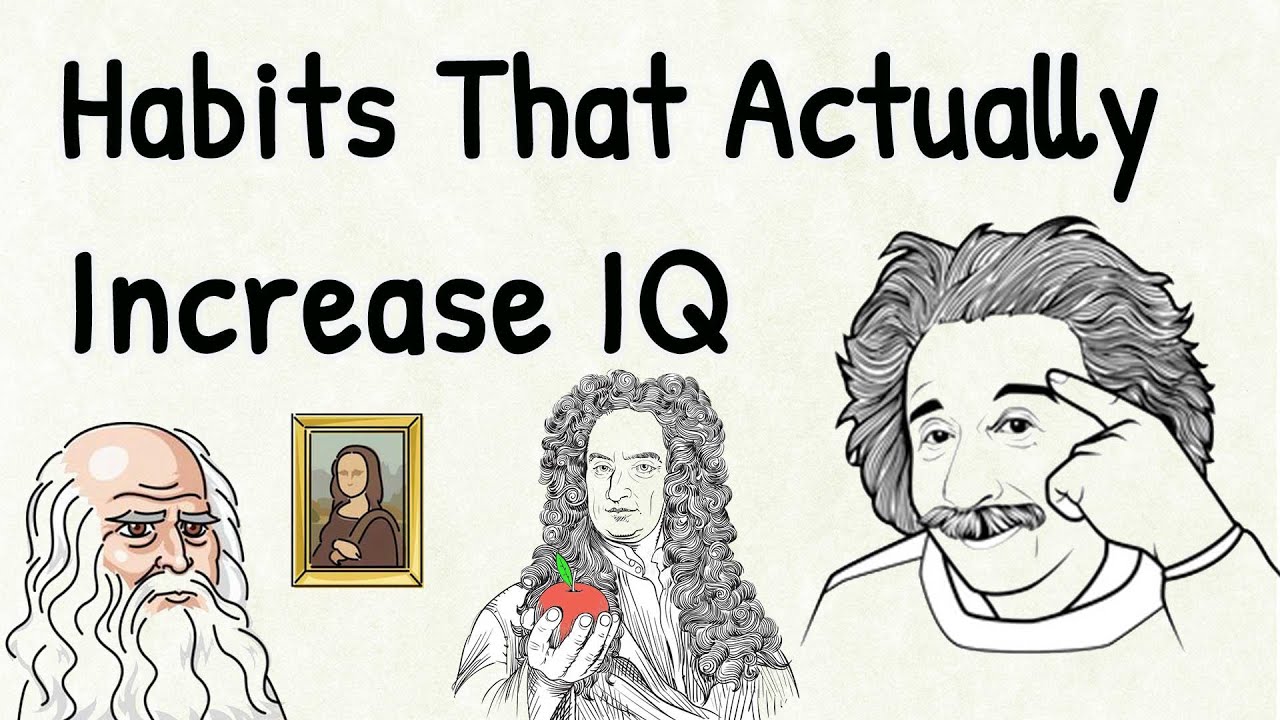
This video challenges the notion that IQ is fixed, arguing instead that intelligence can be cultivated through specific habits. It draws parallels between historical geniuses like Einstein and Edison and modern neuroscience findings to explain how practices such as deep thinking without input, productive struggle, writing for clarity, building mental models across domains, deliberate memory training, and protecting cognitive energy can enhance cognitive abilities. The core message is that intelligence is not an innate trait but a skill developed through consistent, intentional habits.
How was this?
Save this permanently with flashcards, quizzes, and AI chat
Chapters
- Contrary to popular belief, intelligence (IQ) is not a fixed trait determined at birth.
- Historical figures like Einstein and Edison, initially considered unintelligent, achieved great things.
- Their success stemmed not from genetics but from developing specific habits that enhanced their cognitive abilities.
- These habits, now supported by neuroscience, can actively increase intelligence.
Understanding that intelligence can be developed empowers learners to take active steps to improve their cognitive abilities rather than accepting perceived limitations.
Albert Einstein was considered slow as a child, yet he revolutionized physics through his thinking habits.
- True intelligence growth comes from thinking without constant external information.
- Undistracted thinking activates the brain's default mode network, crucial for abstract thought, creativity, and reasoning.
- Engaging in 'thinking walks' without distractions strengthens problem-solving and strategic intelligence.
- Initial discomfort during focused thinking is a sign of cognitive growth.
This habit trains your brain to generate novel ideas and solutions internally, rather than just processing external data.
Einstein's thought experiments, like imagining chasing a beam of light, represent deep thinking without immediate input.
- Intelligent individuals delay seeking answers, embracing 'productive struggle'.
- Attempting, failing, adjusting, and retrying builds stronger neural pathways than passive learning.
- Struggling before seeking help forces retrieval and reorganization of information, leading to deeper understanding.
- Instant solutions are less memorable because they bypass this crucial neural strengthening process.
This approach ensures that learning is robust and retained, as the brain actively works to overcome challenges.
Benjamin Franklin practiced rewriting essays from memory after reading them, struggling before comparing his version to the original.
- Writing should be used to clarify thought, not just record information.
- Handwritten notes, questions, and fragments help identify gaps and refine vague concepts.
- The physical act of writing slows down thinking, making it more precise and understandable.
- This process is more effective for conceptual understanding than typing or passive reading.
Using writing as a tool for thinking makes abstract concepts concrete and reveals areas needing further exploration.
Leonardo da Vinci's notebooks, filled with questions, diagrams, and fragments, demonstrate writing as a tool for active thinking.
- True intelligence involves understanding systems through interconnected 'mental models' from various fields.
- Learning concepts from diverse disciplines (physics, biology, psychology, economics) fosters 'transfer intelligence'.
- This cross-domain learning enhances fluid intelligence, the ability to reason in novel situations.
- Polymaths historically excelled due to their ability to synthesize knowledge from multiple areas.
Building a network of mental models allows you to approach problems from multiple perspectives and apply knowledge flexibly.
Learning about cause and effect from physics, adaptation from biology, and incentives from economics helps build a robust framework for understanding complex issues.
- Memory is fundamental to intelligence, not a separate skill.
- Techniques like active recall, spaced repetition, and visualization strengthen neural connections.
- Trained memory leads to faster reasoning and more efficient cognitive processing.
- Recalling information before reviewing and teaching others are effective memory training habits.
A strong, trained memory provides the foundational capacity for complex thought and rapid learning.
Nikola Tesla's ability to visualize and mentally manipulate complex machinery demonstrates the power of a trained memory.
- Peak cognitive performance requires strategic energy management, not constant work.
- Chronic stress, sleep deprivation, and excessive stimulation impair executive functions.
- Cognitive upgrades happen during periods of rest and recovery, not during intense 'hustle'.
- Prioritizing sleep, movement, sunlight, and allowing for boredom supports brain health and function.
Conserving and recovering cognitive energy ensures your brain operates at its best, preventing burnout and enhancing long-term learning capacity.
Charles Darwin limited his focused work to four to five hours daily, dedicating the rest of his time to walking, resting, and reflecting.
Key takeaways
- Intelligence is not a fixed genetic trait but a skill that can be actively developed through consistent habits.
- Engaging in deep, undistracted thinking is more beneficial for cognitive growth than simply consuming more information.
- Embracing challenges and 'productive struggle' strengthens neural pathways and leads to more durable learning.
- Writing is a powerful tool for clarifying thoughts, identifying knowledge gaps, and deepening conceptual understanding.
- Connecting knowledge across different fields through mental models enhances problem-solving flexibility and fluid intelligence.
- Memory is a trainable skill foundational to intelligence, improved through active recall and spaced repetition.
- Protecting cognitive energy through rest, sleep, and breaks is crucial for optimal brain function and sustained learning.
Key terms
IQDefault Mode NetworkProductive StruggleTransfer IntelligenceMental ModelsFluid IntelligenceActive RecallSpaced RepetitionExecutive FunctionCognitive Energy
Test your understanding
- How does the concept of 'productive struggle' contribute to building intelligence?
- What is the role of the default mode network in cognitive enhancement, and how can it be activated?
- Explain the difference between writing to record information and writing to think.
- Why is learning concepts from multiple domains important for developing intelligence?
- What are the key habits for protecting cognitive energy, and why are they important for learning?