36:00
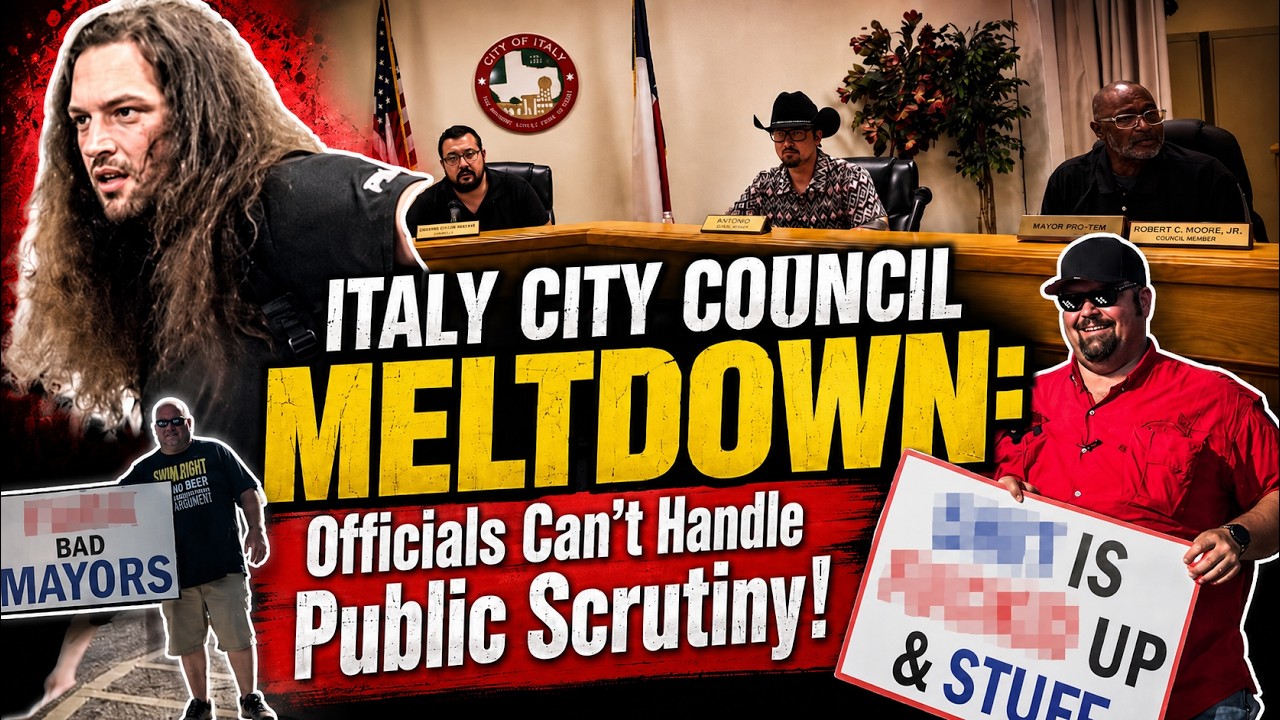
🔥Italy City Council MELTDOWN: Officials Can’t Handle Public Scrutiny!
BZWATCHDOG
Overview
This video documents a contentious Italy City Council meeting where citizen journalists and activists confronted officials regarding alleged suppression of free speech, questionable bidding processes, and potential misconduct. The meeting highlights a clash between public right to criticize government and officials' perceived attempts to control public discourse and spending. Key issues include the arrest of individuals for speaking out, a lack of transparency in contract bidding, and selective enforcement of decorum rules, all framed within the context of First Amendment rights and government accountability.
How was this?
Save this permanently with flashcards, quizzes, and AI chat
Chapters
- The video's purpose is to expose alleged suppression of free speech and government overreach at an Italy City Council meeting.
- Citizen journalists and activists attended to 'stress test' the First Amendment in a public forum.
- The atmosphere is described as a 'circus show' with officials acting defensively and hostile towards criticism.
- The core issue is the perceived weaponization of government authority against citizens exercising their right to criticize.
This sets the stage by framing the meeting not as a routine government proceeding, but as a critical event where fundamental rights are allegedly being violated, motivating the viewer to understand the stakes.
Officials are described as 'auditioning for a government position in North Korea or communist China' due to their reaction to disliked speech.
- The meeting agenda includes the promotion of a detective to Chief of Police, who previously oversaw arrests of citizens for speaking at council meetings.
- Individuals arrested for alleged criminal trespassing were not informed of the trespass at the time and were arrested weeks later.
- One individual, Ron Helms, faced an $8000 bond for 'disruption of a meeting' after being removed for speaking, while others who spoke without signing up were not removed.
- This sequence suggests a potential pattern of retaliation against critics under the guise of enforcing rules.
This highlights a potential abuse of power where law enforcement and legal processes are allegedly used to silence or punish citizens for exercising their free speech rights, raising serious concerns about justice and accountability.
Ron Helms was arrested weeks after a council meeting for criminal trespassing, despite never being told he was trespassing at the time.
- The council agenda includes large repair contracts ($43,000 and $45,000) for security improvements.
- Concerns are raised about these amounts being just under the $50,000 threshold that requires open bidding, suggesting potential favoritism.
- During the meeting, the city administrator could not provide details on other bids or the amounts of informal quotes, hindering informed decision-making.
- The city ultimately selected 'Roof Time' for a contract, prompting questions about potential connections between officials and the chosen company.
This chapter addresses financial accountability and transparency, showing how a lack of clear bidding processes and information can lead to public distrust and suspicions of corruption or cronyism.
The city administrator was unable to provide the amounts of informal quotes for repair contracts when asked by a citizen during the meeting.
- Officials are accused of selectively enforcing 'rules of decorum,' allowing interruptions from their side while penalizing critics.
- The oath taken by officials is to the Constitution, not to the council members, emphasizing that criticism is protected speech.
- Accusations of hypocrisy are made against officials who preach about the First Amendment but allegedly suppress speech.
- Journalists vow to pursue public records requests to investigate the bidding process, contractor selection, and alleged misconduct.
This section directly confronts the core legal and ethical principles at stake, emphasizing that government officials must uphold constitutional rights, even when faced with uncomfortable criticism, and that citizens have the right to demand accountability.
Robert Hodge interrupted a citizen during his speaking time, yet rules of decorum were not enforced against him, leading to accusations of viewpoint discrimination.
- The video frames the actions of the citizen journalists as essential 'watchdog oversight' and journalism.
- They pledge to continue investigating by requesting emails, text messages, and examining all aspects of the bidding and contractor selection process.
- The goal is to bring transparency to government actions and ensure public funds are spent appropriately.
- The message to officials is that scrutiny is not harassment but a necessary part of a functioning democracy.
This concludes by empowering viewers, framing citizen engagement and investigative journalism as vital tools for holding government accountable and preventing 'tyranny' and 'corruption'.
The journalists state they will 'request the quotes, we're going to request the emails, we're going to request the text messages' to investigate the bidding process.
Key takeaways
- Public officials are sworn to uphold the Constitution, including the First Amendment, which protects citizens' right to criticize government.
- Selective enforcement of rules or laws against individuals based on their speech constitutes viewpoint discrimination and is a violation of constitutional rights.
- Transparency in government spending, particularly in contract bidding, is crucial for public trust and preventing potential corruption or favoritism.
- Citizen journalists and activists play a vital role in government oversight by attending meetings, asking questions, and pursuing public records.
- When faced with criticism, government officials should respond with reasoned explanations and adherence to legal processes, not with alleged retaliation or suppression.
- Public meetings are intended for public participation and discourse; officials should not treat criticism as an inconvenience or a personal attack.
- The pursuit of public records is a legitimate journalistic and civic tool to ensure accountability and uncover potential wrongdoing.
Key terms
First AmendmentProtected SpeechViewpoint DiscriminationCriminal TrespassingDecorum RulesPublic BiddingInformal QuotesCitizen JournalismGovernment AccountabilityPublic Records Request
Test your understanding
- How can the selective enforcement of decorum rules at a public meeting potentially violate a citizen's First Amendment rights?
- What are the potential consequences for a city government when its bidding processes lack transparency, as illustrated in the video?
- Why is the role of citizen journalists and public records requests considered important for ensuring government accountability?
- What is the difference between a citizen exercising their right to criticize the government and engaging in protected speech versus illegal conduct?
- How did the events at the Italy City Council meeting suggest a pattern of retaliation against individuals who voiced criticism?