21:56
You’re Not Getting the Full Story
HasanAbi
Overview
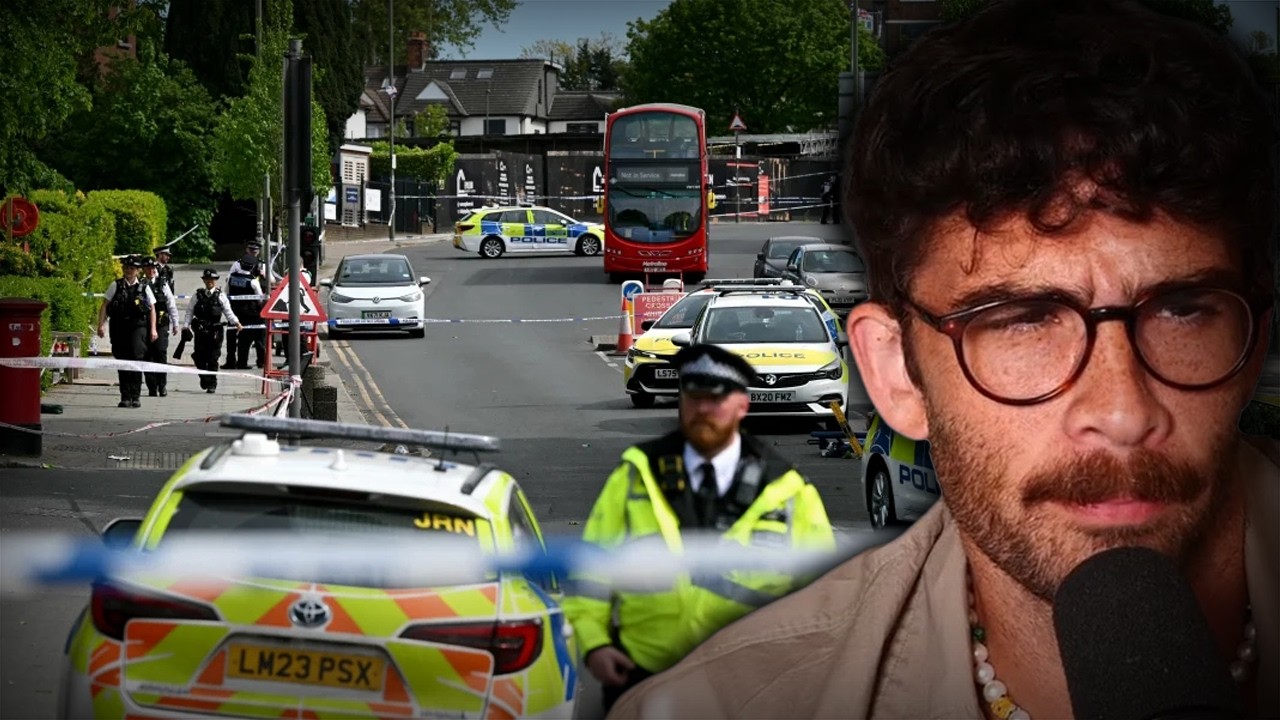
This video critiques the media's and government's narrative surrounding a stabbing incident, arguing that the full story, including the perpetrator's mental health issues and the systemic failures that contributed to the event, is being deliberately obscured. It highlights how this incident is being used to justify crackdowns on pro-Palestinian speech and protests, while ignoring broader societal issues like austerity, privatization, and rising racism. The discussion also touches on the political maneuvering around figures like Zach Polanski and the complex interpretations of protest slogans.
How was this?
Save this permanently with flashcards, quizzes, and AI chat
Chapters
- The media initially framed a stabbing incident as a targeted attack motivated solely by pro-Palestinian sentiment.
- This narrative was incomplete, as the perpetrator also stabbed a Muslim individual and had a history of violence and mental health issues.
- The focus on a single motive ignores the complex factors, including systemic failures, that may have contributed to the crime.
- This selective reporting serves to create a specific political narrative rather than present a full picture.
Understanding how media frames events is crucial for discerning truth from propaganda and recognizing when narratives are being manipulated for political purposes.
The media's portrayal of the stabbing incident as solely motivated by pro-Palestinian views, omitting the fact that the perpetrator also stabbed a Muslim person.
- The perpetrator of the stabbing should have been receiving mental health treatment but was failed by a collapsing social services system.
- Austerity and privatization have led to diminished public services, causing frustration and anxiety among the working class.
- Right-wing forces exploit this frustration by redirecting it towards migrants, fostering anti-immigrant sentiment.
- This cycle of austerity, service decline, and scapegoating is a recurring pattern that undermines societal well-being.
Recognizing the link between austerity, failing social services, and the rise of scapegoating is essential for addressing the root causes of societal unrest and violence.
The perpetrator's history of violence and mental health issues, coupled with his release from psychiatric care and subsequent actions, illustrates the failure of social safety nets.
- The government is using the stabbing incident as a pretext to crack down on pro-Palestinian protests and speech.
- This approach criminalizes dissent rather than addressing the underlying societal issues that fuel frustration.
- The government's response focuses on restricting protests and speech, such as the slogan 'Free Palestine,' instead of tackling negligence and incompetence.
- This strategy aims to silence opposition and maintain a particular political agenda.
It is vital to recognize when governments use isolated incidents to justify broader restrictions on civil liberties and political expression.
The Prime Minister's suggestion to ban pro-Palestinian marches, citing the stabbing incident as justification, despite the perpetrator's complex history.
- Figures like Kier Starmer are exploiting the situation to attack political opponents, such as Zach Polanski.
- Polanski, a Jewish politician, is being criticized and potentially disqualified for retweeting criticism of police actions.
- This is framed as an attack on Polanski, with accusations of antisemitism being used to discredit him.
- Nigel Farage and right-wing media are amplifying these attacks, using antisemitic tropes to target Polanski.
Understanding how political opponents are attacked and scapegoated, particularly by leveraging sensitive issues like antisemitism, is key to navigating political discourse.
Nigel Farage's public statements and media coverage that label Zach Polanski as responsible for rising antisemitism and a threat to the Jewish community.
- The slogan 'From the river to the sea' is interpreted by some as antisemitic, while others see it as a call for democracy and an end to oppression.
- The government and some segments of the public view these chants as calls for violence against Jewish people.
- Protest organizers argue that their marches pose no threat to the Jewish community and are attended by Jewish individuals.
- The debate highlights the tension between freedom of speech and the perceived safety of minority communities.
Analyzing the differing interpretations of protest slogans reveals the complexities of free speech, political expression, and community safety.
The contrasting views on the slogan 'From the river to the sea,' with some interpreting it as a call for genocide and others as a demand for equal rights and democracy.
Key takeaways
- Media narratives often simplify complex events, omitting crucial details to fit a predetermined agenda.
- Systemic failures in social services and public welfare create fertile ground for societal unrest and the rise of scapegoating.
- Governments may exploit isolated incidents to suppress dissent and restrict civil liberties, particularly freedom of protest and speech.
- Political figures can be targeted and discredited through the strategic use of sensitive issues like antisemitism.
- The interpretation of protest slogans is often subjective and can be weaponized in political discourse.
- Critically evaluating information sources and understanding the underlying societal factors are essential for informed decision-making.
- The cycle of austerity leading to public frustration, followed by right-wing scapegoating, is a dangerous and recurring pattern.
Key terms
AusterityPrivatizationScapegoatingAntisemitismPro-Palestinian movementFreedom of speechSocial servicesMental health issuesPolitical maneuveringSystemic failures
Test your understanding
- How does the media's framing of the stabbing incident differ from the full context presented in the video?
- What are the underlying societal issues that the video argues are the root causes of violence and frustration?
- How is the government allegedly using the stabbing incident to justify restricting protests and speech?
- What political strategies are being employed to target and discredit figures like Zach Polanski?
- What are the different interpretations of protest slogans like 'From the river to the sea,' and why is this debate significant?