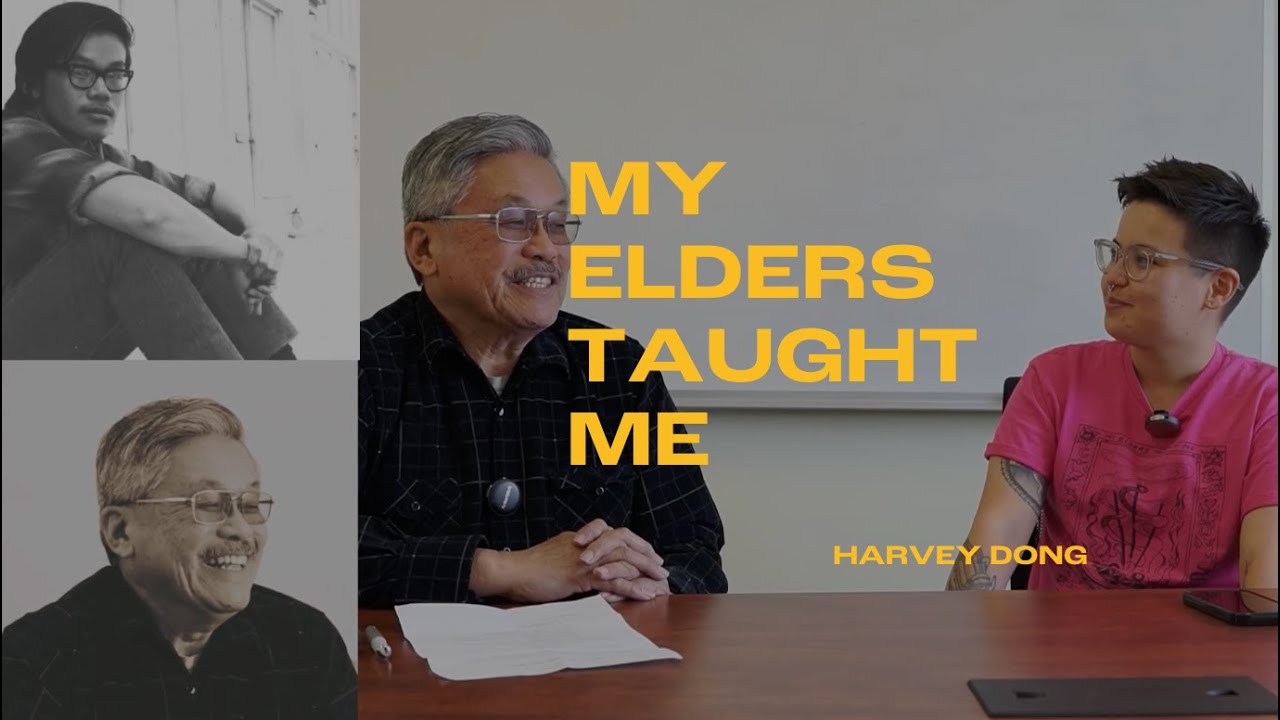
My Elders Taught Me - Harvey Dong
18millionrising
Overview
This video features an interview with Harvey Dong, a long-time activist and educator, who shares his journey of politicization and involvement in social justice movements starting in the late 1960s. He discusses the influence of the anti-war and Black Power movements on his activism, the founding of Everybody's Bookstore and Eastwind Books, and his experiences as a professor at UC Berkeley. Dong highlights the importance of community organizing, solidarity building across different ethnic and social groups, and the challenges and rewards of sustained activism. He emphasizes the lessons learned from past movements and expresses hope for the future of Asian American activism, drawing parallels between historical struggles and contemporary issues.
Save this permanently with flashcards, quizzes, and AI chat
Chapters
- Harvey Dong's political awakening was significantly shaped by the anti-war movement and its intersection with the Black Power movement during his time at UC Berkeley.
- He actively participated in anti-war protests and Black Panther support rallies, even withdrawing from the ROTC program.
- The era was characterized by widespread social and political transformation, including the Vietnam War, Third World anticolonial movements, and student and community activism.
- Dong felt a strong sense of optimism and belief in the collective power of young people to effect change.
- Inspired by the Black Panthers' model of alternative institutions, Dong and other members of the Asian American Political Alliance (AAPA) founded Everybody's Bookstore in 1969 to provide community education and outreach.
- The bookstore, named 'Da Zhong' (the masses) in Chinese, was funded by small donations and aimed to offer progressive literature and resources.
- After Everybody's Bookstore closed, Dong and his partner Beatrice reopened it as Eastwind Books of Berkeley, shifting its focus to Asian American literature and culture.
- Eastwind Books served as a crucial venue for new authors and artists, fostering a space for Asian American voices and experiences.
- Dong's personal journey led him to pursue higher education in Ethnic Studies, eventually becoming a professor at UC Berkeley, while simultaneously managing Eastwind Books.
- Beatrice Dong's return to college and degree in Ethnic Studies significantly influenced the bookstore's focus on diverse Asian American literature.
- The bookstore faced challenges, including landlord issues possibly linked to their activism in support of the International Hotel tenants.
- Eastwind Books became a hub for organizing events, supporting authors, and bridging connections between past movements and new generations of activists.
- The struggle to defend the International Hotel (I-Hotel) tenants in San Francisco's Manilatown was a pivotal community organizing effort.
- Activists used various methods, including protests, court battles, and phone trees, to resist the eviction.
- The eviction of the I-Hotel in 1977 was a violent and traumatic event, highlighting the systemic forces against marginalized communities.
- Despite the loss, the fight led to eventual reforms, including the development of low-cost housing and a Manilatown Heritage Center on the site.
- Dong actively worked to build solidarity between different groups, such as I-Hotel tenants, Chinese garment workers, and Chinese electronic workers, through joint rallies and events.
- The concept of a 'United Front' was crucial, emphasizing that no single group could fight the system alone.
- Solidarity extended beyond ethnic lines, as seen in support for strikes involving white and Latinx women workers in Concord, connecting their struggles to local Asian American workers.
- Challenges to solidarity included patriarchal attitudes, differing priorities within individual groups, and resistance from some organizers who favored a narrow focus.
- The Asian Community Center (ACC) evolved from the Asian American Studies field office at UC Berkeley, serving as a vital community space and classroom.
- The ACC provided services and a gathering place for youth and elders, fostering a sense of community and mutual support.
- Despite university funding cuts due to perceived radical organizing, the ACC continued to operate with community support and volunteer staff.
- Initiatives like the co-op garment factory demonstrated innovative solutions to worker exploitation, born from academic research and community needs.
- Dong emphasizes the importance of self-care, such as practicing Tai Chi and spending time outdoors, to avoid burnout and maintain longevity in activism.
- Sharing experiences with younger generations and reflecting on both successes and failures are crucial for learning and continued engagement.
- Mentors like Yuri Kochiyama and Al Robles exemplify dedication through their continued openness to connection, learning, and participation.
- Dong expresses optimism for the future of Asian America, believing that current generations can draw upon historical lessons to address contemporary issues like anti-Asian racism and social inequality.
Key takeaways
- Social justice movements are often interconnected, with activism in one area inspiring and supporting efforts in others.
- Establishing alternative institutions, like community bookstores, is vital for education, cultural preservation, and empowering marginalized voices.
- Building solidarity across different ethnic, class, and social groups is a powerful strategy for challenging systemic injustice.
- Sustained activism requires both strategic organizing and personal self-care to prevent burnout and ensure long-term impact.
- Learning from the past, including both successes and failures, provides crucial lessons for contemporary activism.
- Community organizing can bridge the gap between academic institutions and grassroots needs, fostering practical solutions and empowerment.
- Intergenerational dialogue and mentorship are essential for passing on knowledge, experience, and hope to future activists.
Key terms
Test your understanding
- How did the anti-war and Black Power movements influence Harvey Dong's early activism?
- What was the significance of Everybody's Bookstore and Eastwind Books in the Asian American community?
- Describe the challenges and strategies involved in building solidarity between different ethnic and working-class groups.
- What lessons can be learned from the struggle to save the International Hotel?
- What advice does Harvey Dong offer for maintaining longevity and avoiding burnout in community organizing?