11:45
Spectroscopy Transformed Astronomy, Chemistry & Physics
Kathy Loves Physics
Overview
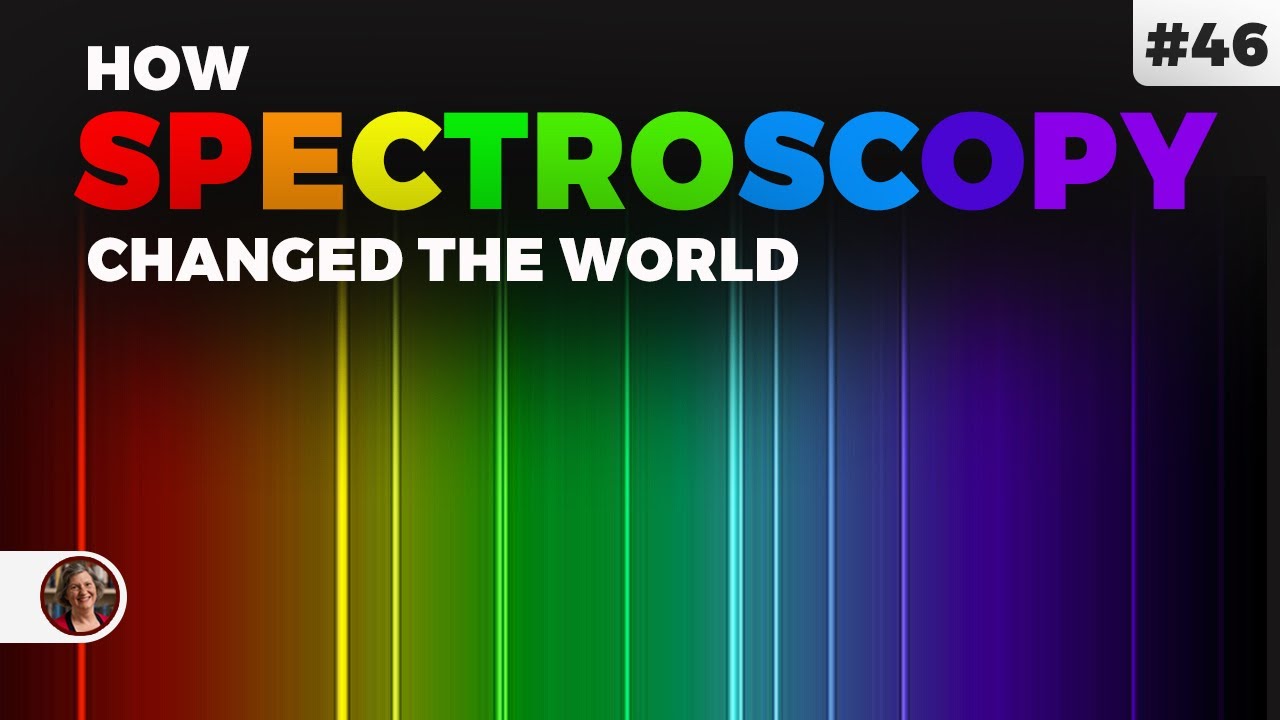
This video explains how spectroscopy, the study of light emission and absorption, revolutionized chemistry, astronomy, and physics. It details the collaboration between Gustav Kirchhoff and Robert Bunsen, who developed the first spectroscope and discovered that each element has a unique spectral fingerprint. This led to the discovery of new elements and the ability to determine the composition of stars. Kirchhoff's work on black-body radiation also laid the foundation for quantum mechanics, fundamentally changing our understanding of the universe.
How was this?
Save this permanently with flashcards, quizzes, and AI chat
Chapters
- Spectroscopy, the study of how objects emit and absorb light, is a revolutionary scientific tool.
- Gustav Kirchhoff and Robert Bunsen, friends and colleagues, pioneered early spectroscopy.
- Bunsen developed the Bunsen burner, providing a stable heat source for chemical experiments.
- Bunsen's systematic study of burning chemical salts revealed that each element produces a unique color spectrum when heated.
This chapter introduces the foundational concepts and key figures in spectroscopy, demonstrating how a simple observation about burning salts led to a powerful analytical technique.
Robert Bunsen, while studying the colors produced by burning chemical salts, complained to Kirchhoff that his methods were not precise enough. Kirchhoff suggested using a prism, which had been known to separate light into a spectrum, to systematically analyze these colors.
- Prisms separate light into distinct lines (spectral lines) for heated, low-density gases, not a continuous rainbow.
- Each element emits a unique set of spectral lines, acting as an 'optical fingerprint'.
- This principle allows scientists to identify elements in unknown substances.
- Bunsen and Kirchhoff used their spectroscope to discover two new elements, rubidium and cesium, by identifying unknown spectral fingerprints.
Understanding spectral fingerprints is crucial because it provides a method for identifying elements with incredible sensitivity, leading to the discovery of previously unknown substances.
While burning compounds, Bunsen and Kirchhoff observed spectral fingerprints that did not match any known elements, leading them to discover rubidium and cesium.
- When light from a continuous source passes through a cooler gas, the gas absorbs specific wavelengths, creating dark lines in the spectrum.
- These dark lines are the inverse of the bright lines emitted by the gas, forming an absorption spectrum.
- Kirchhoff realized that the dark lines in sunlight (Fraunhofer lines) were caused by elements in the sun's cooler atmosphere absorbing specific wavelengths of light from the hotter interior.
- By comparing solar absorption spectra to known elemental emission spectra, astronomers can determine the chemical composition of stars and the sun.
This chapter explains how analyzing the 'shadows' in starlight allows us to understand the composition of celestial bodies without ever visiting them, a monumental leap in astronomical understanding.
Kirchhoff observed that when light from a lamp (producing a continuous spectrum) passed through heated sodium gas, dark lines appeared in the spectrum exactly where sodium's bright emission lines should be. He then realized sunlight had similar dark lines, indicating the presence of elements like sodium in the sun's atmosphere.
- Kirchhoff theorized about 'black bodies' – perfect absorbers and emitters of radiation.
- He predicted that the light emitted by a black body depends only on its temperature and frequency.
- Solving the black-body radiation problem took 40 years and required a radical new idea.
- Max Planck's solution in 1900 proposed that energy is emitted and absorbed in discrete packets, or 'quanta', laying the groundwork for quantum mechanics.
This section highlights how a theoretical problem in understanding light emission from idealized objects unexpectedly led to the birth of quantum mechanics, one of the most transformative theories in physics.
Max Planck derived the equation for black-body radiation by proposing that energy is not continuous but comes in discrete, indivisible units, a concept that fundamentally changed physics.
Key takeaways
- Spectroscopy allows us to identify elements by their unique light emission and absorption patterns, like a fingerprint.
- The presence of dark lines in a star's spectrum reveals which elements are present in its atmosphere.
- Spectroscopy was instrumental in discovering new elements on Earth and determining the composition of the Sun and stars.
- The study of black-body radiation, a theoretical concept, unexpectedly led to the development of quantum mechanics.
- Scientific progress often arises from the collaboration between different disciplines, like physics and chemistry.
- Understanding the interaction of light with matter is fundamental to modern science.
- Even abstract theoretical work, like Kirchhoff's black-body concept, can have profound practical implications decades later.
Key terms
SpectroscopySpectral linesEmission spectrumAbsorption spectrumOptical fingerprintBunsen burnerBlack body radiationQuantum mechanicsQuanta
Test your understanding
- How does spectroscopy allow scientists to identify different elements?
- What is the difference between an emission spectrum and an absorption spectrum, and how are they related?
- Why was Kirchhoff's work on black-body radiation so important for the development of quantum mechanics?
- How did the collaboration between Kirchhoff and Bunsen lead to significant scientific discoveries?
- What is the significance of spectral lines in understanding the composition of stars?