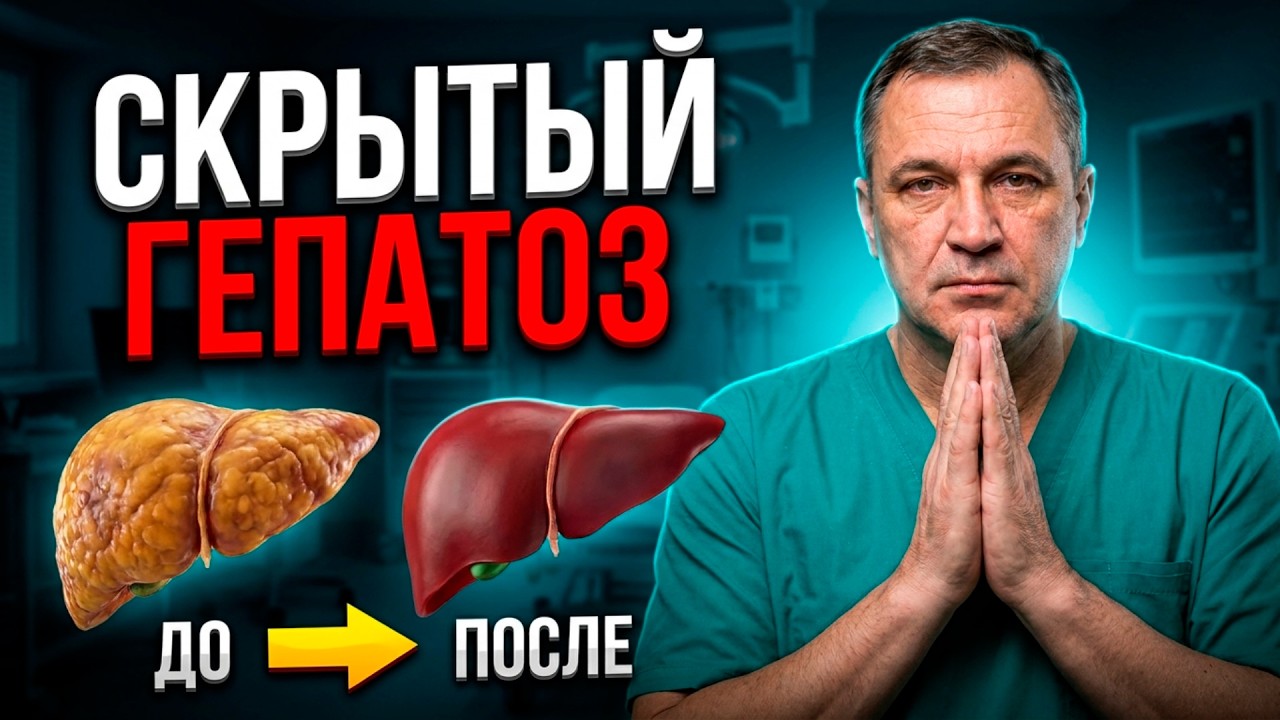
Жировой ГЕПАТОЗ: как очистить печень от жира без таблеток?
Ординаторская Тляшева
Overview
This video explains fatty liver disease (hepatosis), a condition affecting millions, often without their knowledge. It debunks the myth that fatty liver is caused by eating fatty foods, revealing that sugar and refined carbohydrates are the primary culprits due to their impact on insulin levels. The video outlines three key, non-pharmacological strategies to reverse fatty liver: intermittent fasting (specifically, an 8-hour eating window), eliminating fructose-rich foods, and incorporating strength training. It also highlights crucial lab tests beyond standard liver enzymes that can detect the issue earlier and discusses specific supplements that may aid recovery, while cautioning against iron supplementation in certain cases. Finally, it emphasizes the importance of understanding the stage of liver fibrosis and identifies specific populations who may need a more aggressive approach.
Save this permanently with flashcards, quizzes, and AI chat
Chapters
- Fatty liver disease (hepatosis) is widespread, affecting a significant portion of the adult population, often silently.
- It is frequently misattributed to fatty food consumption, but the real cause is linked to carbohydrate metabolism and insulin resistance.
- Traditional treatments like hepatoprotectors often address symptoms rather than the root cause, leading to poor outcomes.
- Fatty liver is reversible in most cases before it progresses to fibrosis or cirrhosis.
- Consuming excess carbohydrates, not fats, leads to fat accumulation in the liver through a process called de novo lipogenesis.
- High insulin levels, triggered by frequent carbohydrate intake, cause liver cells to convert sugars into fat.
- Insulin resistance, where cells become less responsive to insulin, leads to even higher insulin production and further fat storage.
- This condition can affect individuals of normal weight with seemingly normal health markers.
- Many popular liver support medications (hepatoprotectors) are expensive and lack robust scientific evidence from randomized controlled trials.
- These drugs often act as a 'band-aid,' treating consequences like inflammation without tackling the root cause of high insulin.
- The pharmaceutical system incentivizes prescribing medication, even if ineffective, because patients expect a prescription.
- Relying on these ineffective treatments delays necessary lifestyle changes, allowing the disease to progress.
- An 8-hour eating window (16 hours of fasting) significantly lowers insulin levels.
- Prolonged fasting periods allow the liver to enter autophagy, a self-cleaning process that removes accumulated fat.
- Studies show this method can reduce liver fat and improve liver enzymes (ALT) within 12 weeks, even without dietary changes.
- Gradual implementation, starting with a 12-hour fast, is recommended to avoid stress and ensure adherence.
- Fructose, unlike glucose, is processed solely by the liver, leading to rapid fat conversion (de novo lipogenesis).
- Hidden sources of fructose, such as fruit juices, honey, syrups, and processed sauces, are major contributors to fatty liver.
- Even seemingly healthy options like a liter of soda or a glass of orange juice can significantly increase liver fat.
- Whole fruits are generally safe due to their fiber content, which slows fructose absorption.
- Muscle is the primary consumer of glucose, and building muscle mass improves glucose uptake.
- Strength training enhances insulin sensitivity for up to 48 hours post-workout, reducing the signal for fat storage.
- Unlike cardio, strength training directly addresses insulin resistance by improving muscle's ability to utilize sugar.
- Simple bodyweight exercises performed consistently are sufficient to stimulate muscle growth and improve metabolic health.
- Standard liver enzymes (ALT, AST) can be normal even with significant fatty liver, making them unreliable early indicators.
- Key indicators like fasting insulin, HOMA-IR index, fasting triglycerides, and ferritin can reveal insulin resistance and inflammation earlier.
- Supplements like Omega-3, Choline, and Berberine can support liver health when combined with the three core strategies.
- Iron supplementation can be harmful if ferritin levels are already elevated, as it can worsen oxidative stress in an inflamed liver.
- Individuals with type 2 diabetes, postmenopausal women, those with hypothyroidism, and people with sleep apnea face higher risks and may need stricter management.
- The stage of liver fibrosis (scarring) is critical; early stages (0-2) are reversible, while advanced stages (3-4) are difficult or impossible to reverse.
- FibroScan is a more accurate tool than ultrasound for assessing fibrosis stage.
- Fatty liver is a reversible metabolic signal, not a chronic, untreatable disease.
Key takeaways
- Fatty liver disease is primarily driven by insulin resistance caused by excess carbohydrate intake, not dietary fat.
- Hepatoprotective drugs often fail to address the root cause of fatty liver and can lead to disease progression.
- An 8-hour eating window (16-hour fast) is a powerful tool to lower insulin and activate the liver's natural fat-clearing process (autophagy).
- Eliminating fructose from juices, sweeteners, and processed foods is essential, as it directly promotes fat storage in the liver.
- Strength training is more effective than cardio for improving insulin sensitivity and combating fatty liver.
- Fasting insulin, HOMA-IR, and triglyceride levels are better early indicators of fatty liver risk than standard liver enzymes.
- Fatty liver is a reversible condition, but understanding the stage of fibrosis is crucial for determining the likelihood of recovery.
Key terms
Test your understanding
- What is the primary mechanism by which carbohydrates contribute to fatty liver disease?
- Why are traditional hepatoprotective medications often ineffective for treating the root cause of fatty liver?
- How does implementing an 8-hour eating window help in reversing fatty liver?
- What specific types of foods containing fructose should be avoided to prevent exacerbating fatty liver?
- How does strength training contribute to improving insulin sensitivity and reducing liver fat compared to aerobic exercise?
- Beyond standard liver enzymes like ALT and AST, what other lab tests are crucial for detecting early signs of fatty liver and insulin resistance?