10:16
Preschool Observation Part 1
Tiffany Harrison
Overview
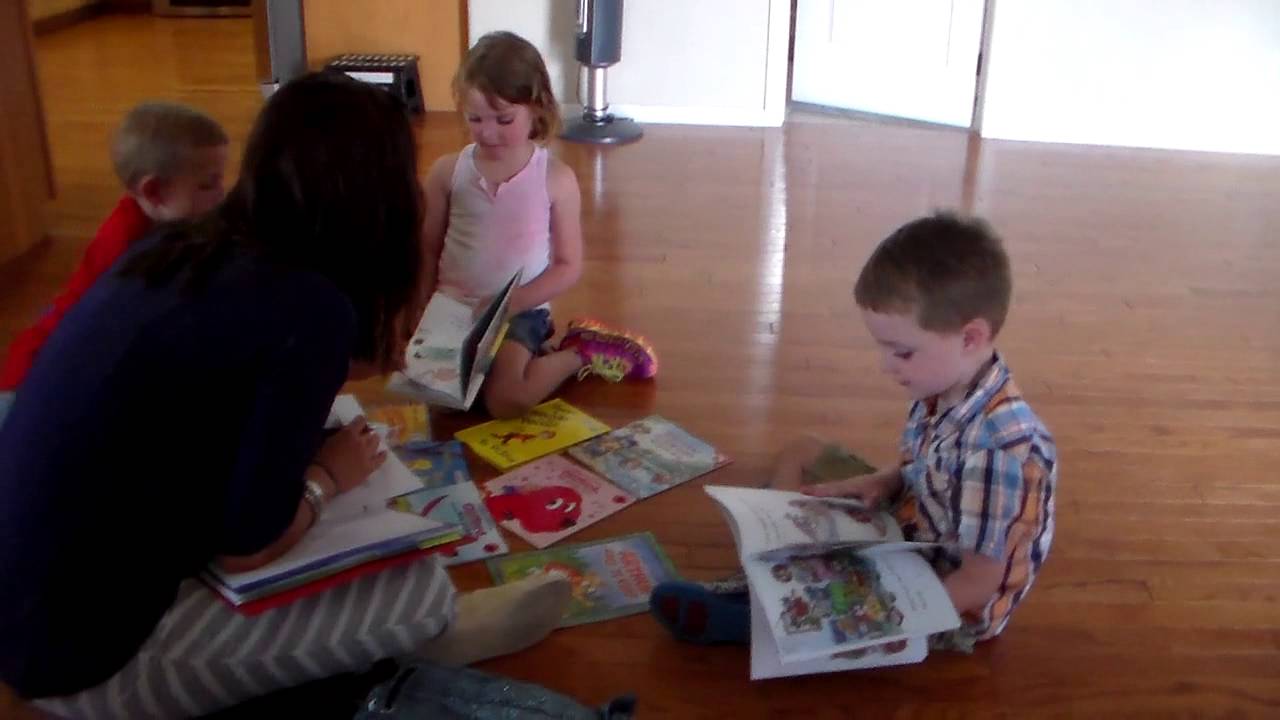
This video demonstrates a preschool observation focused on early literacy skills, specifically letter recognition and the beginnings of reading. The observer guides a child through identifying letters, understanding the directionality of reading (left to right, top to bottom), and recognizing simple words. The interaction highlights a playful, encouraging approach to teaching foundational reading concepts, showing how a child can be prompted to find specific letters and words within a book, reinforcing their learning through positive reinforcement and repetition.
How was this?
Save this permanently with flashcards, quizzes, and AI chat
Chapters
- The observer initiates a playful interaction to gauge the child's familiarity with letters.
- The child is prompted to identify specific letters, such as 'H' and 'T'.
- The observer provides positive reinforcement for correct identifications, encouraging engagement.
Early and accurate letter recognition is a crucial building block for reading, enabling children to decode words and build vocabulary.
The observer asks the child to find the letter 'H' in a book, and the child successfully points to it.
- The observer introduces the concept of starting to read from the beginning of a book.
- The child is guided to understand the left-to-right progression of reading.
- The importance of starting at the top of the page and moving downwards is demonstrated.
Understanding how to navigate text (directionality) is fundamental for comprehension, allowing children to follow the flow of words and sentences.
The observer asks the child, 'Where do you start reading?' and guides them to point to the beginning of a line of text.
- The child is asked to find specific, simple words like 'fun' and 'him'.
- The observer breaks down words into their component letters to aid recognition.
- The child is encouraged to find words that contain specific letters, like 'M' in 'mom'.
Recognizing sight words and simple words builds reading fluency and confidence, allowing children to access more complex texts.
The child is asked to find the word 'fun' and then prompted to locate the letter 'M' within the word 'mom'.
- The observer reinforces the shapes of letters, distinguishing between uppercase and lowercase.
- The child is prompted to identify letters like 'W', 'Y', 'S', and 'F'.
- The interaction emphasizes the connection between letter shapes and their names.
A strong grasp of letter shapes and names is essential for phonological awareness, which underpins successful decoding and spelling.
The child correctly identifies the letter 'W' and is then asked to find the letter 'S'.
Key takeaways
- Early literacy development involves recognizing letters, understanding reading directionality, and identifying simple words.
- Playful and encouraging interactions are effective for teaching foundational reading skills to young children.
- Positive reinforcement significantly boosts a child's confidence and motivation in learning.
- Breaking down words into individual letters helps children learn to decode.
- Consistent practice and repetition are key to mastering letter and word recognition.
- Observing a child's interaction with literacy materials provides insights into their developmental stage.
Key terms
Letter RecognitionReading DirectionalityLeft-to-RightTop-to-BottomSight WordsDecodingUppercase LettersLowercase LettersPhonological Awareness
Test your understanding
- Why is understanding reading directionality (left-to-right, top-to-bottom) important for preschoolers?
- How can an educator effectively encourage a child's letter recognition skills?
- What strategies can be used to help a child identify simple words in a book?
- Explain the significance of positive reinforcement in early literacy learning.
- How does recognizing individual letters contribute to a child's ability to read?