55:59
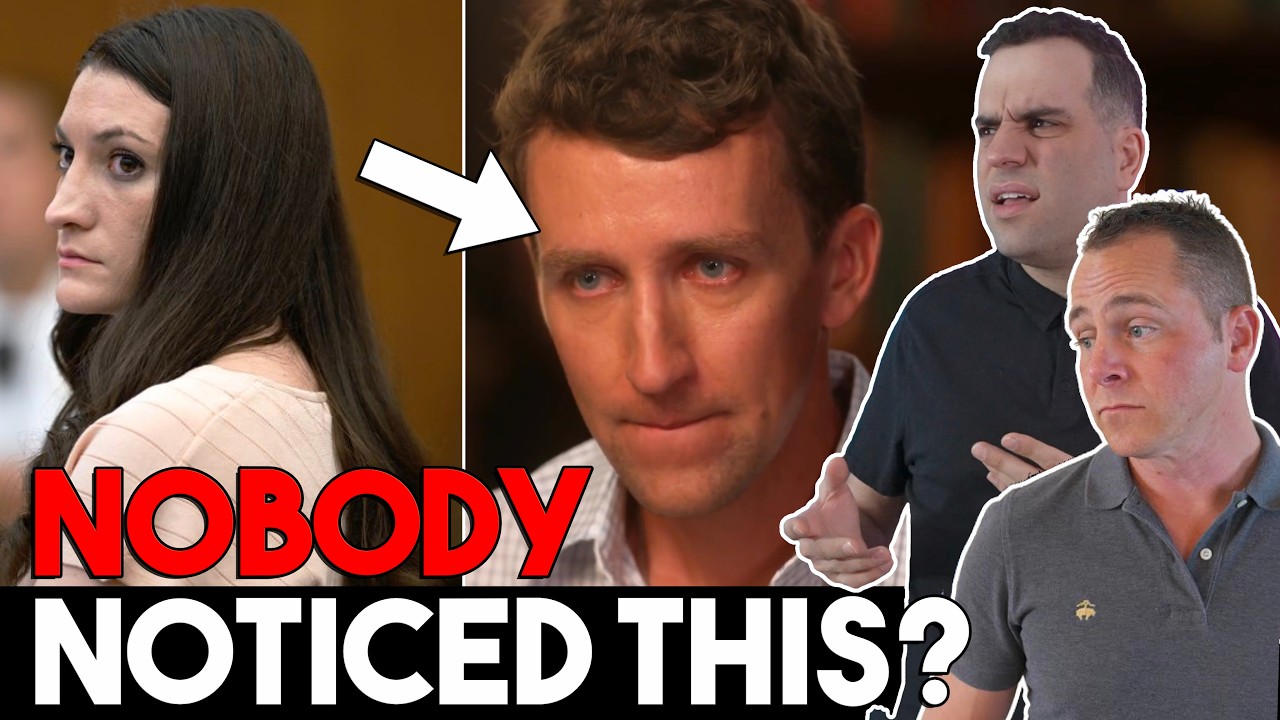
The Truth About Patrick Clancy! Behavioral Analysts React to 60 Minutes Interview! (ft.Chase Hughes)
The Behavioral Arts
Overview
This video features behavioral analysts Spidey and Chase Hughes discussing the 60 Minutes interview with Patrick Clancy, the ex-husband of Lindsay Clancy. The analysts dissect Patrick Clancy's body language, facial expressions, and word choices, exploring potential indicators of his emotional state, stress, and cognitive processes. They discuss his demeanor, his explanations for events, and his interactions, contrasting his behavior with public expectations of grief and offering insights based on behavioral science principles, including the impact of therapies like EMDR.
How was this?
Save this permanently with flashcards, quizzes, and AI chat
Chapters
- The video analyzes Patrick Clancy's behavior during a 60 Minutes interview following his ex-wife Lindsay Clancy's trial.
- Initial observations focus on subtle behaviors like shrugging, increased blink rate, and lip compression.
- Clancy's recollection of his first date is noted as unusually vague, potentially indicating a lack of strong emotional recall for that event.
- His description of mental illness as 'tragically deceptive' is analyzed as a potentially rehearsed phrase, possibly to help him process his inability to foresee events.
Establishing a baseline of Patrick Clancy's behavior and initial reactions is crucial for understanding any subsequent shifts or inconsistencies that might reveal underlying emotional states or cognitive processes.
Clancy's vague recollection of his first date, stating 'I think we flew a kite,' followed by shrugs, is presented as an example of uncertain recall and disengagement.
- Viewers often experience a subjective emotional response to Clancy's statements, questioning his lack of outward breakdown.
- Lip licking and jaw movements are identified as potential stress responses, particularly during moments of perceived deep emotion.
- Eyelid flutters, especially when looking down, may indicate cognitive processing or the filtering of thoughts.
- The phrase 'Give me one kid' is analyzed as a potential expression of bargaining or denial, though its unusual phrasing warrants careful consideration.
Understanding these stress indicators and emotional responses helps differentiate between genuine distress, cognitive processing, and potential attempts at perception management.
The repeated lip licking observed during emotional moments is highlighted as a stress response, distinct from hygienic gestures.
- The 'no' gesture (head shake) is often misinterpreted as solely indicating deception, but it can signify conflict or dissociation between ideas.
- The absence of behavioral clusters, which are groups of simultaneous nonverbal cues, makes interpreting individual gestures less reliable.
- Clancy's use of 'I' and possessive pronouns ('my arms') when describing holding his dying son emphasizes a direct, personal connection and lack of distance.
- The phrase 'I did the best I could' is examined for potential internal disagreement, suggested by blink rate spikes over key words.
Accurate interpretation of gestures and communication patterns is vital to avoid misjudging intent and to understand the subtle ways individuals convey or conceal their internal states.
The 'no' gesture, when discussing telling his children about their siblings, is analyzed not as deception, but potentially as negating an unspoken thought, like 'you wouldn't believe how much I miss them.'
- The 'grief muscle' (glabella) movement, where the inner corners of the eyebrows lift while the rest lowers, is presented as a difficult-to-fake indicator of genuine sadness.
- Clancy exhibits this 'grief muscle' activation when discussing his children's birthdays, suggesting underlying sadness.
- His past experiences in the military and the concept of 'holding it in' are discussed as potential influences on his emotional expression.
- The phrase 'Help me' when talking to his deceased children is noted as unusual, contrasting with more common expressions like 'I miss you'.
Identifying genuine emotional indicators, like the glabella movement, helps distinguish authentic grief from performative displays and understand the impact of past experiences on present emotional expression.
The specific eyebrow movement, where the inner corners remain raised while the outer parts lower, is shown as a sign of authentic sadness during discussions about his children.
- Patrick Clancy's mention of undergoing EMDR (Eye Movement Desensitization and Reprocessing) therapy is significant.
- EMDR is a therapeutic technique used to process traumatic memories, often resulting in a reduced emotional response to those memories.
- The ongoing civil lawsuits filed by both Patrick and Lindsay Clancy against healthcare providers may influence public statements and accountability.
- The analysts suggest that Clancy's perceived lack of overt emotion could be a result of EMDR therapy, aiming to desensitize him to traumatic events.
Understanding therapeutic interventions like EMDR and the context of legal proceedings provides alternative explanations for behaviors that might otherwise be misinterpreted as guilt or deception.
The explanation that EMDR helps individuals process trauma by reducing emotional intensity is offered as a reason why Clancy might discuss horrific events with a seemingly detached affect.
- The inclusion of Patrick Clancy's new partner, Dr. Rachel Dennis, in the interview is questioned as potentially being in poor taste given the context.
- Dr. Dennis's communication style is described as performative, with uptalk, vocal fry, and forced facial expressions.
- Her description of Patrick as a 'selfless father' is questioned, as she may not have known him in that capacity before the tragedy.
- Patrick's behavior while his partner speaks, particularly his gaze towards the interviewer and camera, suggests awareness of perception and potential discomfort.
Analyzing the interaction with the new partner reveals insights into communication styles, potential motivations for appearing in the interview, and Patrick Clancy's awareness of public perception.
Dr. Dennis's description of meeting Patrick in Central Park is characterized as a 'meetcute' and a 'Hallmark movie script,' suggesting a performative narrative that clashes with the tragic context.
- The analysts conclude that there is no definitive behavioral evidence of guilt or deception from Patrick Clancy in the interview.
- Unusual behavior does not automatically equate to guilt; it requires careful consideration of context and potential explanations like EMDR.
- The primal scream described by legal professionals and jurors during the 911 call is contrasted with Clancy's interview demeanor, suggesting a significant difference in emotional expression.
- The core tragedy of the loss of children is emphasized, urging viewers to approach the analysis with both critical thinking and empathy.
The final analysis reinforces that behavioral interpretation must be holistic, considering therapeutic interventions and legal contexts, and that oddities alone are insufficient grounds for assuming guilt.
The contrast between the described 'blood-curdling' primal scream on the 911 call and Clancy's measured interview responses is presented as a significant point of discussion, with EMDR offered as a potential explanation for the latter.
Key takeaways
- Behavioral analysis requires looking for clusters of cues, not isolated gestures, to avoid misinterpretation.
- Therapeutic interventions like EMDR can significantly alter a person's emotional expression when discussing traumatic events.
- Legal contexts, such as civil lawsuits, can influence how individuals present themselves and discuss accountability.
- Genuine sadness can manifest subtly, and indicators like the 'grief muscle' can be difficult to fake.
- Unusual or unexpected behavior is not inherently indicative of deception or guilt; alternative explanations must be considered.
- A person's communication style, including vocal patterns and body language, can be performative and influenced by a desire to manage perception.
- It is crucial to differentiate between subjective emotional reactions to a person's behavior and objective behavioral analysis.
Key terms
Behavioral AnalysisBody LanguageFacial ExpressionsLip CompressionBlink RateStress ResponseEMDR (Eye Movement Desensitization and Reprocessing)Grief MusclePerception ManagementPrimal ScreamCognitive DissonanceBehavioral Clusters
Test your understanding
- How can subtle nonverbal cues like lip licking and eyelid flutters indicate stress or cognitive processing?
- What is the 'grief muscle,' and how can its activation help distinguish genuine sadness from performative emotion?
- Explain how EMDR therapy might account for Patrick Clancy's seemingly subdued emotional responses when discussing traumatic events.
- Why is it important to consider the context of ongoing lawsuits when analyzing a person's statements about accountability and responsibility?
- What are behavioral clusters, and why is their absence significant when interpreting individual nonverbal cues?