Impact Storytelling | Social Impact Fellowship Cohort 10
Social Impact Hub
Overview
This video focuses on the art and science of impact storytelling for social impact organizations. It emphasizes moving beyond simply sharing data and statistics to crafting compelling narratives that resonate emotionally with audiences. The session covers the foundational strategic elements of storytelling, including understanding your 'why,' identifying your audience, and positioning your organization effectively. It delves into the neuroscience behind why stories are more memorable and impactful than facts alone, highlighting the role of emotion and neural coupling. Practical examples and frameworks are provided to help participants develop and deliver stories that drive understanding, belief, and action.
Save this permanently with flashcards, quizzes, and AI chat
Chapters
- The session shifts from impact measurement to communicating impact through storytelling.
- The facilitator, Fern Kenny, brings extensive experience in marketing and communications for major brands and purpose-driven organizations.
- The session will cover clarity, understanding organizational purpose, effective communication, and positioning.
- The goal is for audiences to understand, believe in, and be compelled to act upon the stories shared.
- Organizations often rely heavily on numbers and statistics to prove impact, which are vital for reporting and funding.
- The brain processes stories differently than facts; stories activate sensory, emotional, and motor regions, leading to neural coupling where the listener's brain mirrors the storyteller's.
- Emotionally relevant information is prioritized by the brain, releasing neurochemicals like dopamine (attention, memory) and oxytocin (social bonding, trust).
- Stories are remembered up to 22 times more than facts alone, and data is forgotten much faster than stories.
- Avoid 'dry data'; present statistics in ways that evoke imagination and meaning.
- Translate large numbers into relatable comparisons or individual experiences.
- Use concrete examples and analogies that resonate with the audience's understanding.
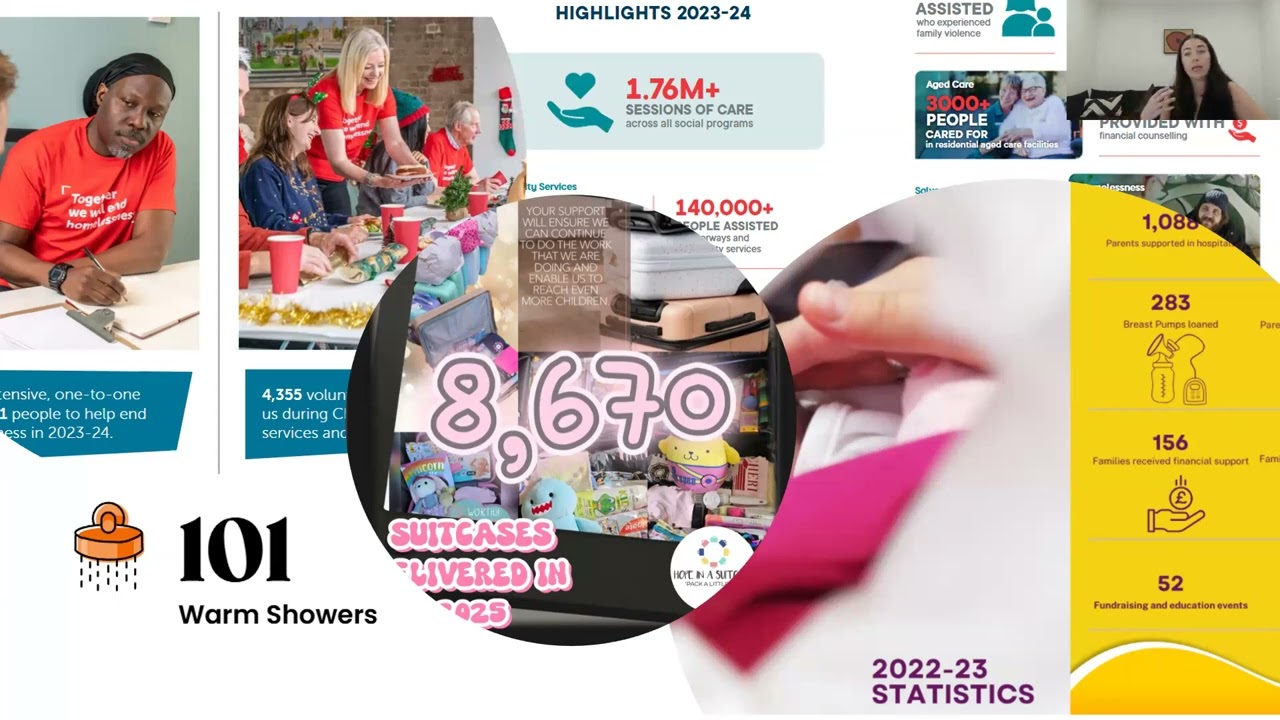
- Creative presentation of data, like the Cancer Council laying out 1700 towels on a beach, can make statistics tangible and memorable.
- Nonprofits using storytelling effectively have significantly higher donor retention rates (45% vs. 27%).
- Video storytelling is a powerful shortcut to building empathy and connection, especially for time-poor audiences.
- Fundraising campaigns incorporating video receive substantially more funding.
- The core of impactful storytelling lies in evoking emotion and making people feel connected, as captured by Maya Angelou's quote: 'People will never forget how you made them feel.'
- The OSH Harvest film is told from the perspective of a volunteer, not the founder, making it relatable.
- The story quickly introduces a protagonist with a relatable background (corporate to giving back).
- It highlights the tangible impact of providing food and the emotional need for company and friendship.
- The narrative emphasizes the feeling of giving back and the profound difference the organization makes in people's lives.
- Before creative execution, establish strategic foundations: understand your 'why' (objective), who you are telling the story to, and your positioning.
- Stories should focus on the impact on others and how it changes something for them, rather than just the organization's journey or cleverness.
- Effective positioning involves understanding the audience's needs, values, and alternatives, and articulating your unique differentiation.
- The 'why' behind telling a story dictates its objective, shape, and how its success is measured.
- Hope in a Suitcase provides new suitcases filled with essentials and comforts to children entering foster care.
- The story is told through the founder's lived experience and the perspective of a case worker, highlighting the emotional impact on children.
- A key element is a letter from a child recipient, which powerfully conveys the impact without revealing personal details, respecting privacy.
- The organization's impact is demonstrated through delivered suitcases and recognition, but the emotional core is the child's feeling of being loved and valued.
- The 'Story Mountain' framework provides a structure: Introduction, Rising Action, Climax, Falling Action, Conclusion.
- The Introduction sets the scene, introduces the protagonist, their needs, and the central conflict.
- Rising Action details the challenges and obstacles faced, and who or what helps the character.
- The Climax is the peak moment of realization or decision, followed by Falling Action showing the results and reflections.
- The Conclusion includes the transformation (from/to), the lesson learned, and a clear call to action.
- Capture attention within seconds, as audiences have limited attention spans.
- Understand your audience and ask them what content they engage with and where.
- Leverage multiple channels and formats (video, written, presentations) for your story to live.
- Consistency is key: say the same thing in different places over time to become known for your message.
Key takeaways
- Stories are far more memorable and emotionally engaging than data alone due to how the brain processes them.
- Transforming data into relatable narratives and analogies is crucial for making impact understandable and tangible.
- Effective storytelling builds empathy, trust, and connection, leading to higher donor retention and greater support.
- Focus your stories on the impact on others and how it changes their lives, rather than solely on your organization's journey.
- Strategic foundations – understanding your 'why,' audience, and positioning – are essential before crafting any story.
- A clear narrative structure, like the Story Mountain, helps guide the audience through an emotional arc to a meaningful conclusion and call to action.
- Consistency in message and format across various channels is vital for ensuring your story reaches and stays with your audience over time.
Key terms
Test your understanding
- Why are stories generally more effective than raw data for communicating impact, and what neurological processes are involved?
- How can organizations transform dry statistics into compelling narratives that resonate with their audience?
- What are the essential strategic foundations that must be established before beginning to craft an impact story?
- Describe the key stages of the 'Story Mountain' framework and how each contributes to a compelling narrative.
- What is the importance of consistency and audience understanding in delivering impact stories effectively?