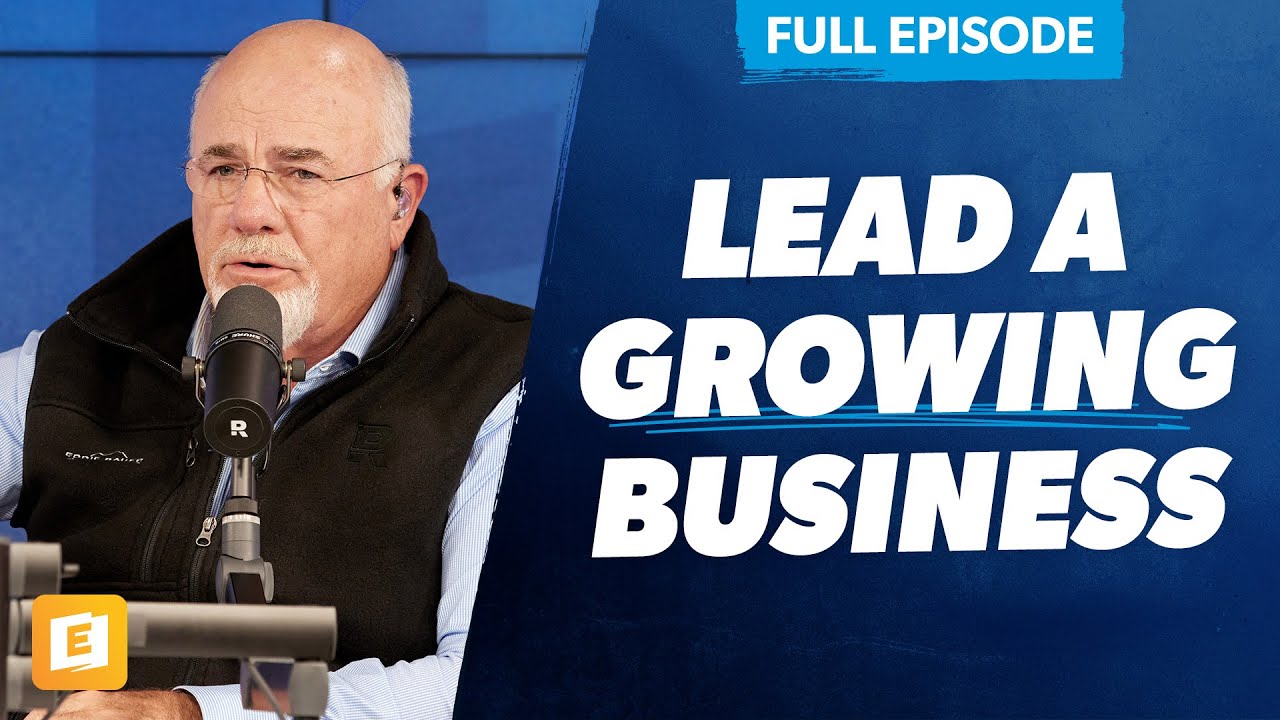
How to Lead High Performers and Scale Your Business
EntreLeadership
Overview
This podcast episode features Dave Ramsey answering calls from business leaders about scaling their companies and managing high performers. The first caller, Nathan, struggles with a top-performing salesperson who is inconsistent. Dave suggests segmenting the role and using personality assessments like DISC to understand motivations and team dynamics. The second caller, David, seeks advice on transitioning leadership of his family's tire business from his father-in-law. Dave emphasizes the need for a clear, gradual succession plan, acknowledging the emotional challenges for founders. Finally, Joe, a sole proprietor electrician, asks about managing excess profits. Dave advises reinvesting retained earnings into business growth, specifically hiring an additional technician and truck, to scale the operation effectively.
Save this permanently with flashcards, quizzes, and AI chat
Chapters
- High performers may excel in certain tasks (e.g., sales negotiations) but disengage with others (e.g., detailed takeoffs).
- Analyze the specific tasks that energize and drain the employee to identify potential role adjustments.
- Consider splitting roles or reassigning tasks to better align with individual strengths and preferences.
- Utilize personality assessments like DISC to understand an employee's natural tendencies (e.g., dominant, influential, steady, conscientious) and how they interact with others.
- Personality assessments (like DISC, StrengthsFinder, Myers-Briggs) provide insights into how individuals process information and make decisions.
- Understanding personality types helps leaders predict potential conflicts and optimize team chemistry by considering how different styles interact.
- Leaders should not use personality tests to exclude candidates but rather to understand how to best position and manage them.
- Matching an employee's personality to the demands of the role and the dynamics of the team is key to success.
- Transitioning leadership requires a clear decision from the founder about their desired end game (e.g., retirement, sale, continued involvement).
- A gradual, incremental succession plan significantly increases the probability of success compared to abrupt transitions.
- Founders often tie their identity to their business, making emotional detachment and the planning process challenging.
- The successor must communicate their need for clarity and a plan, emphasizing that it's about securing their future and the business's continuity, not about forcing the founder out.
- Small businesses often prioritize their teams and customers, avoiding layoffs solely to boost short-term profits.
- Large corporations, driven by stock prices, frequently resort to layoffs as a cost-cutting measure, regardless of the human impact.
- Small businesses can differentiate themselves by offering job security and a caring environment, attracting talent disillusioned by corporate practices.
- Ethical leadership means taking a personal financial hit before resorting to layoffs, especially when the business is profitable but seeking increased margins.
- Sole proprietors should separate funds for taxes, personal expenses, and retained earnings.
- Retained earnings are profits reinvested into the business for growth, emergencies, or strategic investments.
- To scale, consider hiring an additional technician and investing in a second truck, using retained earnings to 'prime the pump'.
- A gradual scaling approach involves training a new hire to work alongside you before they operate independently, ensuring quality and profitability.
Key takeaways
- Understanding and leveraging individual personality differences through assessments like DISC can significantly improve team performance and reduce conflict.
- Effective leaders segment roles and tasks to match employee strengths, leading to higher engagement and productivity.
- Family business transitions require proactive, clear communication and a long-term, gradual plan to navigate emotional complexities and ensure continuity.
- Small businesses often demonstrate greater ethical commitment to their employees than large corporations, prioritizing people over short-term profit maximization.
- Reinvesting profits strategically into growth initiatives, such as hiring and equipment, is crucial for scaling a business beyond a sole proprietorship.
- The most successful business transitions are gradual, allowing all stakeholders to adapt emotionally and operationally.
- Leaders must define their desired future state for the business and then work backward to create a roadmap to achieve it.
Key terms
Test your understanding
- How can understanding an employee's DISC profile help a leader manage their performance and job satisfaction?
- What are the key emotional and practical challenges founders face during succession planning, and how can they be mitigated?
- Why is a gradual succession plan generally more successful than an abrupt one in family businesses?
- How does Dave Ramsey differentiate between ethical small business practices and the behavior of 'Corporate America' regarding layoffs?
- What is the recommended strategy for a profitable sole proprietor to use their retained earnings to scale their business?