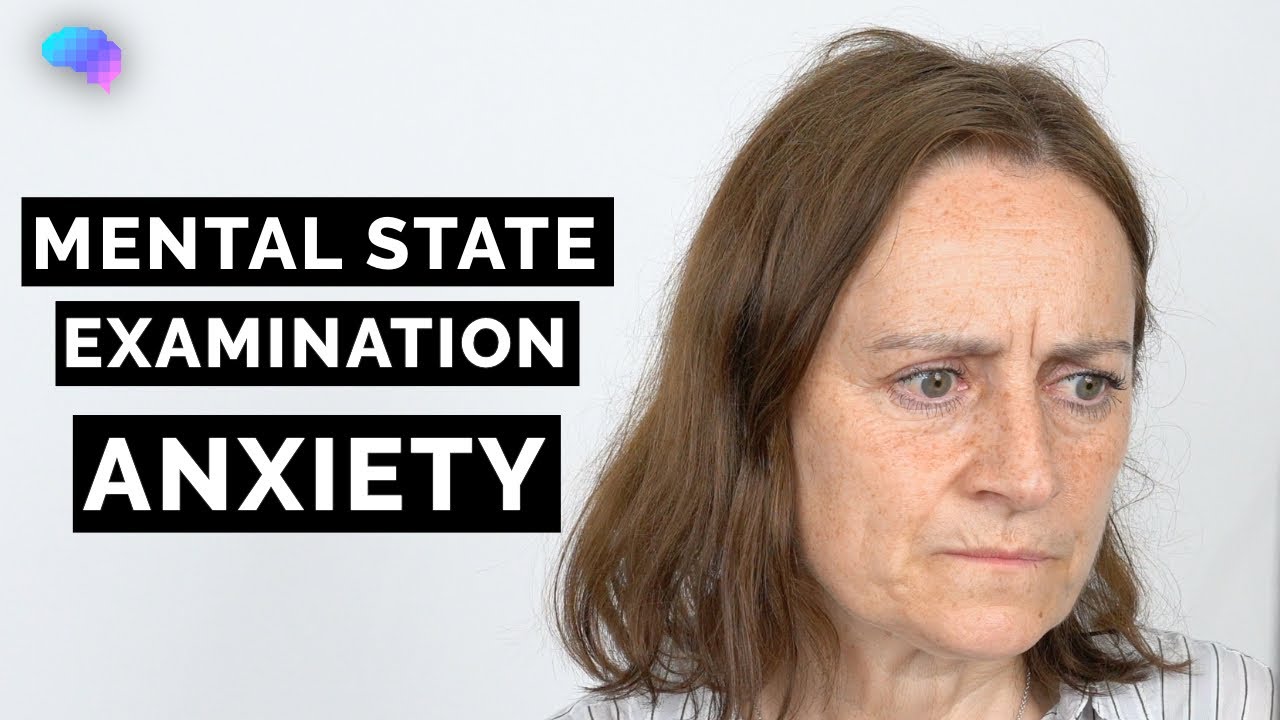
Anxiety | Mental State Examination (MSE) | OSCE Guide | SCA Case | UKMLA | CPSA | PLAB 2
Geeky Medics
Overview
This video demonstrates a simulated patient encounter focused on assessing anxiety as part of a Mental State Examination (MSE). It follows a doctor interviewing a patient, Jan, who describes her struggles with racing heart, sweating, and persistent worries about her family's safety, particularly after her partner's car accident. The interview explores the onset, triggers, impact on her life, sleep, mood, and coping mechanisms. The doctor also probes for more severe symptoms like panic attacks, intrusive thoughts, and suicidal ideation, while assessing insight and risk. The summary concludes with the doctor's assessment of generalized anxiety and a plan for further management.
Save this permanently with flashcards, quizzes, and AI chat
Chapters
- Patient presents with anxiety characterized by a racing heart and sweating.
- Anxiety is triggered by catastrophic thinking about potential bad events.
- Symptoms began a few months ago, following a partner's car accident, leading to persistent worries about family safety.
- Specific worries include partner's safety while driving and children's safety at school.
- Distraction, like watching television, offers some relief.
- Patient experienced panic attacks as a teenager and had one recently, characterized by breathlessness, triggered by fears about child services.
- Anxiety significantly impacts relationships, leading to constant checking on children and potential embarrassment for them.
- The patient's partner, while supportive, is also showing signs of strain from the constant reassurance seeking.
- Daily functioning is affected, with worries being all-consuming, impacting sleep and enjoyment of usual activities.
- Mood is described as low due to the exhaustion of constant worrying.
- Patient strongly denies any thoughts or intentions of self-harm or harming others.
- Family (partner and children) are identified as strong protective factors and a reason not to consider self-harm.
- Patient denies substance misuse as a coping mechanism.
- No formal thought disorder, thought interference, or perceptual abnormalities were noted.
- Patient acknowledges that her worries are getting out of hand, demonstrating good insight.
- She has good judgment regarding her mental health.
- Patient expresses a desire for counseling or talking to someone to 'feel normal again'.
- She does not experience intrusive thoughts that pop into her mind without a trigger, but worries can be easily sparked.
- No rituals or routines are performed to prevent bad things from happening.
- The doctor assesses the patient as having generalized anxiety affecting her relationships.
- The patient appeared anxious and restless but maintained good eye contact and rapport.
- No abnormalities in speech, thought disorder, or perceptual disturbances were observed.
- The doctor plans to discuss the case with their team to determine the best course of action for support.
- The doctor will follow up with the patient regarding the plan.
Key takeaways
- Anxiety can manifest physically (racing heart, sweating) and be triggered by specific events or catastrophic thinking.
- The impact of anxiety extends beyond the individual, significantly affecting relationships and daily functioning.
- A thorough MSE includes assessing mood, thought content (worries, obsessions), insight, judgment, and risk of harm to self or others.
- Family support can be a crucial protective factor in managing mental health conditions.
- Patient-centered care involves understanding the individual's goals and motivations for seeking help.
- Even with significant anxiety, insight and judgment can remain intact, and the patient may be motivated for treatment.
- Distraction and seeking reassurance are common, though not always effective, coping strategies for anxiety.
Key terms
Test your understanding
- What are the key physical and cognitive symptoms of anxiety described by the patient?
- How did the car accident trigger and exacerbate the patient's anxiety?
- What specific areas of the patient's life are most affected by her anxiety?
- Why is it important to assess for suicidal ideation and homicidal ideation in a patient presenting with anxiety?
- How does the patient's insight into her condition influence the approach to her care?