7:06
Project Management Lifecycle
Terrena Hooper
Overview
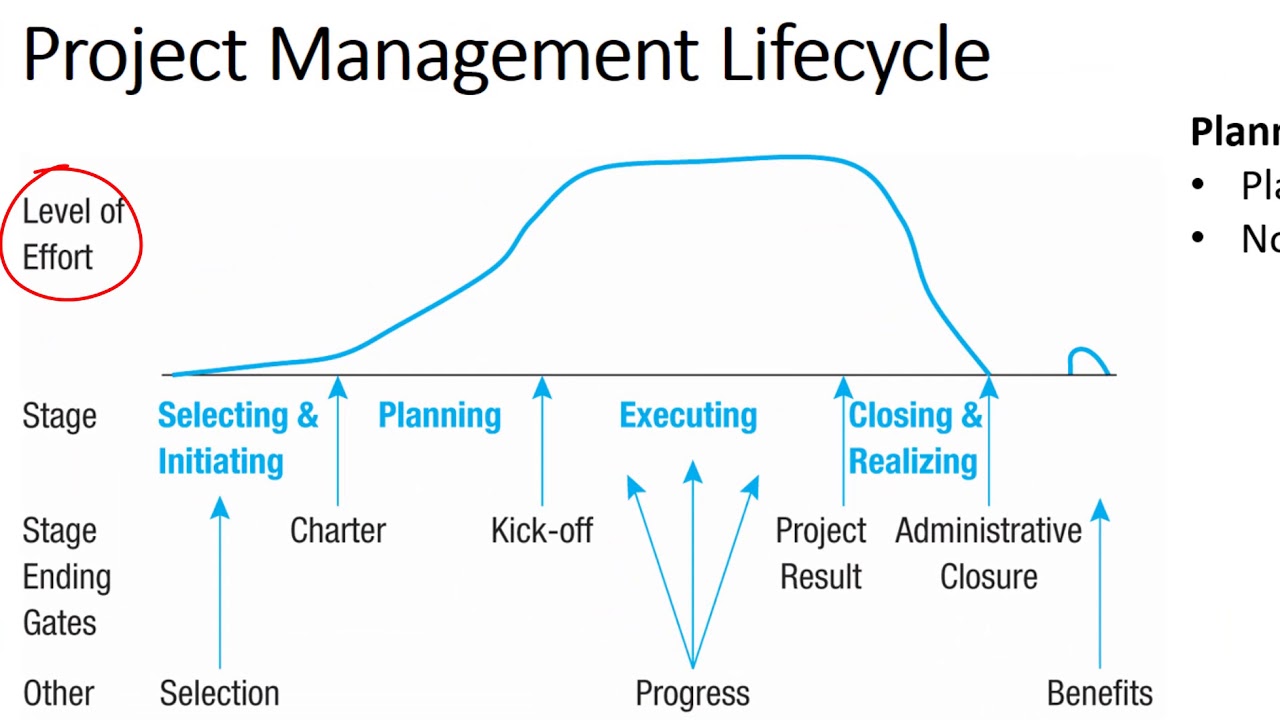
This video explains the five key stages of the project management lifecycle: initiating, planning, executing, monitoring and controlling, and closing. It emphasizes that while the names of these stages might vary slightly across different textbooks, the core functions remain consistent. The lifecycle provides a structured framework for managing projects from the initial idea to final delivery and evaluation, ensuring that resources are used effectively and that project goals are met. Understanding this lifecycle is crucial for anyone involved in managing or participating in projects.
How was this?
Save this permanently with flashcards, quizzes, and AI chat
Chapters
- Projects begin as an idea or concept, which needs to be evaluated for necessity and feasibility.
- This stage focuses on deciding *if* an idea should become a formal project, not on defining the project itself.
- A project charter (or proposal/business case) is created to outline the project's purpose and justification.
- The charter is reviewed by stakeholders, and approval acts as a gateway to the next stage.
This stage is critical for ensuring that an organization invests in projects that are truly needed and have the potential for success, preventing wasted resources on unviable ideas.
A business with a limited budget must choose which of several potential projects to fund, using the initiating stage to assess and select the most promising one.
- Once approved, the project is planned in detail to create a comprehensive roadmap.
- The project plan covers scope, schedule, budget, risk management, quality, resources, procurement, communications, and stakeholder management.
- This phase requires significant effort to anticipate all aspects of project execution.
- Approval of the detailed project plan signifies readiness to begin the actual work.
A thorough plan acts as a blueprint, guiding the project team and providing a baseline against which progress and performance can be measured.
Defining what features will be included in a new smartphone app, setting a deadline for its release, and estimating the development costs.
- This is the phase where the actual project work is performed according to the approved plan.
- A formal kickoff meeting often marks the transition from planning to execution.
- The project team follows the plan, manages resources, and produces the project's deliverables.
- Communication and coordination among team members and stakeholders are vital.
This is where the project's value is created through the diligent effort of the project team, turning plans into tangible results.
Software developers writing code, designers creating interfaces, and testers verifying functionality for a new application.
- This phase runs concurrently with execution, focusing on tracking progress and performance.
- Key activities include comparing planned versus actual work, managing risks, handling changes, and reporting status.
- Progress reports are essential documents for communicating project health to stakeholders.
- This ensures the project stays aligned with its objectives and addresses deviations promptly.
Continuous monitoring and control allow for early detection of problems and necessary adjustments, increasing the likelihood of project success.
A project manager reviewing daily progress reports, updating the risk register, and processing change requests to modify the project scope.
- This final stage involves completing all project activities and formally closing the project.
- Activities include administrative closure (payments, archiving), team reassignment, and final evaluations.
- A project review assesses the project's success, lessons learned, and stakeholder satisfaction.
- The goal is to ensure all deliverables are accepted and the project is officially concluded.
Proper closure ensures all loose ends are tied up, valuable lessons are captured for future projects, and the project's success is formally recognized.
Getting final client sign-off on a completed building, paying all outstanding invoices, and holding a team meeting to discuss what went well and what could be improved.
Key takeaways
- The project management lifecycle provides a structured, phased approach to guide projects from conception to completion.
- Each stage of the lifecycle has distinct objectives and deliverables, building upon the previous one.
- Effective initiation is crucial for selecting viable projects and avoiding wasted resources.
- Detailed planning sets the foundation for successful execution by defining scope, schedule, and resources.
- Execution is where the project's work is performed, requiring strong team coordination.
- Monitoring and controlling are ongoing processes that ensure the project stays on track and adapts to changes.
- Closing involves formalizing completion, evaluating performance, and capturing lessons learned for future improvement.
Key terms
Project Management LifecycleInitiating StageProject CharterPlanning StageProject PlanExecuting StageMonitoring and ControllingClosing StageProject ReviewStakeholders
Test your understanding
- What is the primary purpose of the initiating stage in the project management lifecycle?
- How does the planning stage contribute to the successful execution of a project?
- What are the key activities involved in the executing phase of a project?
- Why is the monitoring and controlling phase essential, even though it runs alongside execution?
- What are the main objectives of the closing stage, and why is a project review important?