22:10
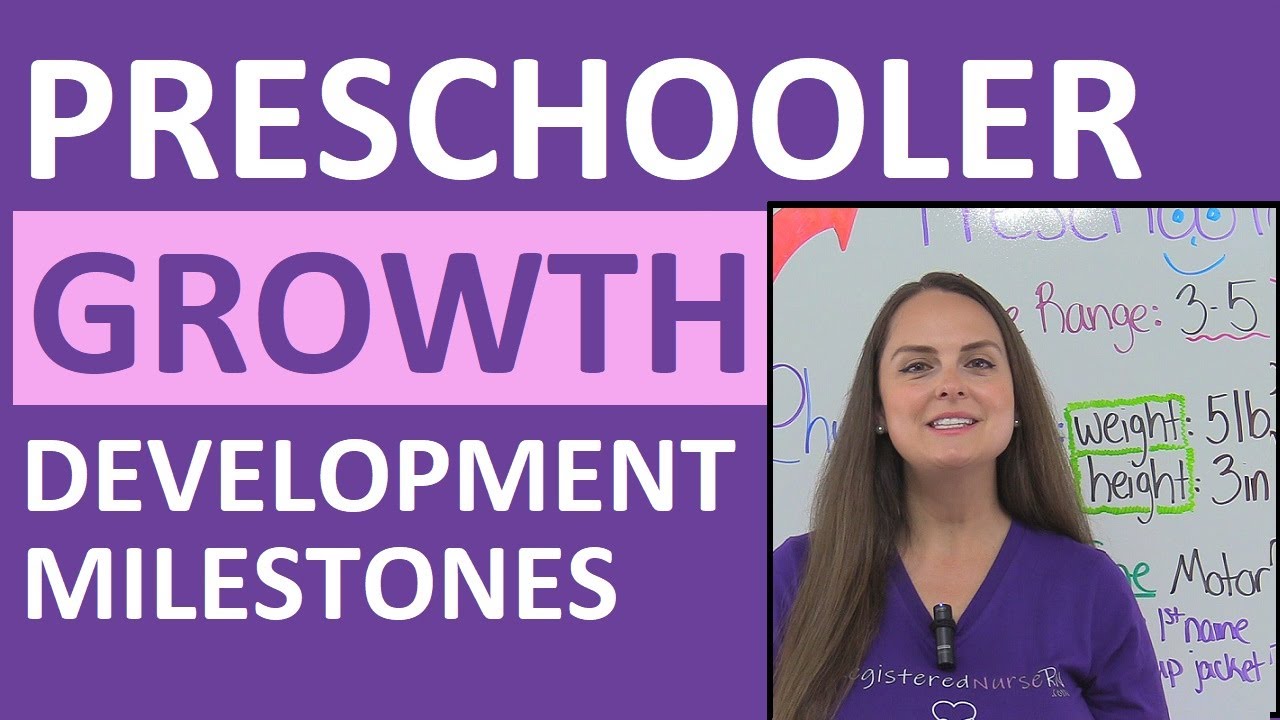
Preschooler Growth & Developmental Milestones Pediatric Nursing NCLEX Review
RegisteredNurseRN
Overview
This video covers the key growth and developmental milestones of preschoolers, typically aged three to five years old. It breaks down development into physical changes, motor skill progression, emotional and social development, cognitive shifts according to Piaget and Erikson, common fears, safety considerations, nutritional habits, language acquisition, and play behaviors. The content is presented in a way that is useful for nursing students preparing for the NCLEX exam, emphasizing practical applications and nursing interventions for this age group.
How was this?
Save this permanently with flashcards, quizzes, and AI chat
Chapters
- Preschoolers lose their baby-like chubbiness, developing a more defined physique with elongating limbs and tightening abdominal muscles.
- Physical growth slows compared to infancy; expect about 5 pounds and 3 inches of growth per year.
- Gross motor skills (large muscle use) improve significantly, enabling activities like riding tricycles, hopping, skipping, and climbing.
- Fine motor skills (small muscle use) develop, allowing for tasks such as copying shapes, writing their name, zipping jackets, and cutting with scissors.
Understanding these physical changes and motor skill advancements helps in assessing normal development and identifying potential delays, which is crucial for pediatric nursing.
A preschooler learning to zip their own jacket demonstrates the development of fine motor skills using small hand muscles.
- Separation anxiety, prominent in toddlers, lessens significantly in preschoolers, though it may persist in younger preschoolers (around age 3).
- Preschoolers are transitioning from parallel play (playing alongside others) to associative play (playing with shared toys but without a common goal) and then cooperative play (working together towards a shared goal).
- Play is a primary learning method for preschoolers, allowing them to explore new experiences, develop social skills, and practice problem-solving.
Recognizing the decrease in separation anxiety and the progression in play styles is important for managing a child's adjustment to new environments, like a hospital stay, and for fostering social competence.
Children in a sandbox sharing shovels and molds but building their own individual creations illustrates associative play, a precursor to cooperative play where they might build a sandcastle together.
- According to Erikson, preschoolers are in the 'Initiative vs. Guilt' stage, where they need opportunities to explore, make decisions, and try new things to develop a sense of purpose.
- Piaget's pre-operational stage continues, characterized by egocentrism (difficulty seeing others' perspectives) and magical thinking.
- Magical thinking means preschoolers may believe inanimate objects have feelings (animism) and can interpret language very literally.
- Developing a conscience and understanding basic right/wrong are key cognitive milestones in this stage.
Understanding these cognitive frameworks helps nurses explain a child's behavior, such as literal interpretations or imaginative play, and guides interventions to support their development of independence and self-worth.
A child believing their stuffed animal is hungry and needs to be fed demonstrates animism, a characteristic of magical thinking in Piaget's pre-operational stage.
- Preschoolers experience real fears, often stemming from their active imaginations, literal thinking, and animism, leading to fears of monsters, loud noises, or even punishment for their illness.
- They may also fear mutilation due to invasive procedures and hospitalization, sometimes believing their sickness is a punishment.
- Nurses should be honest, use simple terms, and employ medical play (using dolls and equipment) to prepare children for procedures.
- Offering choices, maintaining routines where possible, and keeping parents involved can help reduce anxiety and a sense of lost control.
Addressing a preschooler's fears directly and honestly, using age-appropriate communication and play, is essential for building trust and reducing trauma during healthcare experiences.
Using a doll to demonstrate how an IV will be inserted, allowing the child to participate in the pretend procedure, is a form of medical play to alleviate fear.
- Preschoolers are more aware of dangers than toddlers but still require supervision and education on safety, including firearm safety, water safety, and stranger awareness.
- Active play necessitates safety gear like helmets and pads when biking or skating.
- Nutritional needs are met with a growing willingness to try new foods, though dental visits remain important as baby teeth are replaced.
- Choking risks decrease but remain for certain foods or behaviors like running with objects in their mouths.
Educating parents and children about these health and safety aspects promotes well-being and prevents common childhood injuries and illnesses.
Ensuring a preschooler wears a helmet while riding a tricycle protects them from head injuries during potential falls.
- Preschoolers experience a significant 'language explosion,' developing extensive vocabularies and forming more complex sentences.
- By age five, they can speak around 2,400 words and use five-word sentences, often incorporating conjunctions.
- Stammering or stuttering can be normal during this rapid language development as they articulate complex thoughts.
- Parents should be patient, avoid rushing the child, and not make fun of speech difficulties to encourage confident communication.
Understanding the nuances of preschooler language development, including potential speech disfluencies, allows nurses to provide appropriate guidance to parents and identify when further speech therapy might be needed.
A preschooler using the word 'because' to connect two ideas in a sentence, like 'I want to play outside because the sun is shining,' shows advanced language development.
Key takeaways
- Preschoolers are actively developing independence and a sense of purpose through exploration and decision-making, as described by Erikson's 'Initiative vs. Guilt' stage.
- Cognitive limitations like egocentrism and magical thinking significantly influence how preschoolers perceive the world and interact with others, including healthcare providers.
- Fear is a common experience for preschoolers, often rooted in their imaginative minds, and requires sensitive, honest communication and reassurance from caregivers and medical staff.
- Play is not just recreation but a critical tool for learning, social development, and emotional processing for preschoolers.
- While physical growth slows, gross and fine motor skills advance considerably, preparing children for school-age activities.
- Language development accelerates dramatically, but temporary speech disfluencies can be normal and should be handled with patience.
- Safety remains a concern, and education on preventing accidents and understanding dangers is vital for this age group.
Key terms
PreschoolerGross Motor SkillsFine Motor SkillsSeparation AnxietyInitiative vs. GuiltPre-operational StageEgocentrismMagical ThinkingAnimismMedical PlayAssociative PlayCooperative PlayLanguage Explosion
Test your understanding
- How does a preschooler's approach to play differ from a toddler's, and why is this progression important?
- What are the key characteristics of Piaget's pre-operational stage that influence a preschooler's understanding of the world?
- Describe nursing interventions that can help alleviate a preschooler's fear of hospitalization or medical procedures.
- Explain the significance of Erikson's 'Initiative vs. Guilt' stage for preschooler development and how caregivers can support it.
- What are the typical advancements in gross and fine motor skills expected in a preschooler, and how do these prepare them for future learning?