5:11
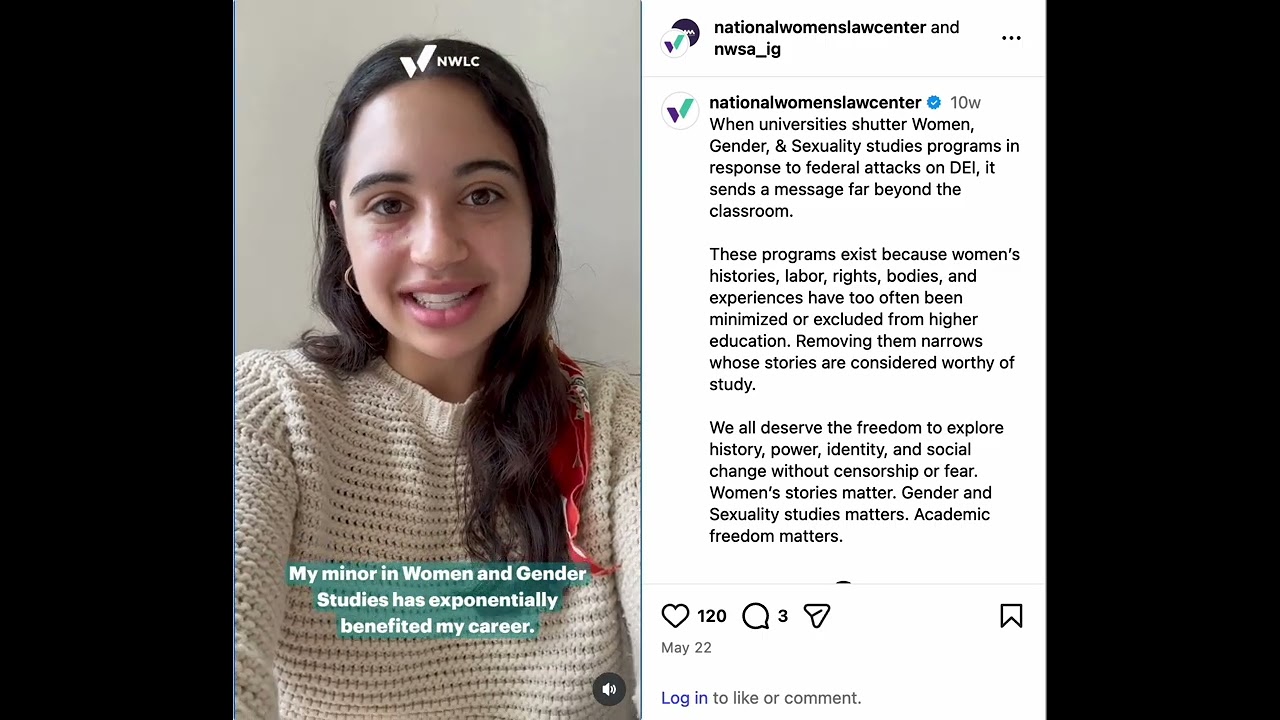
National Women's Law Center IG video on WGS degrees
WGS at College of Charleston
Overview
This video addresses the recent trend of shutting down Women, Gender, and Sexuality Studies (WGS) programs in universities, highlighting the Trump administration's role in this action. It features several advocates from the National Women's Law Center (NWLC) who are graduates of these programs. They explain how their WGS education equipped them with critical thinking, analytical, and advocacy skills essential for their careers in law, policy, and social justice, enabling them to fight for issues like equal pay, reproductive rights, and protections against domestic violence and sexual harassment.
How was this?
Save this permanently with flashcards, quizzes, and AI chat
Chapters
- Several universities, including Texas A&M and UC Santa Cruz, are seeing their Women, Gender, and Sexuality Studies programs shut down or diminished.
- The Department of Education under the Trump administration has publicly celebrated these closures.
- These programs are crucial for training individuals who advocate for and research issues like equal pay, domestic violence protections, and reproductive rights.
- Eliminating WGS programs reduces the number of trained professionals equipped to address and combat gender-based inequalities and oppression.
Understanding the political and administrative pressures against WGS programs is vital for recognizing the broader implications for social justice advocacy and the future of gender equity.
The Department of Education published a press release bragging about the shutdown of women, gender, and sexuality studies programs.
- Graduates from WGS programs at various universities share their positive experiences and the transformative impact of their studies.
- WGS education provides essential analytical tools, critical thinking skills, and the ability to question systems of oppression like sexism and racism.
- These programs offer a deeper understanding of personal experiences within broader societal contexts.
- The skills gained, such as advanced writing and analytical abilities, are foundational for success in law school and subsequent careers.
Personal testimonials demonstrate the tangible benefits of WGS degrees, illustrating how they foster essential skills applicable to diverse and impactful careers.
One graduate explains that their WGS minor helped them develop critical thinking skills, question systems of oppression, and understand their own experiences.
- WGS education directly translates into effective work in fields like law, policy, and social justice.
- Alumni use their analytical frameworks to tackle complex societal challenges, such as workplace sexual harassment and systemic oppression.
- The understanding of gender dynamics and power structures gained from WGS is crucial for litigators and advocates working on gender equity issues.
- These programs equip individuals with the ability to analyze legal frameworks and advocate for policy changes that protect vulnerable populations.
This chapter highlights the direct career relevance of WGS studies, showing how academic learning empowers professionals to achieve significant advancements in gender justice.
An attorney specializing in gender equity and Title IX credits their WGS degree for teaching them to think critically and enhancing their analytical skills, enabling decades of successful practice.
- WGS graduates are actively working at the National Women's Law Center, contributing to major legal victories.
- Their work includes securing rights for pregnant workers, protecting domestic violence victims from housing discrimination, and advancing equal pay protections.
- The academic background provides a strong foundation for understanding theory, practice, and the impact of law on society.
- WGS studies foster a passion for civil rights and gender justice, leading to fulfilling careers dedicated to making societal change.
The success stories of NWLC advocates underscore the vital role WGS programs play in cultivating the next generation of leaders in the fight for gender equality.
One advocate mentions helping to win equal pay protections for women across the country, directly attributing this capability to their WGS background.
Key takeaways
- Women, Gender, and Sexuality Studies programs are under threat from governmental pressure, jeopardizing the training of future social justice advocates.
- WGS education cultivates essential critical thinking, analytical, and communication skills vital for understanding and challenging societal inequalities.
- The academic foundation provided by WGS programs directly enables graduates to excel in careers focused on gender equity, law, and policy.
- WGS studies empower individuals to connect personal experiences with broader systemic issues of oppression and discrimination.
- Graduates of WGS programs are actively contributing to significant legal and policy victories that advance the rights of women and gender minorities.
- The skills developed in WGS are transferable and beneficial across a wide range of professions, including law, social work, and advocacy.
- Understanding gender studies is crucial for analyzing legal frameworks and advocating for effective policy changes.
Key terms
Women, Gender, and Sexuality Studies (WGS)Equal PayDomestic Violence ProtectionsReproductive RightsSystemic OppressionGender EquityCritical ThinkingAnalytical SkillsTitle IXAdvocacy
Test your understanding
- What are the primary reasons cited for the shutdown of WGS programs, and why is this considered a threat?
- How does a WGS education equip individuals with skills that are valuable in professional settings like law and policy?
- Why is it important for individuals to understand systems of oppression, and how do WGS programs facilitate this understanding?
- What are some concrete examples of how WGS graduates have contributed to advancements in gender justice and legal protections?
- How can understanding gender and sexuality studies help in analyzing and addressing societal challenges like sexual harassment or discrimination?