8:25
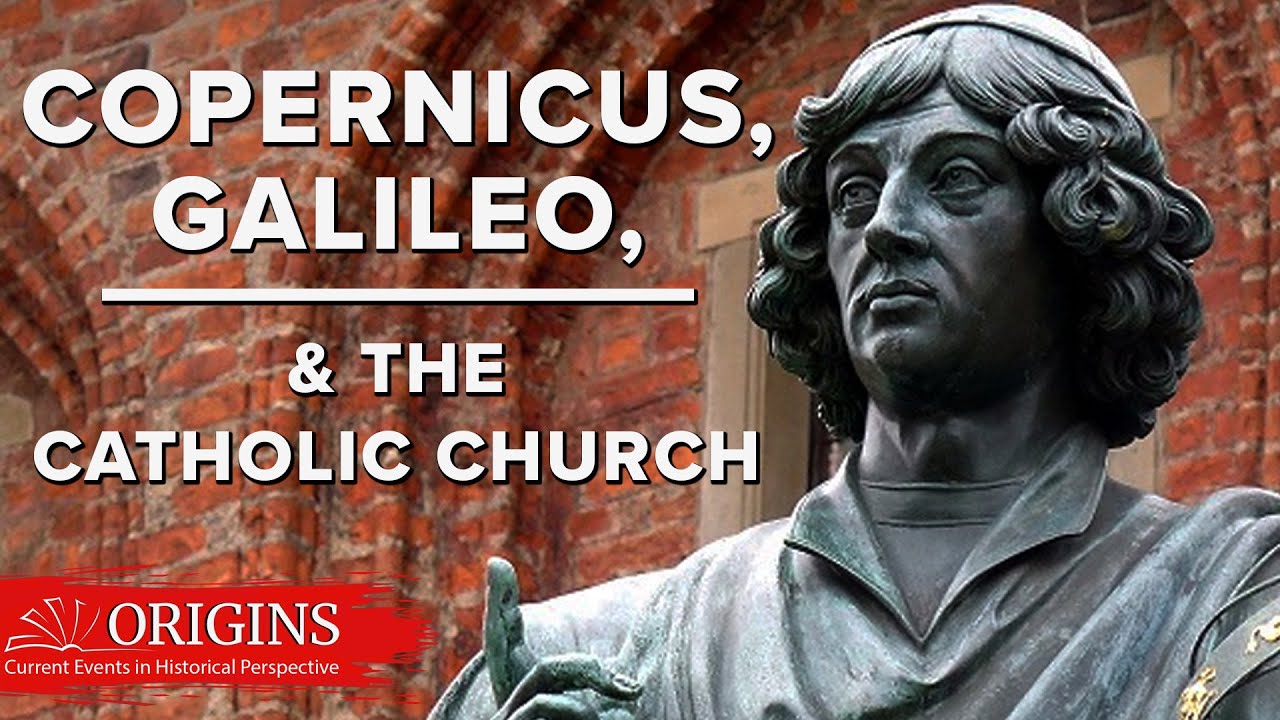
Copernicus, Galileo, and the Catholic Church
Origins OSU
Overview
This video explores the historical conflict between Nicolaus Copernicus's heliocentric theory and the Catholic Church, focusing on the condemnation of Galileo Galilei. It details the scientific, religious, and philosophical objections to the idea that the Earth revolves around the Sun, the Church's official pronouncements in 1616 and Galileo's subsequent trial in 1633. The summary also touches upon the Church's later attempts to reconcile with these past actions and the ongoing debate about science and religion.
How was this?
Save this permanently with flashcards, quizzes, and AI chat
Chapters
- Nicolaus Copernicus proposed the heliocentric model, suggesting Earth rotates daily and orbits the Sun.
- This challenged the long-held geocentric view where Earth was stationary at the universe's center.
- Objections included astronomical observations, physics, biblical interpretations, and sensory experience.
- Copernicus's arguments were not fully convincing, attracting few initial followers.
Understanding the initial resistance to heliocentrism highlights the deeply entrenched scientific and philosophical beliefs of the time, setting the stage for future conflicts.
The traditional geocentric model, where the Earth was believed to be the unmoving center of the universe.
- Galileo's telescopic observations (mountains on the Moon, Jupiter's moons, Venus's phases) provided new evidence supporting heliocentrism.
- These discoveries refuted some existing objections to the heliocentric model.
- Galileo became more vocal in his support for heliocentrism, leading to accusations of heresy.
- Complaints were filed with the Roman Inquisition, accusing Galileo of contradicting Scripture.
Galileo's empirical evidence dramatically shifted the debate, moving heliocentrism from a theoretical possibility to a scientifically supported hypothesis, thereby escalating the conflict with religious authorities.
Observing the phases of Venus, which could only be explained if Venus orbited the Sun.
- A committee of experts declared heliocentrism philosophically false and theologically heretical.
- The Inquisition, with papal approval, prohibited the Copernican theory.
- Cardinal Bellarmine warned Galileo not to hold or defend heliocentrism.
- A decree officially banned Copernicus's book and similar arguments, declaring the Earth's motion contrary to Scripture.
This formal condemnation established the Church's official stance against heliocentrism, creating a direct confrontation that would have long-lasting repercussions for Galileo and the relationship between science and religion.
The March 5, 1616, decree by the Index of prohibited books, which banned 'On the Revolutions of the Heavenly Spheres'.
- Galileo published 'Dialogue on the Two Chief World Systems,' presenting arguments for heliocentrism.
- This was seen as an attempt to circumvent the 1616 prohibition.
- Galileo was summoned to Rome and tried for suspected heresy.
- He was found guilty, leading to house arrest and the banning of his book.
Galileo's trial and condemnation became a landmark event, symbolizing the perceived conflict between scientific inquiry and religious dogma, and leading to a lasting controversy.
Galileo's punishment of house arrest, restricting his freedom and ability to publish.
- The Church has made several attempts over centuries to revise its stance on heliocentrism and Galileo.
- These include unbanning Galileo's works and implicitly vindicating his biblical interpretations.
- The Galileo affair remains an iconic example of science-religion conflict.
- The lesson of caution regarding Church interference in scientific matters is still debated today.
Examining the Church's later actions reveals an evolving understanding of the relationship between faith and reason, while the persistent debate underscores the enduring significance of the Galileo affair.
Pope John Paul II's partial rehabilitation of Galileo between 1979 and 1992.
Key takeaways
- Scientific theories can face resistance due to existing paradigms, religious interpretations, and empirical limitations.
- Empirical evidence, like Galileo's telescopic observations, can challenge established scientific and religious doctrines.
- The interpretation of religious texts in light of new scientific understanding is a complex and often contentious process.
- Institutional power, like that of the Inquisition, can suppress scientific ideas perceived as threatening.
- Historical conflicts between science and religion often stem from differing methodologies and authority claims.
- Later attempts at reconciliation by religious institutions acknowledge the evolution of understanding and the importance of scientific inquiry.
- The Galileo affair serves as a historical touchstone for discussions about the boundaries and interactions between science and faith.
Key terms
Heliocentric theoryGeocentric theoryGeokineticGeostaticInquisitionHeresyScriptureCopernicanismDialogue on the Two Chief World SystemsIndex of Prohibited Books
Test your understanding
- What were the main scientific and religious objections to the heliocentric model proposed by Copernicus?
- How did Galileo's telescopic discoveries challenge the prevailing geocentric view and the Church's stance?
- What was the significance of the 1616 decree and Galileo's 1633 trial in the context of science and religion?
- Why did the Catholic Church officially condemn the heliocentric theory, and what were the consequences for Galileo?
- What lessons can be drawn from the historical conflict between Galileo and the Church regarding the relationship between science and religion?