Lecture 3- HIST 1301
Chloe Northrop
Overview
This lecture explores the European Age of Exploration, focusing on Spain's pivotal role. It details Christopher Columbus's voyages, dispelling the myth of a flat-earth belief among educated individuals, and highlighting the economic motivations behind exploration. The summary covers the establishment of the encomienda system, the conquest of the Aztec and Inca empires by Hernán Cortés and Francisco Pizarro respectively, and the devastating impact of disease on indigenous populations. Finally, it introduces the Columbian Exchange, emphasizing the reciprocal transfer of goods, people, and diseases between the Old and New Worlds, and its lasting culinary and demographic consequences.
Save this permanently with flashcards, quizzes, and AI chat
Chapters
- European powers, particularly Portugal and Spain, began expanding maritime exploration beyond established trade routes.
- Educated Europeans knew the Earth was round, but underestimated the vastness of the Atlantic Ocean.
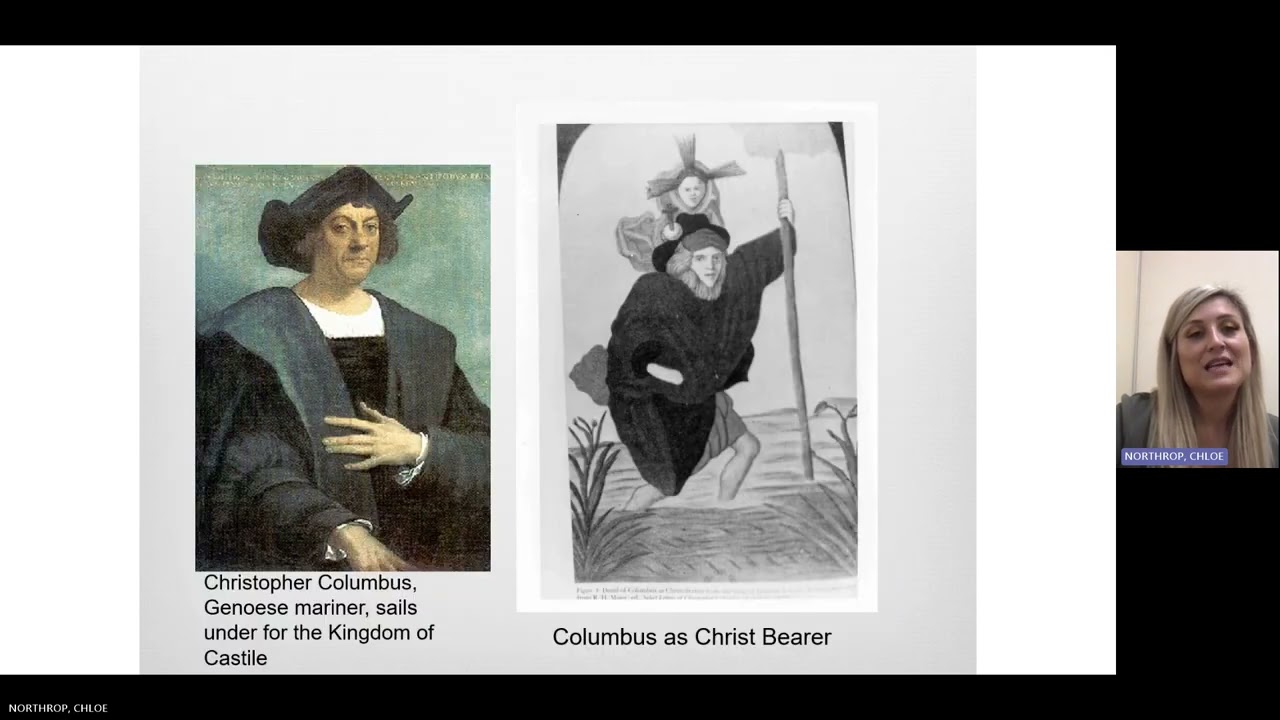
- Christopher Columbus, sailing for Spain, sought a westward route to Asia, believing it was closer than it was.
- Queen Isabella and King Ferdinand of Spain funded Columbus's voyages after the Reconquista, seeking wealth and expansion.
- Exploration was driven by a desire for trade and wealth, aiming to bypass intermediaries for Eastern goods.
- Proto-nationalism and the desire for powerful states also fueled exploration efforts.
- Religion played a significant role, with efforts to spread Christianity.
- The Treaty of Tordesillas (1494) divided newly discovered lands between Spain and Portugal, influencing colonial boundaries (e.g., Brazil becoming Portuguese).
- Columbus's voyages led to the establishment of Spanish rule and the exploitation of indigenous populations.
- The encomienda system granted Spanish individuals control over indigenous people, compelling them to provide labor and pay tribute in exchange for supposed protection and Christianization.
- This system was brutal, leading to overwork, harsh punishments, and significant death tolls among indigenous peoples, primarily due to disease.
- Figures like Bartolomé de las Casas debated the morality of exploiting non-Christian populations, while others like Juan Ginés de Sepúlveda defended it.
- Hernán Cortés conquered the Aztec Empire by exploiting internal divisions and forming alliances with resentful indigenous groups, aided by superior weaponry and horses.
- Cortés founded Veracruz, sank his ships to commit his forces to conquest, and eventually captured the Aztec capital, Tenochtitlan, in 1521.
- Francisco Pizarro conquered the Inca Empire by ambushing and capturing Emperor Atahualpa, exploiting a recent civil war, and using advanced military technology.
- The Spanish secured vast amounts of gold and silver, leading to the downfall of both empires and the establishment of Spanish dominance in Mesoamerica and the Andes.
- The Columbian Exchange involved the widespread transfer of plants, animals, culture, human populations, technology, diseases, and ideas between the Americas, West Africa, and the Old World.
- Indigenous populations were decimated, with estimates showing a drop from 50 million to 7.5 million by 1750, primarily due to European diseases like smallpox, to which they had no immunity.
- New World foods like corn, potatoes, and peanuts were introduced to the Old World, while Old World staples like wheat, rice, and livestock (cattle, horses, pigs) were brought to the New World.
- Syphilis is believed to be the only major disease that traveled from the New World to the Old World.
- Spanish colonies focused on mining and labor exploitation (encomienda, later repartimiento), while Portuguese Brazil developed a plantation economy, primarily sugar-based.
- The West Indies also developed into slave societies, heavily reliant on sugar production.
- The immense wealth flowing from the Americas to Spain attracted the attention of other European nations, particularly England.
- English 'sea dogs' began raiding Spanish treasure ships, encouraged by the English crown, foreshadowing future English colonization efforts.
Key takeaways
- European exploration was driven by a complex mix of economic ambition, nationalistic competition, and religious zeal, not solely by scientific curiosity.
- Misconceptions about geography, like the perceived distance to Asia, significantly influenced the planning and execution of early voyages.
- The establishment of colonial systems like the encomienda led to widespread exploitation and the devastating decline of indigenous populations due to disease and brutal labor practices.
- The conquest of major empires like the Aztec and Inca was facilitated by European military advantages, strategic alliances with disaffected local groups, and the impact of introduced diseases.
- The Columbian Exchange created a profound biological and cultural intermingling, permanently altering global diets, economies, and demographics, with severe consequences for indigenous peoples.
- The wealth generated by the Americas fueled European rivalries and set the stage for further colonization and conflict among European powers.
Key terms
Test your understanding
- What were the primary economic and political motivations behind Spain's investment in Christopher Columbus's voyages?
- How did the encomienda system function, and what were its ethical implications as debated by figures like Las Casas and Sepúlveda?
- What factors enabled Hernán Cortés and Francisco Pizarro to conquer the Aztec and Inca empires, respectively?
- Explain the concept of the Columbian Exchange and describe at least three significant exchanges of goods or diseases between the Old and New Worlds.
- Why did European nations like England begin to target Spanish treasure ships, and how did this foreshadow future colonial competition?