2:44
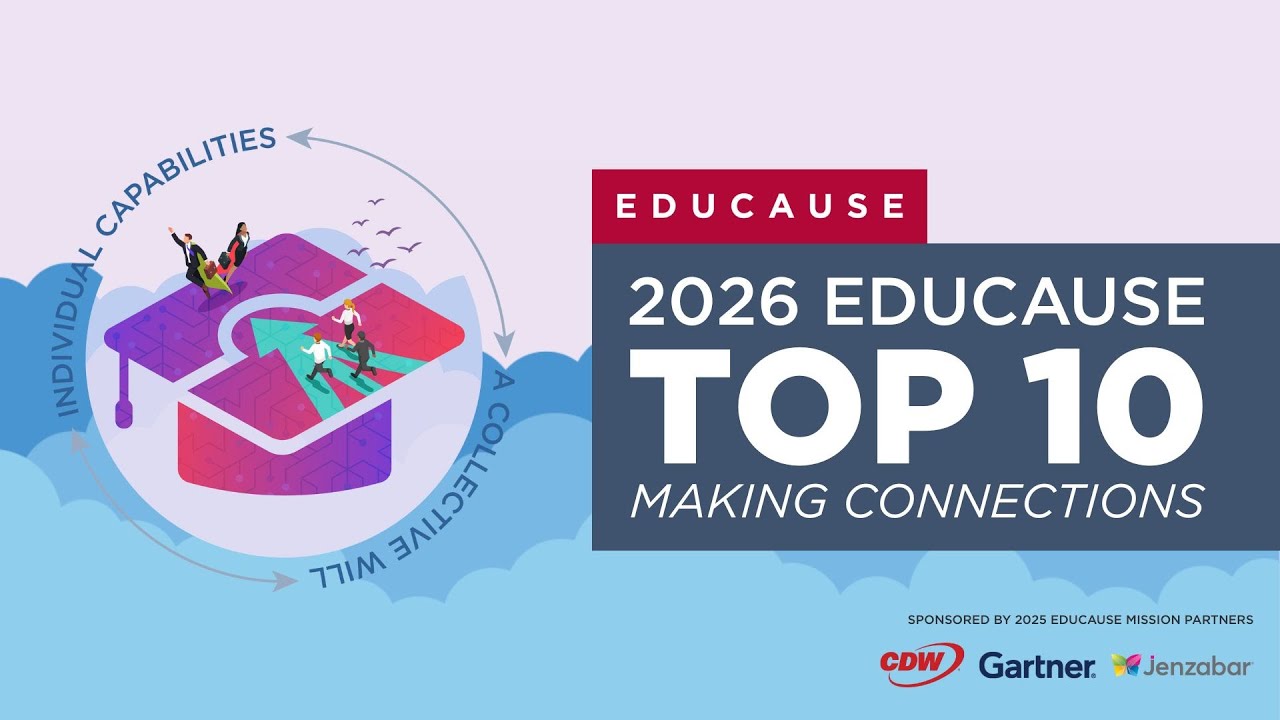
2026 EDUCAUSE Top 10 - #7
EDUCAUSE
Overview
This video highlights the critical need for technology literacy, particularly in AI, for the future workforce. It emphasizes that students must be equipped with in-demand tech skills to be considered fully educated and prepared for their careers. The speaker suggests that educational institutions should provide a flexible framework for students to adapt to rapidly evolving technologies, foster collaboration with industry partners to understand current skill demands, and integrate technology training into both the curriculum and the broader student experience.
How was this?
Save this permanently with flashcards, quizzes, and AI chat
Chapters
- Technology, data, and AI are now essential tools across most industries, making them fundamental to workforce preparedness.
- Students lacking understanding of these technologies are not fully educated for the modern job market.
- AI's rapid advancement makes it a necessity, not a luxury, for future professionals.
Understanding and being able to use current technologies is crucial for students to be competitive and successful in their chosen careers after graduation.
AI is rapidly becoming a skill that will be more a necessity than a nice to have for future students.
- Educational institutions need to provide frameworks that help students and faculty adapt to fast-changing technological environments.
- Skills learned on specific tools today may become obsolete or significantly altered by the time students graduate.
- The focus should be on teaching students how to apply technological tools within their professions and to make a difference, rather than just mastering specific software.
This adaptability ensures that students' education remains relevant and valuable even as technologies evolve, preparing them for long-term career success.
You get experience in a particular tool today, by the time you graduate in four years, maybe that tool has been totally re-imagined.
- Preparing students for the 2026 workforce requires embedding AI and technology engagement as a core competency.
- Institutions must build stronger connections with industry partners to gain insights into the skills and competencies employers expect.
- Faculty involvement is essential for shaping and supporting discipline-specific technology requirements, ensuring integration and buy-in.
Aligning educational programs with industry demands ensures graduates possess the skills employers are actively seeking, improving their employability.
Institutions will need to construct new bridges out to industry partners to allow partner guidance on the skills and competencies that are becoming expectations for students entering the workforce.
- Technology and AI skills should be integrated into the holistic student experience, not just confined to the curriculum.
- Campus-wide initiatives for student development should include technology awareness and training as a critical life skill.
- Facilitating faculty conversations is key to shaping and supporting technology requirements within departments.
A comprehensive approach to technology education, extending beyond coursework, better prepares students for the pervasive role of technology in their personal and professional lives.
Make technology skills, and perhaps AI skills in particular, a part of the holistic student experience across your campus.
Key takeaways
- Future workforce readiness hinges on students' ability to engage meaningfully with technologies like AI.
- Educational frameworks must prioritize adaptability to rapidly changing technological landscapes over mastery of specific tools.
- Stronger partnerships between academia and industry are vital for identifying and teaching in-demand tech skills.
- Technology literacy should be treated as a core competency, integrated into both academic curricula and the broader student experience.
- Faculty engagement is crucial for the successful implementation of technology training within specific disciplines.
- Preparing students for the future workforce requires a proactive approach to embedding essential technology skills.
Key terms
Technology LiteracyFuture WorkforceArtificial Intelligence (AI)Workforce PreparednessIn-Demand SkillsDiscipline-Specific TechnologyCore CompetencyHolistic Student Experience
Test your understanding
- Why is technology literacy, especially AI, considered a necessity rather than a desirable skill for the future workforce?
- How can educational institutions best equip students to adapt to the rapid evolution of technology throughout their careers?
- What role should industry partnerships play in shaping technology education for students?
- Beyond the curriculum, how can universities foster technology awareness and skill development as part of the overall student experience?
- What is the significance of faculty buy-in when integrating new technology requirements into academic programs?