1:27:10
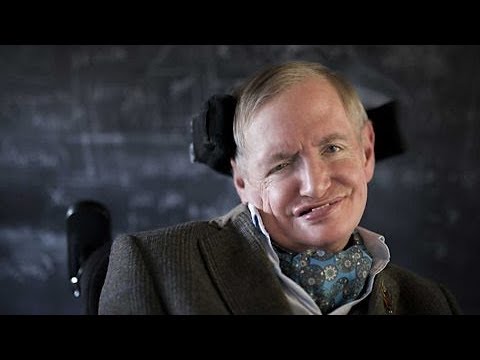
How Stephen Hawking changed the World | Full Documentary
Best History Biographies and Documentaries
Overview
This documentary chronicles the extraordinary life and groundbreaking scientific contributions of Stephen Hawking. It traces his journey from a curious student at Oxford and Cambridge, through his diagnosis with Amyotrophic Lateral Sclerosis (ALS) at a young age, to his rise as one of the world's most renowned theoretical physicists. The film highlights his relentless pursuit of understanding the universe, particularly the Big Bang and black holes, his innovative communication methods, and his profound impact on both science and popular culture, all while living with a debilitating condition.
How was this?
Save this permanently with flashcards, quizzes, and AI chat
Chapters
- Hawking's childhood was marked by intellectual curiosity and a competitive spirit, fostered by his parents and a stimulating home environment.
- He showed an early aptitude for understanding how things worked, even building computers from scratch in his teenage years.
- Despite a relaxed attitude towards formal study at Oxford, his brilliance was evident, leading him to pursue Natural Sciences with a specialization in physics.
- His time at Oxford also included rowing and a social life, demonstrating a multifaceted personality beyond pure academics.
Understanding Hawking's early life reveals the foundational curiosity and intellectual environment that shaped his later scientific endeavors and resilience.
Hawking's sister recalls him installing plumbing and lighting in a doll's house, showcasing his early interest in mechanics and problem-solving.
- During his final year at Oxford and early days at Cambridge, Hawking began experiencing increasing physical clumsiness and erratic movements.
- A serious fall and subsequent diagnosis of Amyotrophic Lateral Sclerosis (ALS), with a prognosis of only 2-3 years to live, profoundly impacted his life.
- Initially, he struggled to process the diagnosis, withdrawing from discussion about his condition.
- The realization of his limited time fueled a desire to make the most of every moment and to pursue his research with renewed vigor.
This chapter highlights the critical turning point in Hawking's life, demonstrating his courage and determination in the face of a devastating diagnosis.
Upon receiving his ALS diagnosis, Hawking was told he had only two to three years to live, a prognosis that dramatically altered his life's trajectory.
- Hawking's PhD research focused on the Big Bang theory, seeking to understand the universe's origin.
- He applied the concept of a singularity, initially developed for black holes by Roger Penrose, to the entire universe, suggesting it began from a singularity.
- This work controversially implied that the universe could have come into existence without the need for a creator.
- His research on black holes led to the discovery that they emit particles, now known as Hawking radiation, unifying relativity and quantum mechanics.
These scientific contributions fundamentally changed our understanding of the universe's origins and the nature of black holes, establishing Hawking as a leading theoretical physicist.
Hawking theorized that black holes emit particles, a concept that initially shocked the physics community but eventually became accepted as Hawking radiation.
- As his illness progressed, Hawking's ability to communicate deteriorated, leading to the development of sophisticated assistive technologies.
- He transitioned from speaking to using a cheek muscle to control a cursor, and later, facial recognition software was explored to improve communication speed.
- The development of new software significantly enhanced his ability to communicate by improving next-word prediction.
- Despite the physical limitations, his mind remained sharp, driving his continued scientific work and intellectual engagement.
This chapter illustrates Hawking's remarkable adaptability and the crucial role of technology in enabling him to continue his scientific work and engage with the world.
Hawking learned to communicate by using a cheek muscle to move a cursor on a computer screen, a method that allowed him to write and interact despite losing his voice.
- Hawking's ambition to write a popular book explaining cosmology to a mass audience led to 'A Brief History of Time'.
- The book's publication was a lengthy process, involving significant rewrites and overcoming initial publisher doubts.
- Against expectations, the book became a global bestseller, translated into numerous languages and selling millions of copies.
- This success brought Hawking immense fame, transforming him into a cultural icon and a spokesperson for complex scientific ideas.
The success of 'A Brief History of Time' democratized complex scientific concepts and cemented Hawking's status as a beloved public figure.
'A Brief History of Time' stayed on the bestseller list for over four years, selling millions of copies worldwide and becoming a publishing phenomenon.
- Hawking's personal life involved two marriages, navigating the complexities of his illness, fame, and family responsibilities.
- His increasing disability placed significant strain on his relationships, particularly with his first wife, Jane.
- The demands of his care required a dedicated team, including students living with the family and later, professional nurses.
- Despite profound physical challenges, including a life-threatening bout of pneumonia requiring a tracheotomy, Hawking maintained a strong will to live and work.
This chapter reveals the personal sacrifices and immense resilience required to manage a complex illness alongside a demanding scientific career and family life.
After a severe bout of pneumonia, Hawking required a tracheotomy, which robbed him of his ability to speak, necessitating new communication methods and constant care.
- Hawking's proudest achievement was inspiring people to think about the cosmos and their place within it.
- He believed in making the most of life's limited time and encouraged human endeavor without boundaries.
- His work and life story inspired millions, demonstrating that a brilliant mind can thrive despite severe physical limitations.
- He continued to engage with the world, embracing his public role and encouraging curiosity and a sense of humor.
Hawking's enduring legacy lies not only in his scientific discoveries but also in his inspirational message of hope, resilience, and the pursuit of knowledge.
Hawking's participation in the opening ceremony of the Paralympic Games underscored his belief in celebrating human potential and overcoming limitations.
Key takeaways
- The human mind's capacity for understanding the universe is not limited by physical constraints.
- Resilience and a strong will to live are crucial for overcoming immense personal challenges.
- Scientific breakthroughs often arise from questioning established theories and pursuing unconventional ideas.
- Effective communication is vital, and technological innovation can bridge significant barriers.
- Making complex ideas accessible to the public can profoundly impact society's understanding and engagement with science.
- A sense of humor and the ability to not take oneself too seriously are important coping mechanisms.
- The universe's fundamental laws may suggest a natural origin, challenging traditional notions of creation.
Key terms
Amyotrophic Lateral Sclerosis (ALS)Motor Neuron DiseaseBig Bang TheorySingularityBlack HoleHawking RadiationTheoretical CosmologyGeneral RelativityQuantum MechanicsTracheotomyAssistive Technology
Test your understanding
- How did Stephen Hawking's diagnosis with ALS impact his approach to scientific research and life?
- What were Stephen Hawking's key contributions to our understanding of the Big Bang and black holes?
- Describe the evolution of Stephen Hawking's communication methods and the technologies that supported him.
- What factors contributed to the immense success of 'A Brief History of Time'?
- How did Stephen Hawking's personal life and relationships navigate the challenges posed by his illness and fame?