AI-Generated Video Summary by NoteTube
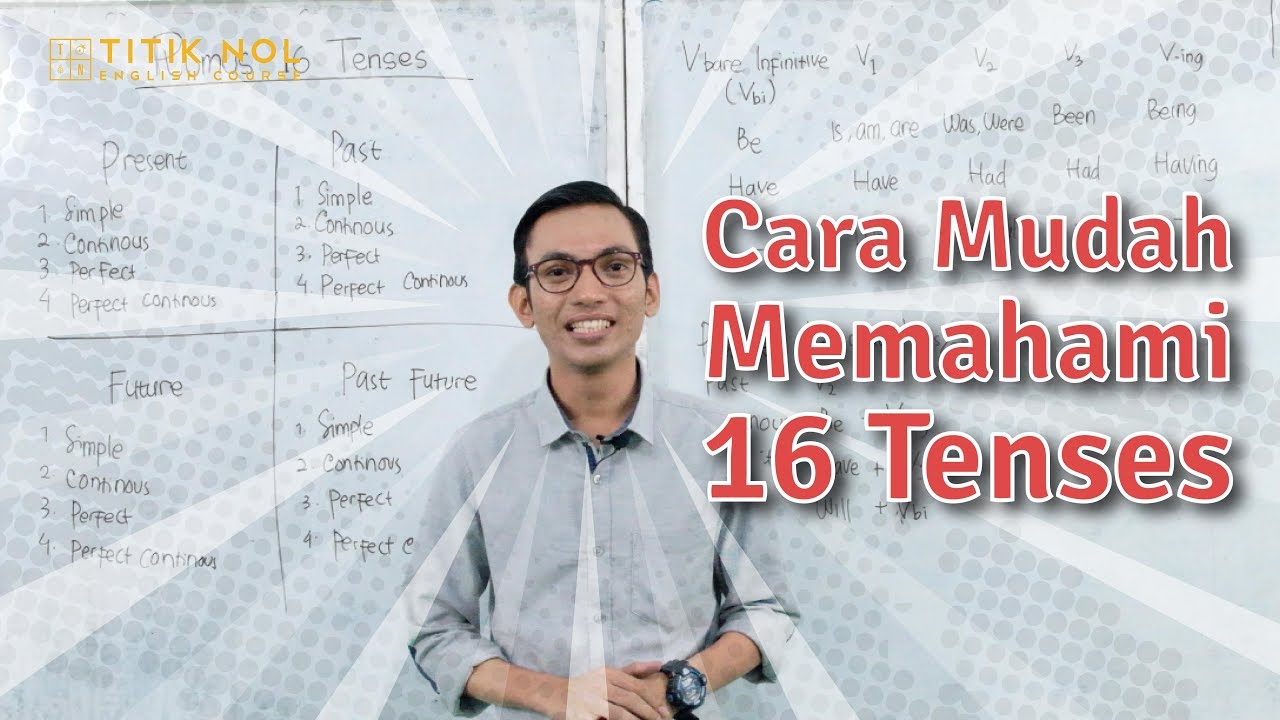
Belajar Bahasa Inggris - Cara Mudah Memahami 16 Tenses
Titik Nol English Course
Overview
This video provides a simplified approach to understanding and applying the 16 English tenses. It begins by explaining the fundamental concept of tenses as verb changes indicating time. The presenter breaks down how to name the tenses by categorizing them into four time frames (present, past, future, past future) and four aspects (simple, continuous, perfect, perfect continuous). Key auxiliary verbs (be, have, will/would) and their forms are introduced, along with basic formulas for each tense category. The core of the lesson focuses on a practical method of 'marrying' or combining these elements to construct correct tense forms, illustrated with examples like "Jane eats a banana" transformed into various tenses. The video aims to equip viewers with a trick to avoid memorizing all 16 formulas individually, emphasizing understanding the structure and combination.
Want AI Chat, Flashcards & Quizzes from this video?
Sign Up FreeChapters
- •Tenses are verb changes that show the time of an event.
- •Understanding tenses is crucial for English grammar.
- •This video offers an easy way to grasp all 16 tenses.
- •Tenses are categorized by time: Present, Past, Future, Past Future.
- •Tenses are also categorized by aspect: Simple, Continuous, Perfect, Perfect Continuous.
- •The 'Simple' aspect always comes first when naming a tense.
- •Auxiliary verbs are essential for forming tenses.
- •Key auxiliary verbs include 'be' (is, am, are, was, were, been, being), 'have' (have, has, had, having), and 'will/would'.
- •These verbs change form depending on the tense and subject.
- •Present: Subject + Verb 1 (or Verb 1 + s/es for he/she/it).
- •Past: Subject + Verb 2.
- •Continuous: Be + Verb-ing.
- •Perfect: Have/Has + Verb 3 (Past Participle).
- •Future: Will + Verb Infinitive.
- •Combine the naming structure (time + aspect) with the basic formulas.
- •Focus on combining the auxiliary verbs and main verbs correctly.
- •Example: Present Perfect Continuous involves combining elements of Present, Perfect, and Continuous.
- •The key is to link the verb forms sequentially according to the tense name.
- •Starting sentence: Jane eats a banana.
- •Present Perfect Continuous formula: Subject + Have/Has + Been + Verb-ing.
- •Applying to Jane: Jane has been eating a banana.
- •This demonstrates how to 'marry' the components of the tense.
- •Past Future Perfect formula: Subject + Would + Have + Verb 3.
- •Applying to Jane: Jane would have eaten a banana.
- •This shows the combination of 'Past' (Would), 'Future' (implied by Would), and 'Perfect' (Have + Verb 3).
- •Simple Future formula: Subject + Will + Verb Infinitive.
- •Applying to Jane: Jane will eat a banana.
- •This is a straightforward application of the Future tense structure.
- •Mastering tenses involves understanding the combination trick, not just memorizing.
- •Assignment: Translate 'Alex bought a luxurious house' into various tenses.
- •Encouragement to follow the channel for future lessons and social media.
Key Takeaways
- 1Tenses are verb forms indicating time and aspect.
- 2The 16 tenses can be systematically named by combining time (Present, Past, Future) and aspect (Simple, Continuous, Perfect).
- 3Auxiliary verbs (be, have, will/would) are fundamental building blocks for tenses.
- 4A practical 'marrying' method simplifies constructing tenses by combining their components.
- 5Understanding the structure of each tense aspect (Simple, Continuous, Perfect) is key.
- 6Focus on how auxiliary verbs and main verbs link together.
- 7Practice applying the 'marrying' technique to various sentences and tenses.
- 8Consistent practice and understanding the underlying logic are more effective than rote memorization.