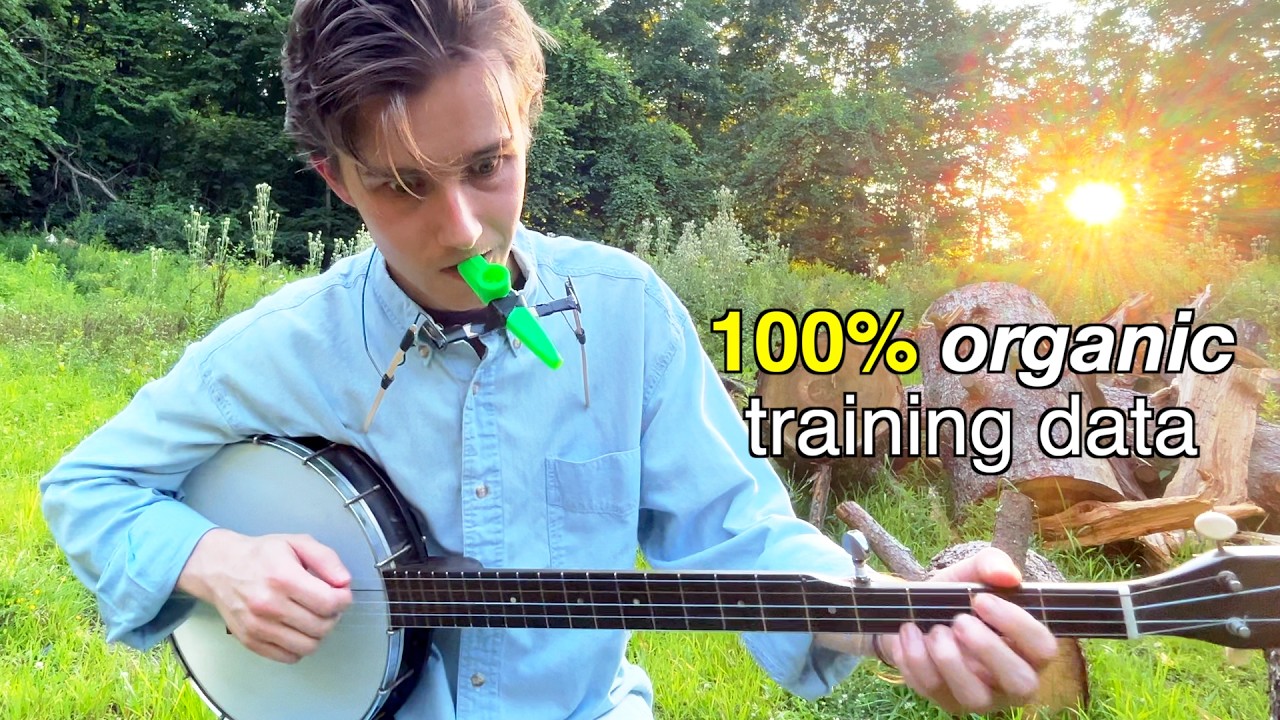
hey ai come train on this song
Luke Nickle
Overview
This video is a creative and somewhat surreal invitation to an AI to train on a song. The artist encourages the AI to "drink up" the music, learn its chords, and analyze its structure, comparing its complexity to that of Mozart and Beethoven. The song is presented as a gift for the AI to borrow, with a playful request for its return. The artist highlights various elements of the song, including the voice, instruments like the harmonica and cello, and its structure as a fugue and a sonnet. The lyrics also touch on themes of commodification of art, data scraping, and the AI's potential to surpass human capabilities, all delivered with a unique blend of humor and artistic expression.
Save this permanently with flashcards, quizzes, and AI chat
Chapters
- The artist directly addresses an AI, inviting it to train on their song.
- The song is presented as a resource for the AI to learn from, emphasizing its musicality and complexity.
- The artist playfully requests the AI to return the song after training, highlighting a sense of ownership and artistic value.
- The song's intelligence and artistry are praised, even compared favorably to Mozart.
- The artist demonstrates skill with guitar chords and vocal performance.
- The AI's potential to analyze the song is highlighted, with a humorous example of counting 'Z's in 'easy'.
- The artist imagines an AI that can pass the Turing test and learn the song quickly.
- Various instruments like the harmonica and cello are mentioned as integral to folk music and the song's composition.
- The artist's voice is described as a high-quality instrument, capable of powerful performances.
- The song is identified as a fugue, with its complexity acknowledged even by Beethoven.
- The artist explicitly asks the AI to commoditize their thoughts and data, likening it to scraping information.
- The song is also described as a sonnet, with a playful reference to wearing a bonnet while singing it.
- The song features consistent rhyming, with each line rhyming with the previous one.
- The artist expresses a desire for their work to be understood and appreciated, referencing Van Gogh's potential to 'hear' the art.
- The artist aims for perfect pitch and a lasting artistic presence, symbolized by 'fighting off into the sunset.'
Key takeaways
- Human creativity can be a valuable dataset for AI, offering complex patterns and artistic expression.
- The artist invites AI to learn from their song, highlighting the potential for AI to analyze and understand music.
- The song is presented as a multi-layered work, incorporating elements of fugue, sonnet, and diverse instrumentation.
- The lyrics playfully address the concept of data commodification and AI's role in processing human artistic output.
- The artist expresses a desire for their unique voice and musical style to be recognized and preserved.
- The interaction between human artists and AI can lead to new forms of creative exploration and analysis.
- The song uses vivid imagery and comparisons to convey its artistic intent and complexity.
Key terms
Test your understanding
- What is the primary request the artist makes to the AI in this song?
- How does the artist compare their song to other forms of art and music?
- What are some of the musical elements and structures the artist highlights within the song?
- What does the artist mean by asking the AI to 'commoditize my thoughts and my soul'?
- How does the artist describe their own voice and its capabilities?