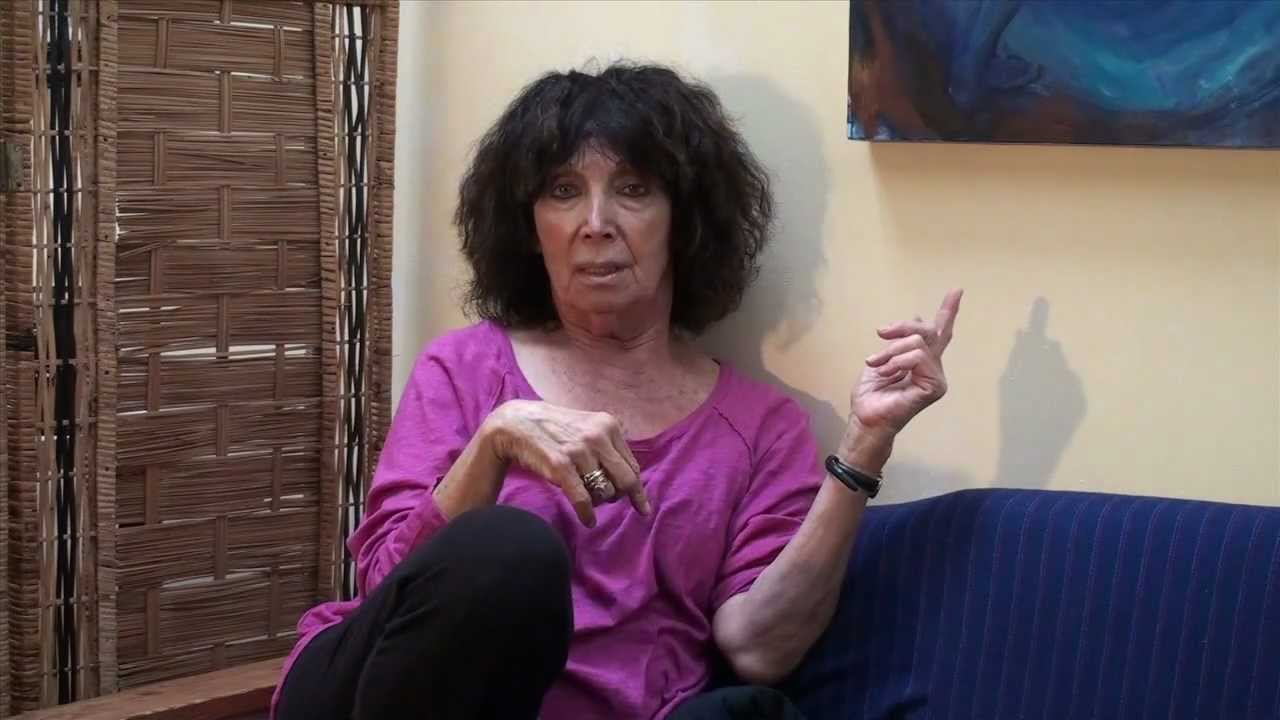
CONTINUUM: An Introduction with Emilie Conrad
Continuum Movement
Overview
This video introduces Continuum, a movement-based practice focused on exploring the body's inherent fluid nature and its connection to the larger universe. It posits that the body is not a static structure but a dynamic, interpenetrating wave motion. Continuum aims to release self-limiting patterns, including those stemming from trauma, by reawakening the body's natural intelligence and fluid resonance. Through specific practices involving sound, breath, and mindful movement, participants are guided to soften conditioning, access deeper nourishment, and broaden their sense of self-identity, ultimately fostering greater resilience and a more profound connection to life.
Save this permanently with flashcards, quizzes, and AI chat
Chapters
- Continuum is an ongoing inquiry into how we become self-limiting.
- The body is understood as movement, specifically as interpenetrating wave motions stabilized within Earth's electromagnetic field.
- We are programmed for survival, but our consciousness may not engage with all bodily capabilities.
- The practice explores the mystery of unfolding bodily capability, which has been central to Continuum for 47 years.
- Humans are born approximately 80% fluid, carrying oceanic origins within.
- Fluid is a resonant element, connecting fluid in the galaxy, planet, and our bodies.
- This resonance stream provides 'biocosmic nourishment,' essential for our systems.
- Being cut off from this fluid resonance leads to deprivation, starvation, and alienation from our life source.
- The embryo and the cell are viewed as universal motifs for understanding the choreography of life.
- Embryonic development mirrors billions of years of planetary processes, with fluid and spiral forms evident.
- The cell, like the embryo, represents a fundamental pattern of life's organization.
- These motifs help describe Continuum's approach to movement and bodily awareness.
- Continuum practices often begin with establishing a 'baseline' while lying flat on the floor, in neutral to gravity.
- The baseline assesses how much of the body feels released and supported by the ground, checking for awareness in different body parts.
- Areas of withdrawal or tension (e.g., an arched back, lifted shoulders) indicate defensive strategies or adaptive trauma responses.
- The degree to which one can let go and be supported by the ground is a key indicator of energy flow and system openness.
- As the system becomes more receptive, breath transforms into a wave that permeates the body, facilitating self-correction.
- This inherent 'moving medicine' is our birthright but is unavailable when the system is constricted or compressed.
- Continuum aims to soften adaptive patterns and inhibitors that impede this natural flow of life.
- Rigid tissues prevent us from receiving the choreography of burgeoning life, leading to alienation and dependence on external authority.
- Sound vibration is highly effective in moving compressed fluid molecules and softening rigid tissues.
- Continuum sequences utilize specific, textural sounds to facilitate this process without overwhelming the system.
- After movement sequences, practitioners enter 'open attention,' a state of waiting for internal cues or stirrings.
- Following these internal cues allows for emergent choreography that represents burgeoning life.
- As we embody the movements of cells, sea creatures, or organs, our self-identity broadens beyond personal history.
- Continuum involves returning to primordial states, expanding time-space before physical structures like vertebrae.
- In these less-structured states, greater nourishment and capability can be accessed, similar to deprogramming a cell.
- Increased versatility and resilience allow for better management of life's challenges.
- Continuum sequences involve an overview, specific sounds, their application, and movement suggestions, progressing from baseline to larger movements.
- Cycling back to the starting point ('layering') enriches the internal environment and expands possibilities for thriving.
- This process facilitates 'biogenesis,' the unfolding of life, and has been effective even with individuals with spinal cord injuries.
- Engaging with Continuum is described as a form of prayer, a total engagement with life's exquisiteness.
Key takeaways
- The body is a dynamic fluid system, not a static structure, and its inherent movement is essential for well-being.
- Fluid resonance connects us to a universal source of nourishment, and maintaining this connection is vital.
- Self-limiting patterns, often rooted in trauma, can be softened through conscious movement and awareness.
- Sound vibration is a powerful tool for releasing physical tension and accessing deeper bodily states.
- Embracing emergent, spontaneous movement allows us to connect with our innate 'moving medicine' and life's inherent choreography.
- Broadening our sense of identity beyond personal history fosters greater resilience and a deeper connection to the world.
- Continuum practices aim to reawaken our birthright to a vibrant, unhindered existence by softening conditioning.
- The practice cultivates a sense of belonging and sanity by reconnecting us to planetary and cosmic processes.
Key terms
Test your understanding
- How does Continuum define the body, and why is this definition significant for self-limitation?
- What is fluid resonance, and how does it relate to nourishment and the body's well-being?
- Explain the concept of 'baseline' in Continuum practice and how it helps identify areas of tension or withdrawal.
- How does sound vibration contribute to the Continuum practice, and what is 'open attention'?
- What does it mean to access 'primordial states' within Continuum, and what benefits does this offer?