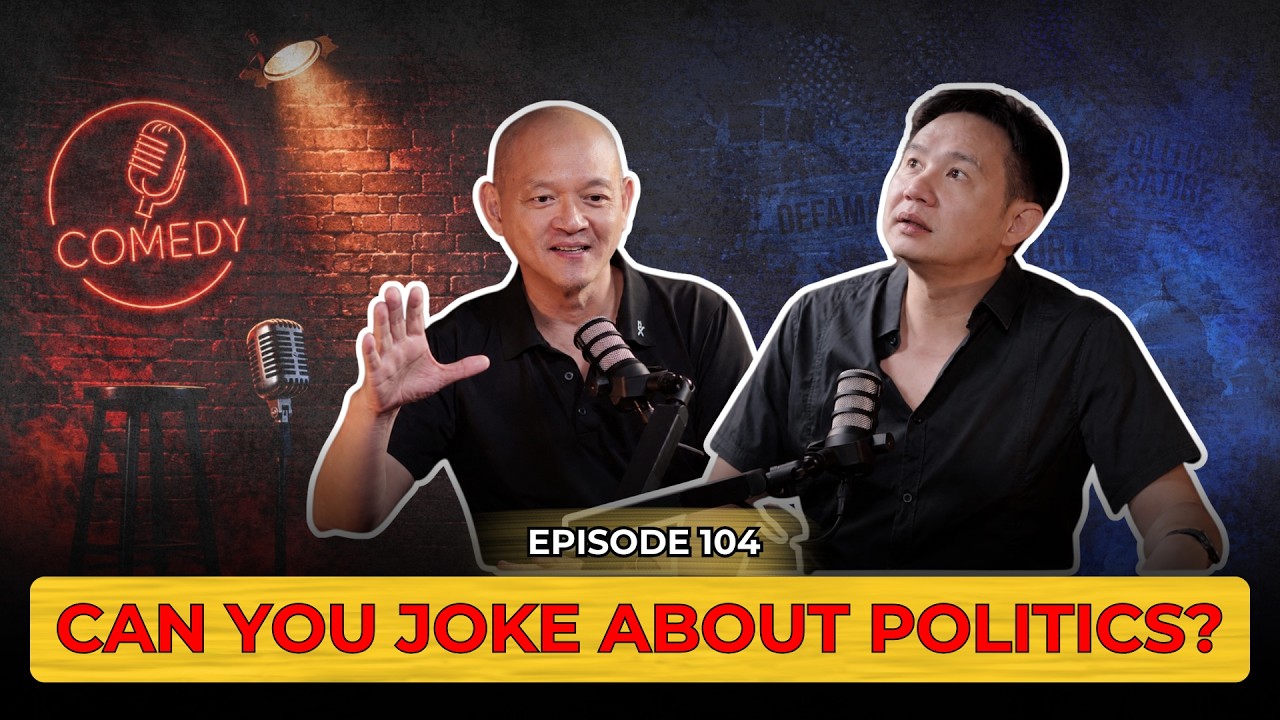
Douglas Lim on the Rosmah Backlash, 1MDB Jokes | Is Political Comedy Safe in Malaysia? | EP104
Are We OK?
Overview
This podcast episode features comedian Douglas Lim discussing the role of political comedy in Malaysia, the challenges comedians face, and his personal experiences. He explores how comedy serves as a coping mechanism, the nuances of making jokes about sensitive topics like 1MDB and political figures, and the legal and social implications of satire. The conversation also touches on the evolution of free speech in Malaysia, the importance of cultural sensitivity in comedy, and Lim's personal journey and upcoming shows, including his performance at Istana Budaya and his new show 'Vital Stats.' The episode concludes with a discussion on community advocacy and the trust deficit between citizens and authorities, using the example of a proposed police quarters development.
Save this permanently with flashcards, quizzes, and AI chat
Chapters
- Comedy historically emerged as a way for people to cope with difficult or oppressive circumstances.
- Ancient cave drawings and Egyptian hieroglyphics suggest early forms of humor used to deal with fear and unfairness.
- Douglas Lim uses comedy as a personal coping mechanism for discomfort and unfairness in political and social situations.
- The accessibility of media today means anyone can create content, but not all content is good or meaningful.
- Malaysian society has established norms and regulations that restrict certain content, such as showing kisses in films.
- Filmmakers and comedians often find creative ways to circumvent these restrictions through indirect references and allusions.
- Douglas Lim avoids direct naming of individuals in his political jokes to prevent legal repercussions like police reports or lawyer's letters.
- The 'satay joke' and similar indirect references are examples of how Malaysian humor navigates sensitive topics.
- Comedian Harith Iskander faced a defamation lawsuit from Rosmah Mansor over jokes made about her.
- The incident involved a photo of Rosmah being used, making the target of the joke unmistakable.
- The recording and online sharing of the joke, particularly the specific segment, amplified the issue.
- While individuals have the right to sue if they feel defamed, the broader discussion revolves around the boundaries of freedom of speech and satire.
- The public reaction to the Rosmah incident highlighted a strong stance against body shaming, even in the context of political satire.
- Douglas Lim distinguishes between direct personal attacks (body shaming) and using a person as a reference for entertainment.
- Jokes made in front of an audience, even if referencing a physical trait, are seen as entertainment rather than shaming if the intent is to amuse.
- Creative jokes that use a physical characteristic as a springboard for humor, like calling a bald person a 'deodorant,' are considered entertainment.
- The period after the 2018 Malaysian general election brought increased freedom of speech.
- This newfound freedom has led some, including comedians, to be less careful in their content creation, potentially inciting undesirable reactions.
- Douglas Lim has not faced issues with his political and social commentary content, attributing this to careful crafting and smart execution.
- Historically, comedians were more hesitant, whispering jokes in private, whereas now they can perform more openly, though caution is still advised.
- Douglas Lim's shows often resonate with Malaysian diaspora overseas, but reaching a broader international audience is challenging.
- Jokes relying heavily on local Malaysian references (e.g., satay, nasi lemak, 1MDB) may not translate well to non-Malaysian audiences.
- Comedians typically joke about their own experiences and cultural context, requiring time and immersion to develop material about other countries.
- Cultural sensitivity is crucial when performing in different countries, as stereotypes can vary widely and lead to misinterpretations or offensive jokes.
- Douglas Lim's show 'Vital Stats' incorporates more personal stories and reflects his personal reactions to political and social issues.
- The show aims to demonstrate that Lim, like others, feels the impact of events and uses comedy as a way to process and move forward.
- He emphasizes that life is not always fair and that obstacles are inevitable, but the key is how one deals with them.
- The show includes musical elements, with Lim singing, which he balances carefully due to vocal strain.
- Douglas Lim became involved in advocating against a proposed police quarters development in his residential area (Ampang).
- He observed a significant 'trust deficit' and suspicion among residents towards authorities and developers.
- The developer's absence from a town hall meeting, citing a convenient 'emergency,' fueled resident suspicion.
- Residents shared past experiences where land designated for public services was allegedly re-purposed for private development, increasing their distrust.
Key takeaways
- Comedy is a fundamental human coping mechanism used to process fear, oppression, and unfairness.
- Malaysian comedians often employ indirect references and creative workarounds to navigate censorship and avoid legal trouble.
- The Rosmah defamation case underscores the legal risks comedians face when satirizing public figures, sparking debate on freedom of speech.
- Distinguishing between offensive body shaming and creative entertainment is crucial for understanding comedic boundaries.
- Increased freedom of speech post-2018 in Malaysia comes with a responsibility for creators to be mindful of their content's impact.
- Making comedy universally relatable requires understanding cultural nuances and avoiding overly specific local references when performing internationally.
- Douglas Lim's 'Vital Stats' show reflects a more personal approach to comedy, using humor to process individual and societal challenges.
- Community advocacy can be significantly hampered by a profound distrust between residents and authorities, often fueled by past experiences.
Key terms
Test your understanding
- How does Douglas Lim explain the historical and personal function of comedy as a coping mechanism?
- What strategies do Malaysian comedians use to navigate censorship and avoid legal issues when creating political satire?
- What was the core issue in the Rosmah defamation case involving Harith Iskander, and what does it reveal about the risks in political comedy?
- How does Douglas Lim differentiate between body shaming and entertainment in comedy, and what criteria does he use?
- What are the challenges Douglas Lim faces when trying to appeal to international audiences with his comedy, and how does he adapt?
- What does Douglas Lim aim to convey through the more personal approach in his show 'Vital Stats'?
- What was the primary concern raised by residents during the town hall meeting about the proposed police quarters, and what fueled their distrust?