29:39
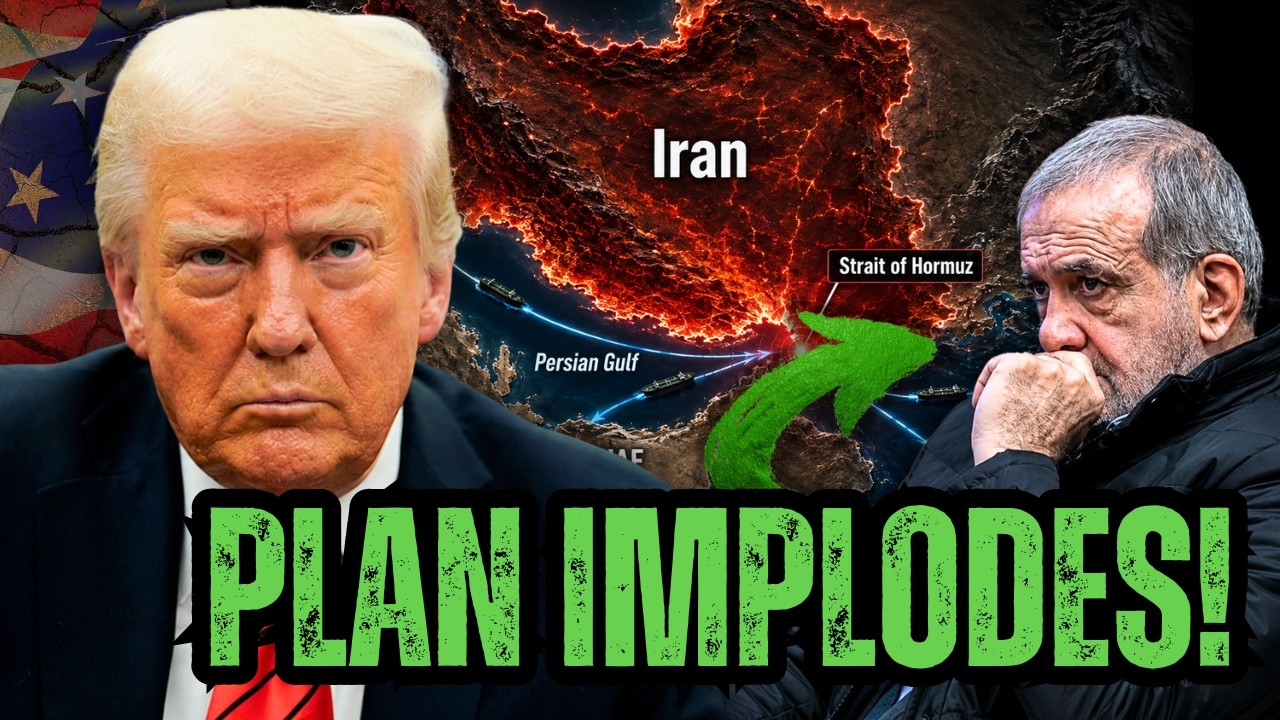
Iran's Real Intensions With The Negotiations Is Not What You Think...
Pesach Wolicki
Overview
This video analyzes Iran's true intentions regarding negotiations, particularly concerning the Strait of Hormuz, and contrasts them with President Trump's public statements. It argues that Iran's primary goal is not to reach a deal but to prolong negotiations, using them as a tactic while continuing to assert control over strategic waterways. The video also explores how regional powers are developing alternative oil export routes to mitigate Iran's leverage, suggesting this long-term strategy could diminish Iran's influence.
How was this?
Save this permanently with flashcards, quizzes, and AI chat
Chapters
- President Trump stated he halted potential military strikes because allies, including Iran, requested a delay to pursue a deal.
- Trump believes a deal is imminent regarding the Strait of Hormuz and potentially Iran's nuclear program.
- He acknowledged that Iran's statements about a deal might not be genuine, indicating a pattern of negotiation rather than resolution.
Understanding Trump's stated rationale provides context for the subsequent Iranian reactions and the broader negotiation dynamics.
Trump's quote: 'We were all set to go... But when the allies ask to fall it off, you got to sort of say, 'Well, let's see.' And the reason they asked is, I think there's a deal. There's a deal on hormones.'
- Saudi Arabia, UAE, and Qatar, despite conflicts with Iran, do not wish for the Iranian regime to collapse.
- These nations prefer a weakened Iran that poses less of a threat, rather than a regime change that could lead to a pro-Western, democratic society.
- Their desire to avoid regime collapse stems from concerns that such a change could threaten their own political systems.
This highlights the nuanced geopolitical interests of regional players, which influence their interactions with both Iran and the US.
The speaker notes that while these countries 'hate Iran and Iran's been attacking them, they do not want the regime to fall. They want it to be weak.'
- Iranian sources explicitly denied reports of agreeing to reopen the Strait of Hormuz.
- Iran's policy regarding the strategic waterway remains unchanged, with passage contingent on coordination with the IRGC.
- The denial emphasized that hostile US actions would keep the situation in the strait unchanged.
This directly contradicts Trump's assertion of an imminent deal, revealing Iran's strategy of denial and maintaining its position.
Iranian informed sources stated: 'Claims of Iran agreeing to reopen straight of Hormuz are false... stressing that there has been no change in Thran's policy regarding the strategic waterway.'
- Iran announced significant progress in bilateral negotiations with Oman regarding the management of the Strait of Hormuz.
- This agreement, framed as a continuation of a prior MOU with the US, positions Iran to have a role in the future management of the strait.
- Iran stressed that these talks were exclusively between Iran and Oman, excluding any third parties, and that navigation framework is separate from broader security policy.
This presents Iran's alternative framing of the situation, suggesting a focus on bilateral agreements and internal management rather than a direct deal with the US.
Iranian Foreign Minister Abbas Aragshi stated that discussions with Muscat 'had made significant progress and were nearing completion.'
- Iran dismisses US threats as ineffective, citing past military actions and psychological warfare.
- The Iranian perspective is that repeated threats without decisive action demonstrate US weakness and a lack of will.
- Iran insists that its decisions will not change under pressure or threats, emphasizing its sovereign rights in managing the Strait of Hormuz.
This explains Iran's strategic interpretation of US actions, viewing de-escalation and threats as signs of American hesitation, which they exploit.
Iranian Foreign Ministry spokesperson stated: 'The United States threats aren't working... We have faced more than threats. The United States has carried out two and in a sense three high-intensity military aggressions against Iran.'
- The US and Gulf countries are actively developing oil pipelines to bypass the Strait of Hormuz.
- Saudi Arabia utilizes an East-West pipeline to the Red Sea, with plans for expansion.
- The UAE is investing in new terminals and pipelines on its eastern coast, aiming for zero dependency on Hormuz, though proximity to Iran remains a concern.
This demonstrates a long-term strategy by oil producers to reduce Iran's leverage by creating alternative export routes, potentially diminishing the strategic importance of the Strait of Hormuz.
Saudi Arabia is rerouting up to 7 million barrels of oil per day through an east west pipeline connecting its eastern province oil fields to the Red Sea port of Yanbu.
- Iraq is exploring pipeline options, including a potential US-backed pipeline to Syria's Mediterranean coast.
- Turkey is also considering increasing the capacity of a pipeline from Iraq's Kurdistan region to its Mediterranean port of Ceyhan.
- These alternative routes aim to facilitate oil exports, reducing reliance on the Strait of Hormuz.
These initiatives by Iraq and Turkey further illustrate the global effort to diversify oil export routes, challenging Iran's control over a critical chokepoint.
The Kirkook-Baniyas pipeline, shut for over two decades, is being considered for rehabilitation to transport up to two million barrels per day from Iraq through Syria to the Mediterranean coast.
Key takeaways
- Iran's negotiation strategy is characterized by prolonged talks rather than a genuine desire for immediate resolution, using diplomacy as a tool to maintain its position.
- Regional Arab states have complex interests, preferring a weakened Iran over regime change, which influences their diplomatic stances.
- Iran actively denies agreements concerning the Strait of Hormuz, framing its actions within bilateral talks (e.g., with Oman) and prior MOUs.
- Iran interprets US threats as a sign of weakness due to a perceived lack of decisive action, emboldening its negotiating stance.
- The development of alternative oil export routes by Saudi Arabia, UAE, Iraq, and potentially others is a long-term strategy to diminish Iran's leverage over global oil markets.
- While short-term de-escalation might occur, Iran's fundamental position on controlling the Strait of Hormuz and its strategic objectives remain unchanged.
- The US faces a dilemma between its strategic goals regarding Iran and the desire to maintain stable relations with regional allies who have different priorities.
Key terms
Strait of HormuzNegotiationsDenuclearizationIRGC (Islamic Revolutionary Guard Corps)Memorandum of Understanding (MOU)Bilateral negotiationsOmanUS threatsOil pipelinesAlternative export routesGeopolitical leverage
Test your understanding
- How does Iran's stated policy on the Strait of Hormuz differ from President Trump's public statements about a potential deal?
- Why do Saudi Arabia, UAE, and Qatar not want the Iranian regime to be overthrown, despite their conflicts with Iran?
- What is Iran's primary objective in engaging in prolonged negotiations, according to the video's analysis?
- How are countries like Saudi Arabia and the UAE attempting to reduce Iran's strategic leverage related to the Strait of Hormuz?
- What is Iran's interpretation of US military threats, and how does this interpretation influence its negotiating strategy?