1:01:25
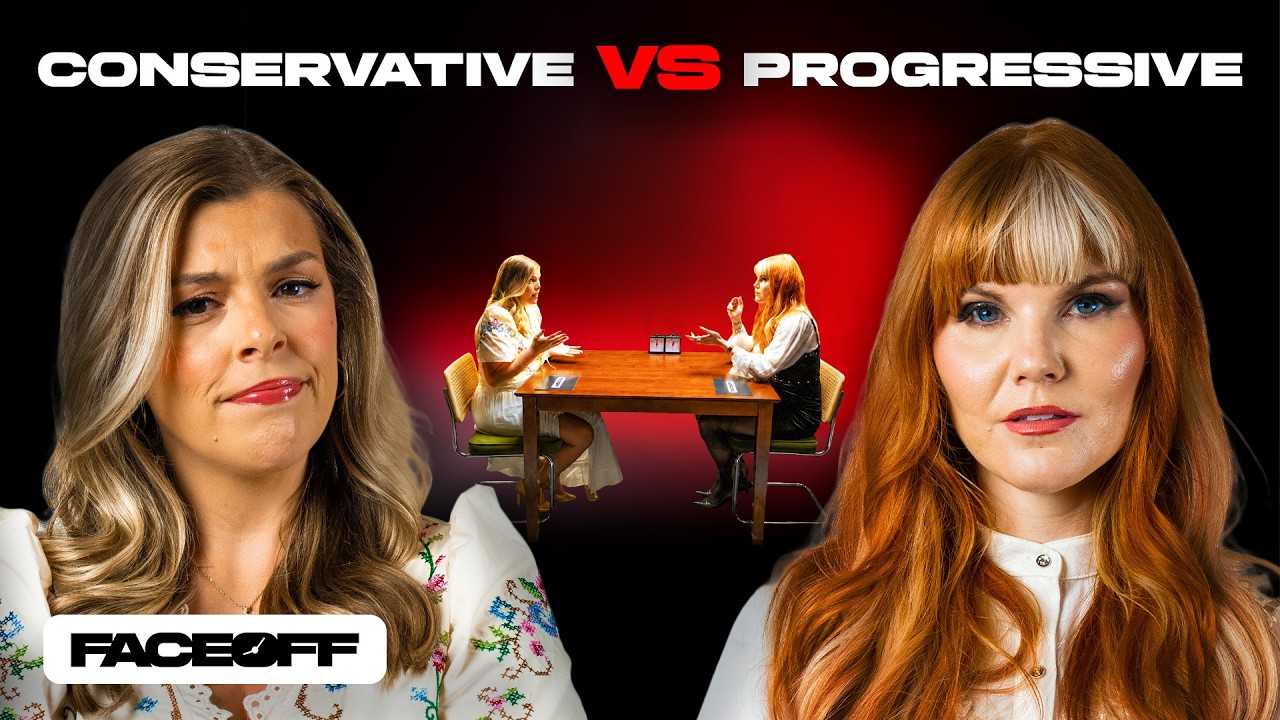
Progressive vs Conservative Christian (Monte Mader vs Allie Beth Stuckey)
Jubilee
Overview
This video features a debate between Allie Beth Stuckey, a conservative Christian commentator, and Monty Meter, a progressive political commentator, on several key claims related to Christian beliefs and societal issues. They discuss abortion, patriarchy versus feminism, and same-sex marriage, exploring theological interpretations, historical context, and the role of religion in public life. The conversation highlights differing views on personhood, biblical interpretation, gender roles, and the separation of church and state, aiming to clarify the distinctions between conservative and progressive Christian perspectives.
How was this?
Save this permanently with flashcards, quizzes, and AI chat
Chapters
- The debate centers on whether human life at conception constitutes personhood with inherent rights.
- One perspective argues that personhood requires consciousness and autonomy, differentiating it from mere biological life.
- The opposing view asserts that all human beings, from conception, possess personhood and rights, making abortion equivalent to murder.
- Historical interpretations of abortion within the church and the evangelical movement's shift in stance on the issue are discussed.
- The role of scientific understanding of life's beginning versus the philosophical concept of personhood is a central point of contention.
Understanding the differing definitions of personhood is crucial for grasping the core arguments surrounding the abortion debate and its ethical implications.
The example of pulling the plug on a brain-dead individual is used to illustrate the concept of personhood being distinct from biological life.
- Patriarchy is defined as a social system where men hold dominant power and authority.
- Feminism is defined as the advocacy for the economic, social, and political equality of all sexes.
- Jesus's ministry is seen as elevating the dignity and status of women, challenging the patriarchal norms of his time.
- Complementarianism, a view that men and women have distinct but complementary roles, is discussed, with one side arguing it can lead to inequitable relationships and subjugation.
- The debate touches on whether biblical texts like Ephesians 5, which discuss husband-wife roles, should be interpreted literally or as countercultural directives.
This discussion is vital for understanding how religious interpretations shape views on gender roles, leadership within the church, and the broader societal implications of patriarchal structures.
The example of Mary Magdalene being the first apostle of the resurrection, despite women's inability to testify in court at the time, is used to highlight Jesus's elevation of women.
- The claim is whether Christians can biblically affirm same-sex marriage.
- One perspective argues that marriage is biblically defined as exclusively between one man and one woman, rooted in creation accounts and reiterated by Jesus.
- The opposing view challenges this by pointing to Old Testament allowances for polygamy and questioning the literal interpretation of certain biblical passages.
- The discussion explores whether Jesus's statements on divorce in Matthew 19 were prescriptive or merely responsive to specific questions.
- The role of interpretation and the authority to define who is a Christian based on their stance on same-sex marriage are debated.
This section delves into the theological underpinnings of Christian views on marriage, highlighting how differing interpretations of scripture lead to contrasting conclusions on same-sex relationships.
Jesus's reference to 'eunuchs' in Matthew 19 is discussed as a potential affirmation of those who do not fit traditional gender or sexual norms.
- The claim is whether America invented the separation of church and state and if it is a Christian nation.
- The Constitution is presented as a document that does not derive its law from God, establishing a secular framework.
- The Declaration of Independence's references to a creator are interpreted as deist language, not necessarily a Christian foundation.
- The principle of separation of church and state is seen as protecting both the church from state interference and the state from theocratic enforcement.
- The debate questions whether religious worldviews should influence legislation and if conservative Christians are unfairly expected to leave their beliefs at the door when voting.
Understanding the historical and constitutional basis for the separation of church and state is crucial for navigating the complex relationship between religious freedom and public policy.
Thomas Jefferson's letter to the Danbury Baptist Association is cited as the origin of the phrase 'separation of church and state,' emphasizing its role in protecting religious liberty.
Key takeaways
- The definition of 'personhood' is a critical, often contentious, point in debates about abortion, with implications for human rights.
- Differing interpretations of biblical texts are central to conservative and progressive Christian views on social and ethical issues.
- The historical context and authorship of biblical passages can significantly influence their application to modern-day issues like gender roles and marriage.
- Feminism is viewed differently by conservatives and progressives, with conservatives often focusing on its perceived anti-abortion stance, while progressives emphasize its goal of social and political equality.
- The separation of church and state is a principle with multiple interpretations, particularly regarding the extent to which religious worldviews should inform public policy.
- Christian nationalism, the idea that a nation is inherently Christian and should promote Christian values, is contrasted with the secular framework of the U.S. Constitution.
- The debate highlights that while Jesus's teachings often elevated women, the practical application within some Christian traditions has led to systems that critics argue subjugate women.
- The core of the debate on same-sex marriage for Christians often rests on whether biblical passages are seen as prescriptive definitions of marriage or as culturally bound regulations.
Key terms
PersonhoodAbortionPatriarchyFeminismComplementarianismSame-sex marriageBiblical inerrancySeparation of church and stateChristian nationalismDeism
Test your understanding
- How do the differing definitions of 'personhood' influence the arguments presented in the abortion debate?
- What are the main arguments for and against complementarianism within Christian traditions, and how do they relate to biblical interpretation?
- Explain the different approaches to interpreting biblical passages concerning marriage and how they lead to contrasting views on same-sex marriage.
- What is the historical and constitutional basis for the separation of church and state in the United States, and how do progressive and conservative Christians interpret this principle differently?
- How does the concept of Christian nationalism differ from the secular framework established by the U.S. Constitution, according to the video?