Video 1 - Approaches to rubric of lesson observation
Phòng Chương Trình - Vinschool
Overview
This video introduces a new lesson observation rubric designed to shift the focus from surface-level classroom activities to the depth of student thinking and learning. It emphasizes a student-centered approach, integrating principles from the science of learning. The rubric aims to help educators evaluate lessons based on the quality of students' cognitive processes, their ability to engage in productive struggle, individual accountability, and the teacher's capacity to respond to student thinking. The video outlines four key philosophical shifts necessary to implement this new approach effectively, moving beyond traditional performance metrics to foster genuine, durable learning and student agency.
Save this permanently with flashcards, quizzes, and AI chat
Chapters
- The system is implementing a new lesson observation rubric focused on student-centered learning and cognitive processes.
- The rubric integrates the science of learning to evaluate how students think, not just their performance.
- It aims to shift observation from surface-level dynamics to evidence of genuine cognitive development and learning autonomy.
- The rubric is structured around four domains: planning, learning environments, learning experiences, and principal teaching.
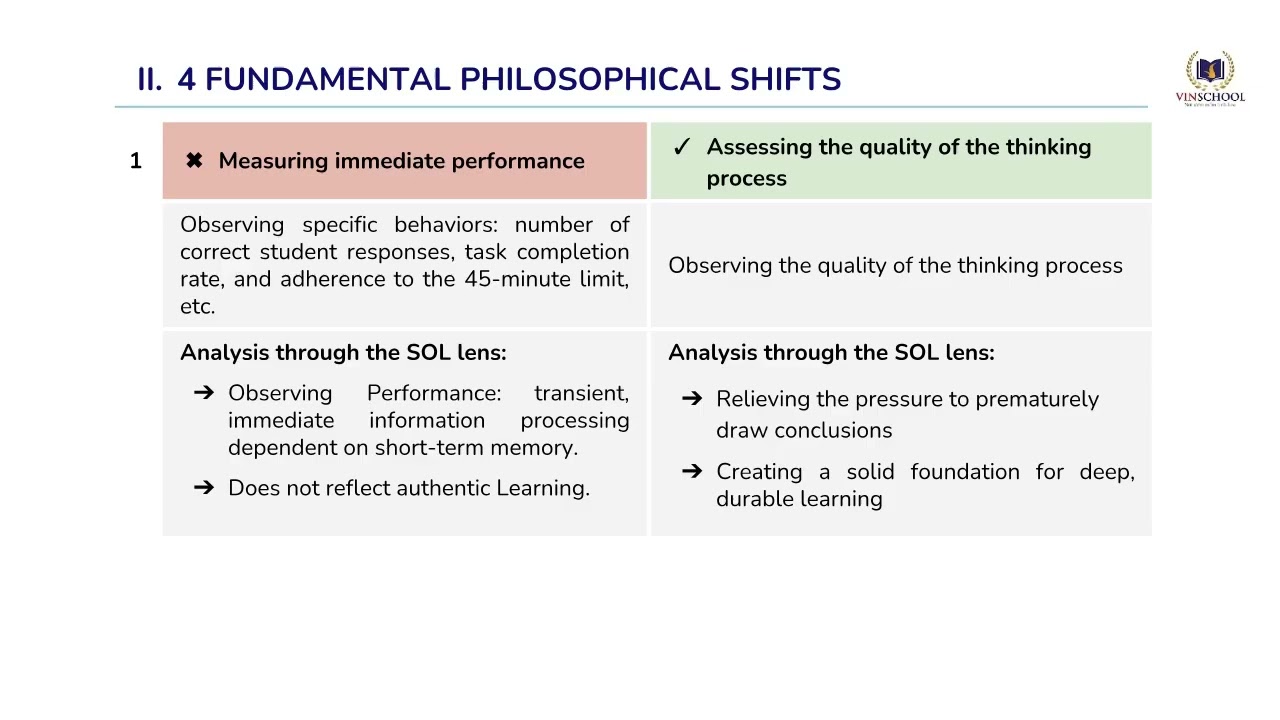
- Traditional observation often measures immediate performance (correct answers, task completion) within a lesson period.
- The science of learning distinguishes between performance (short-term memory, context-dependent) and learning (durable, long-term knowledge alteration).
- The new rubric assesses the quality of the student's thinking process, not just whether objectives are met by the end of class.
- This shift relieves pressure on teachers to prove immediate mastery and allows focus on fostering deep thinking.
- Smooth, error-free lessons are often seen as successful, but can mask a lack of cognitive engagement.
- Authentic learning often requires 'desirable difficulties' and 'productive struggle' to restructure neural connections.
- The new rubric values teachers intentionally designing learning experiences with optimal challenge levels.
- Hesitant pauses or incomplete answers are viewed as opportunities for students to work through cognitive bottlenecks, not as failures.
- Energetic group work and visually appealing products can create an illusion of learning for all students.
- In collaborative settings, superficial labor division can occur, where a few students do the thinking while others perform peripheral tasks.
- The new rubric seeks evidence of individual cognitive accountability, ensuring every student's brain is actively engaged.
- Group collaboration should be built on a foundation of individual reflection and articulation of thinking.
- Traditional feedback often involves praise or immediate answers, which can close off opportunities for deeper thinking.
- Student questions and confusion are windows into their internal thinking processes.
- The new rubric emphasizes 'epistemic responsiveness,' where teachers probe underlying thinking rather than just providing answers.
- Feedback should be tailored cognitive support, like prompting questions or using inquiries for class discussion, to help students refine their mental models.
- The four philosophical shifts aim to restore learning to its fundamental nature: empowering students to engage thinking, confront challenges, and build agency.
- A quality lesson is defined by student cognitive engagement and agency, not superficial perfection.
- A shared professional language is needed to accurately translate these shifts into classroom observations.
- Video two will decode core concepts and distinctions between surface indicators and cognitive realities.
Key takeaways
- Durable learning requires shifting focus from immediate student performance to the quality of their underlying thinking processes.
- Intentional cognitive challenges and productive struggle are essential for deep conceptual understanding and building cognitive capacity.
- Effective collaboration requires ensuring individual cognitive accountability, not just surface-level group activity.
- Teacher feedback should act as a cognitive lever, probing student thinking rather than simply providing answers or praise.
- The new rubric aims to foster student agency by empowering them to engage with challenges and take ownership of their learning.
- Moving beyond traditional observation metrics requires a deeper understanding of cognitive science principles.
- A shared professional language is necessary for consistent and accurate application of the new rubric's principles.
Key terms
Test your understanding
- How does the new rubric differentiate between student performance and genuine learning?
- Why is 'productive struggle' considered beneficial for student learning according to the science of learning?
- What is the risk of 'superficial labor division' in group activities, and how does the new rubric address it?
- What does 'epistemic responsiveness' mean in the context of teacher feedback, and how does it differ from traditional feedback?
- How does the shift in focus from 'frictionless lessons' to 'cognitive challenges' empower teachers?